
The China Story
at your Fingertips
OPEN

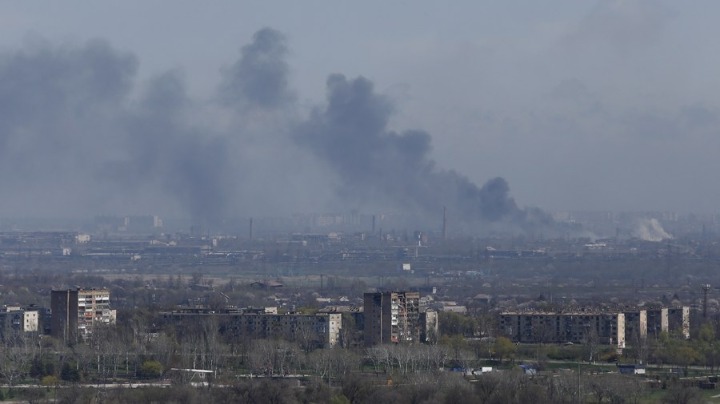
Russia's President Vladimir Putin says his country will continue its yearlong "special military operation" in Ukraine, and he accused the US-led NATO alliance of fanning the flames.
Russia-Ukraine conflict would have cost world economy $1.6 trillion in 2022, according to a study published by the German Economic Institute.
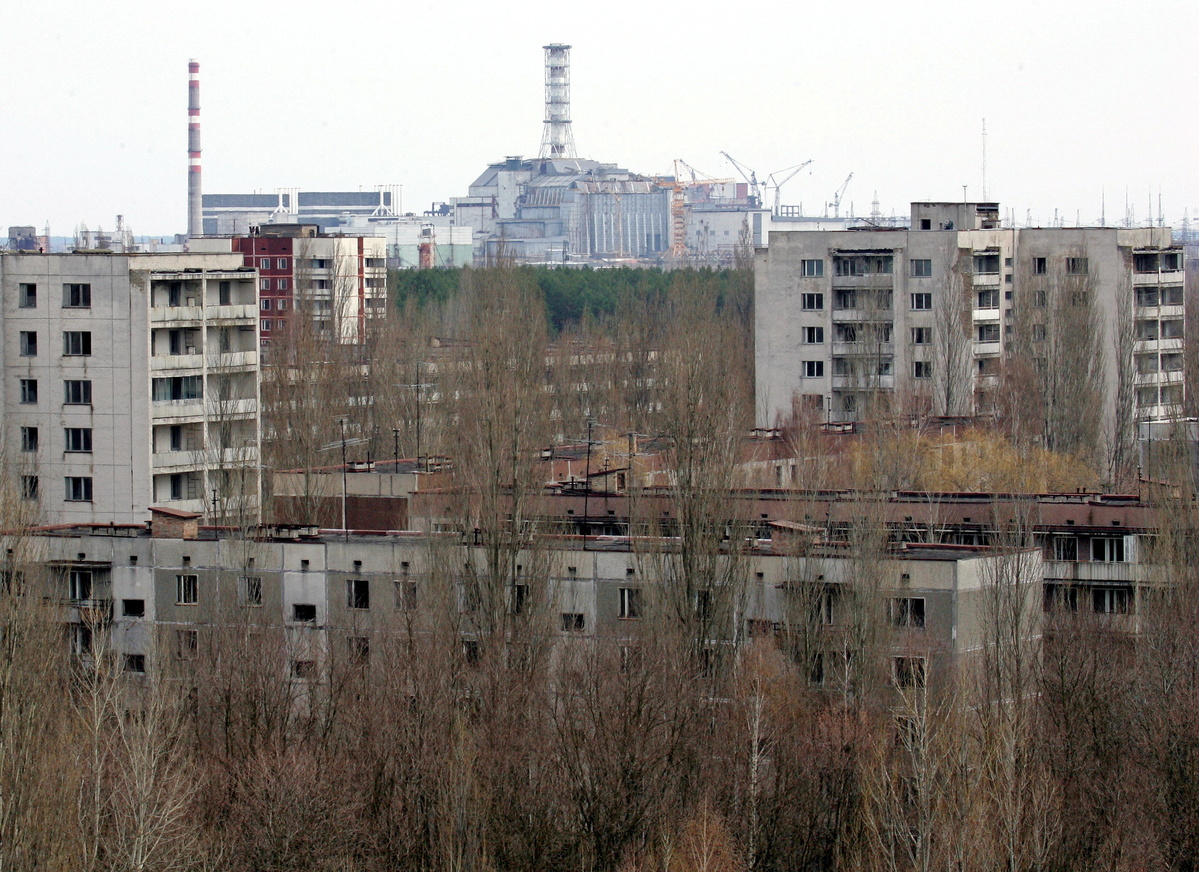
KYIV - Forest fires, which broke out around the Chernobyl nuclear power plant due to hostilities, cover more than 10,000 hectares, Ukrainian Ombudswoman Lyudmyla Denisova said Sunday.
"We have recorded 31 fires, which caused an increased level of radioactive contamination in the air," Denisova wrote on Facebook.
Ukrainian firefighters are unable to reach the area, which is controlled by Russian forces, Denisova added.
The Chernobyl nuclear plant, some 110 km north of Kiev, suffered one of the worst nuclear accidents in human history on April 26, 1986.
On Feb 24, Mykhailo Podoliak, advisor to the head of the President's Office of Ukraine, said Russian forces had seized the Chernobyl nuclear power plant.



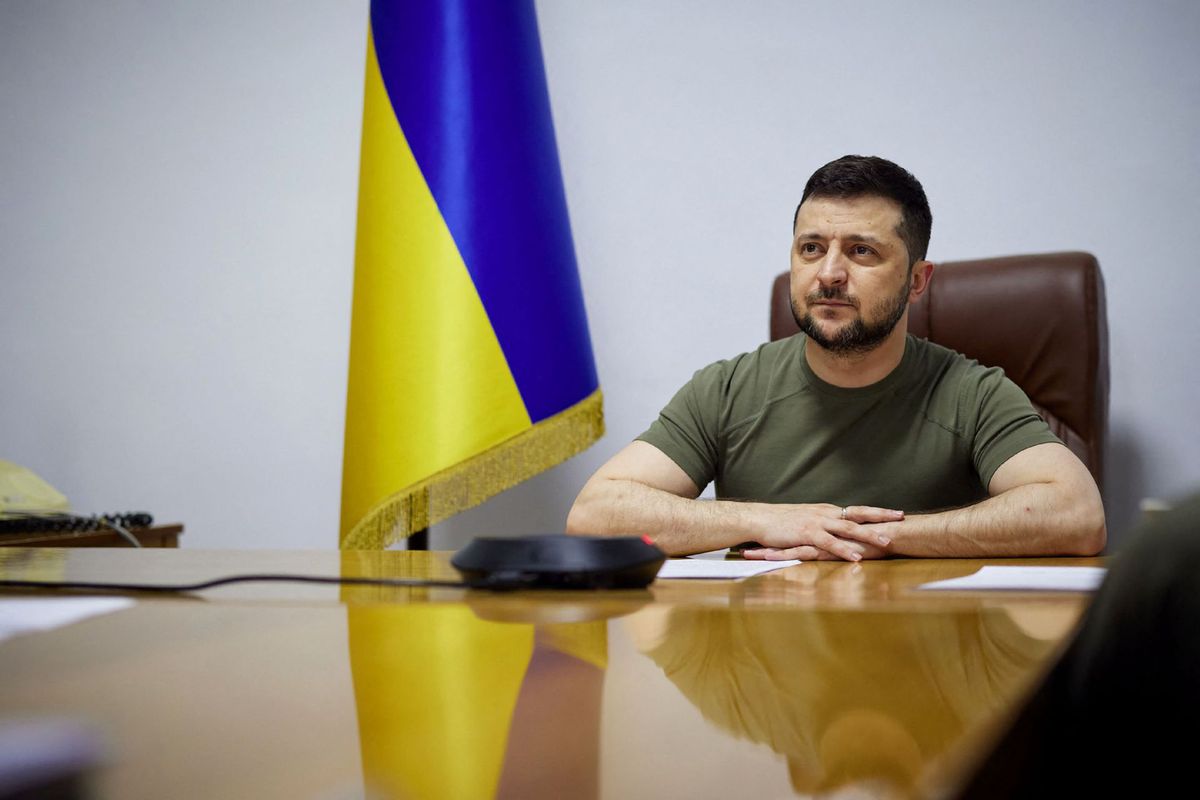
KYIV - Ukrainian President Volodymyr Zelensky said on Sunday that his country stands ready for an all-for-all prisoner exchange with Russia before the end of hostilities, the presidential press service reported.
"I believe that there is an agreement to exchange everyone for everyone, we have this number -- let's exchange for this number," Zelensky said in an interview with Russian media.
He also noted that Ukraine wants to hand over the corpses of Russian soldiers to their relatives.
On Thursday, Ukrainian Deputy Prime Minister Iryna Vereshchuk said that Ukraine and Russia conducted the first prisoner swap since the start of the conflict.
Ten Ukrainians held by the Russian military were released in exchange for ten Russian soldiers captured by Ukrainian forces.
Ukraine also handed over to Russia 11 civilian Russian sailors, who were rescued from a sunken ship near Odesa, in exchange for 19 Ukrainian civilian sailors, according to Vereshchuk.

ANKAR - Turkish President Recep Tayyip Erdogan and his Russian counterpart, Vladimir Putin, on Sunday agreed to hold the next round of Russia-Ukraine negotiations in Turkey's Istanbul city, the Turkish presidency said.
The two leaders had a phone conversation on Sunday and discussed the latest situation in the Russia-Ukraine conflict and the negotiation process, the Turkish presidency said in a statement.
The two leaders "agreed that the next meeting of the negotiation teams of Russia and Ukraine will be held in Istanbul", the statement said.
During the conversation, Erdogan told Putin that a ceasefire and peace between Russia and Ukraine must be achieved as soon as possible and the humanitarian situation in the region should be improved, adding that Turkey would continue to "contribute in every possible way during this process".
Earlier on Sunday, David Arakhamia, a member of the Ukrainian delegation, said the next round of peace talks between Ukraine and Russia will take place next week in Turkey.
"Today, at the video talks, it was decided to hold the next live round by two delegations in Turkey on March 28-30," Arakhamia wrote on Facebook.
Meanwhile, head of Russia's negotiation team Vladimir Medinsky said the face-to-face talks will take place on March 29-30.
Ukrainian and Russian delegations have held three rounds of peace talks in-person in Belarus since Feb 28, and the fourth one started on March 14 in a format of video conference.
Previously, Russian Foreign Minister Sergey Lavrov and his Ukrainian counterpart, Dmytro Kuleba, met in a resort town of Turkey's southern province of Antalya on March 10.
The meeting, held on the sidelines of the Antalya Diplomatic Forum, was the first high-level talks between Moscow and Kiev since Russia launched a special military operation in Ukraine on Feb 24.
During the meeting, the two sides failed to make progress on a ceasefire but agreed to continue negotiations over the conflict.

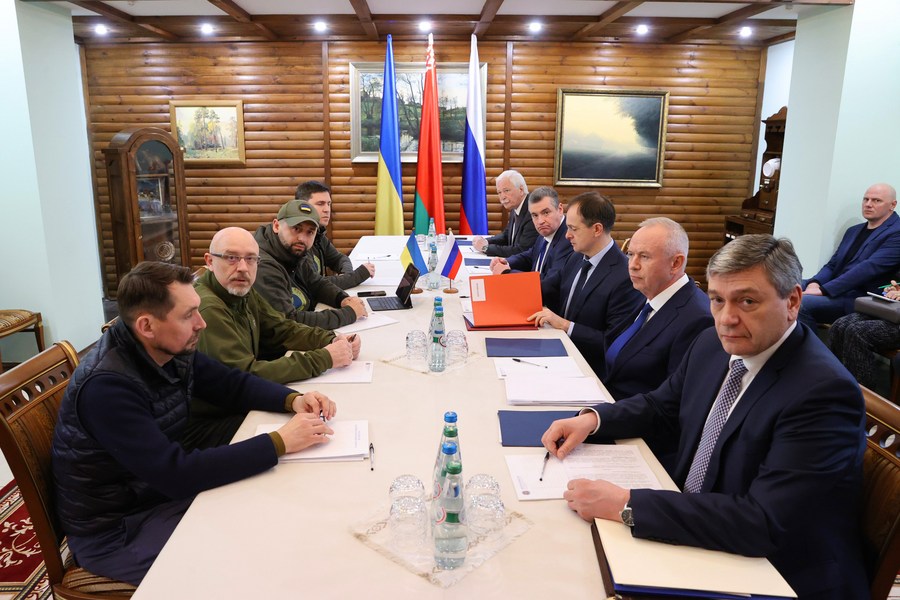
MOSCOW - Russian and Ukrainian delegations will hold a new round of face-to-face negotiations on March 29-30, head of Russia's negotiation team Vladimir Medinsky said on Sunday.
"Today, another round of negotiations with Ukraine via video link took place. As a result, it was decided to meet in person on March 29-30," Medinsky, also an aide to the Russian president, said on Telegram.
Meanwhile, David Arakhamia, a member of the Ukrainian delegation said Sunday that the next live round will be held in Turkey on March 28-30.
Since Feb 28, Russia and Ukraine have held three rounds of face-to-face peace talks and then a series of online discussions, failing to reach a major agreement.
The new round of talks will take place after the Russian military announced on Friday that the main tasks of the first stage of Russia's special military operation in Ukraine had been completed in general.


The Kremlin hit back at United States President Joe Biden's remark during a speech on Saturday that Russian leader Vladimir Putin "cannot remain in power", saying that's not up to Biden because Russia's presidents "are elected by Russians".
Biden made his comment castigating his Russian counterpart during a visit to the Royal Castle in Polish capital of Warsaw after meeting with top Ukrainian ministers.
He participated in intensive NATO, G7 and the European Council summits during his visit to Europe, with the Ukraine crisis as the major focus.
Biden tried to coax a display of unity with European partners, but failed to talk them into concerted actions against Russia.
In his speech, Biden plainly warned Russia not to "think about moving on one single inch of NATO territory", while bluntly calling the Russian president "a butcher".
Biden coupled his harsh words for Putin with a pointed attempt to appeal to ordinary Russians, saying they were "not our enemy" and urging them to blame their president for the heavy sanctions imposed by the West.
Although the White House moved quickly to temper Biden's unprecedented comment on Putin, insisting that the US leader is not seeking "regime change" in Russia and was referring to Putin's influence over neighbors in the region, the Kremlin made its displeasure clear.
Kremlin spokesman Dmitry Peskov said it is not for Biden to decide who should be in power in Russia.
"A state leader should control his temper," Peskov said.
"And, of course, each time such personal insults are uttered, they narrow the window of opportunity for our bilateral relations under the current US administration. It is necessary to be aware of this," Peskov stressed.
Biden met with Ukraine's Foreign Minister Dmytro Kuleba and Defense Minister Oleksii Reznikov earlier on Saturday.
He offered reassurance to Ukrainians at a time when nearly 4 million of them have been driven out of their country.
In a tweet, Kuleba said that the meeting allowed him to seek "practical decisions in both political and defense spheres in order to fortify Ukraine's ability to fight back", while Reznikov tweeted that he felt "cautious optimism".
However, in a possible shift on a plan to transfer Soviet-era fighter jets from Poland to Kyiv to boost Ukraine's firepower in the skies-rejected last month by the Pentagon as too "high risk"-Kuleba said that the United States now did not object.
Biden made clear that the West would need to steel itself for what will be a long and difficult battle.
He cast doubt on Russia's signal that it may scale down its war aims to concentrate on eastern Ukraine, even as two Russian missile strikes had hit a fuel depot in Ukraine's Lviv, a rare attack on a city just 70 kilometers from the Polish border.
Russian Defence Ministry spokesman Igor Konashenkov said on Saturday that Russian Armed Forces destroyed four Ukrainian unmanned aerial vehicles in the past day, including a drone that was flying over the Black Sea toward Sevastopol.
According to Konashenkov, Russia's air defenses also downed a Ukrainian military Mi-24 helicopter over the Staraya Basan settlement, which is 60 km east of Kyiv.
Agencies contributed to this story.

MOSCOW/KYIV -- The Russia-Ukraine conflict continued on Sunday as relevant parties are working to broker a peaceful solution. Following are the latest developments of the situation:
Ukrainian Deputy Defense Minister Hanna Maliar said that the Russian army is preparing for active hostilities by mobilizing its forces and personnel, the Ukrainian government-run Ukrinform news agency reported on Saturday.
"As of now, the intensity of the enemy's offensive operations has been reduced, but in reality, they are preparing to continue these actions," Maliar said.
Separately, Dmytro Zhyvytskyi, head of the Regional Military Administration in the northeastern Sumy region, said that fierce fighting is underway in three districts of the region.
- - - -
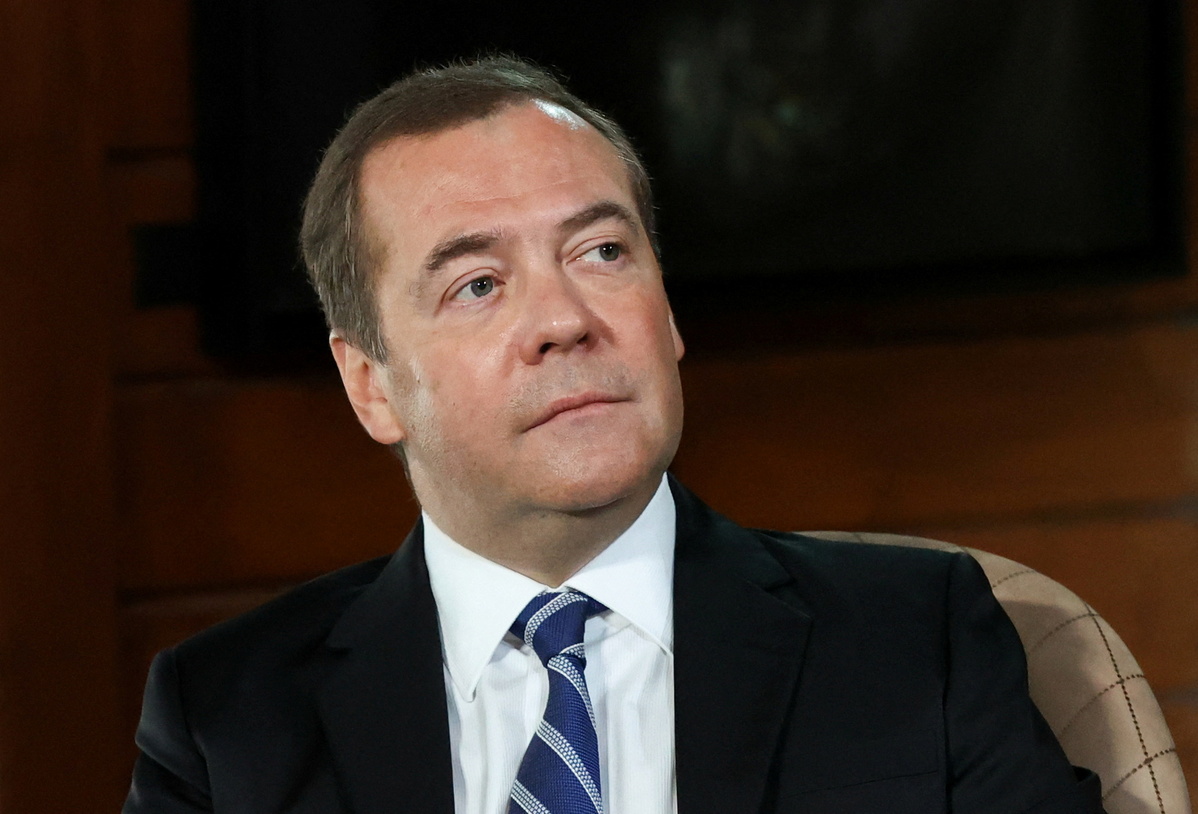
The current crisis is worse than it was during the Cold War, Deputy Chairman of the Russian Security Council Dmitry Medvedev said Saturday.
"At that time, Russia's counterparts were not trying to bring the situation to the boiling point, they did not impose sanctions on industries, agriculture and individuals," Medvedev told Russia's RIA Novosti news agency in an interview.
"But western sanctions are not fatal difficulties for Russia," he said.
- - - -
Mykhailo Podolyak, a member of the Ukrainian delegation to the peace negotiations with Russia, said that at the talks, Kyiv insists on creating a system of security guarantees for Ukraine, the Ukrainian presidential press service reported Saturday.
"Ukraine insists on a system of security guarantees, which will include countries that are ready to provide these guarantees, including in the military sense," Podolyak said.
He stressed that such a system should involve the United States as a guarantor of Ukraine's security.
The issue of territorial integrity is extremely important for Ukraine, Podolyak said, noting that the future of Crimea and rebel-held areas in eastern Ukraine should be decided only by the presidents of Ukraine and Russia.
- - - -
Moscow is ready to hold talks on equal terms with Washington, while the United States is doing everything to further complicate the work of Russian diplomats, Russian Foreign Ministry spokesperson Maria Zakharova said Saturday.
"We do not dodge dialogue and are ready to hold talks but only on equal terms, on condition there is a reciprocal movement, which cannot be seen in Washington even under a magnifying glass," Zakharova said.
"The US is doing everything to further hamper the performance of Russian diplomatic missions in the United States while at the same time engaging in hypocritical speculations on the need to preserve a diplomatic presence," she added, urging Washington to think of the repercussions.
- - - -
At least five people were injured in missile attacks on Ukraine's western city of Lviv on Saturday, head of the Lviv Regional Military Administration Maksym Kozytskyi said on Facebook.
Two missile strikes hit the city at about 4:30 p.m. local time (1430 GMT), and residential buildings were not affected, Kozytskyi said, adding that the threat of new attacks on the city persists.
The information has not yet been verified by the Russian side.
- - - -
Russia's armed forces destroyed an ammunition depot of the Ukrainian troops in the Zhytomyr region with Kalibr cruise missiles, Russian Defense Ministry spokesman Igor Konashenkov said Saturday.
In total, 271 unmanned aerial vehicles, 1,627 tanks and other armored combat vehicles, 167 multiple launch rocket systems, 669 field artillery and mortars, as well as 1,474 units of special Ukrainian military vehicles have been destroyed during the military operation, according to the ministry.

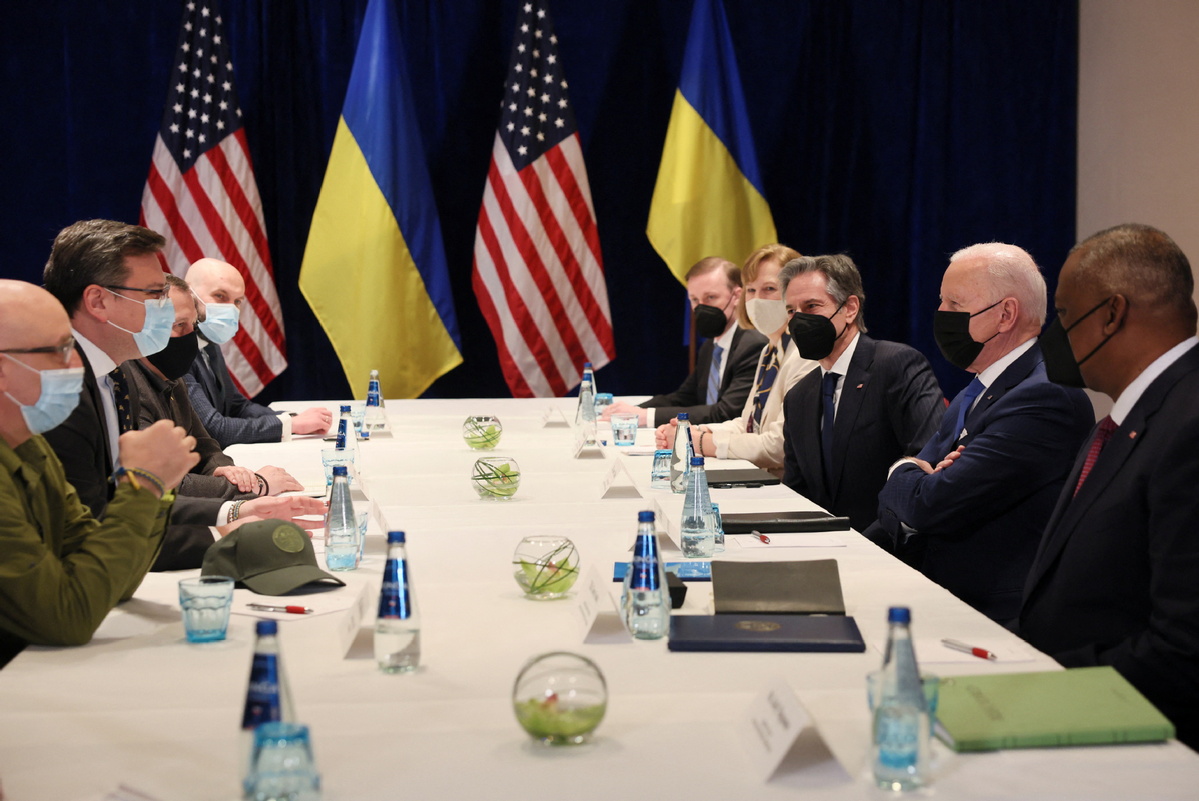
WARSAW -- US President Joe Biden on Saturday met with Ukraine's Foreign Minister Dmytro Kuleba and Defence Minister Oleksii Reznikov during his visit to Poland, "for an update on Ukraine's military, diplomatic, and humanitarian situation," according to the White House.
Biden dropped in a meeting between US Secretary of State Antony Blinken and Secretary of Defense Lloyd Austin and their Ukranian counterparts, Kuleba and Reznikov.
They discussed "further efforts to help Ukraine defend its territory" and the United States and its allies' ongoing actions towards Russia, the White House said in statement.
In a tweet, Kuleba said that the meeting between Ukrainian ministers and US secretaries allowed him to seek "practical decisions in both political and defense spheres in order to fortify Ukraine's ability to fight back," while Reznikov tweeted that he acquired "cautious optimism."
Biden is visiting Poland, after attending the North Atlantic Treaty Organization (NATO) summit, G7 gathering and the summit of the European Council -- three intensive summits in two days with the Ukraine crisis as major focus.
The US president tried to coax a display of unity with European partners, but failed to talk them into concerted actions against Russia.
The NATO summit concluded Thursday with no agreement to impose additional sanctions against Moscow, especially the country's oil and gas products. Nor did the European Council summit succeed in reaching a consensus on the same issue.

BEIJING -- The relations between Russia and the North Atlantic Treaty Organization (NATO) in the past 30 years have experienced a downward spiral from honeymoon to spat, from detente to bickering, and from new cold war to quasi-hot war, an expert has told Xinhua recently.
The dramatic change in their relations is not just the epitome of the drastic shifts in Russia's identity orientation and foreign policy, but of expanding American clout over former Warsaw Pact countries in the post-Cold War era, said Kang Jie, an associate research fellow at the China Institute of International Studies.
Thirty years ago, a newly independent Russia tried to seek NATO membership, but was met by the George H.W. Bush administration's promise of not one inch eastward of NATO expansion.
Despite no direct engagement, Russia is now in an all but hot war with NATO amid its military conflict with Ukraine, Kang said.
FANTASIES (1991-1993)
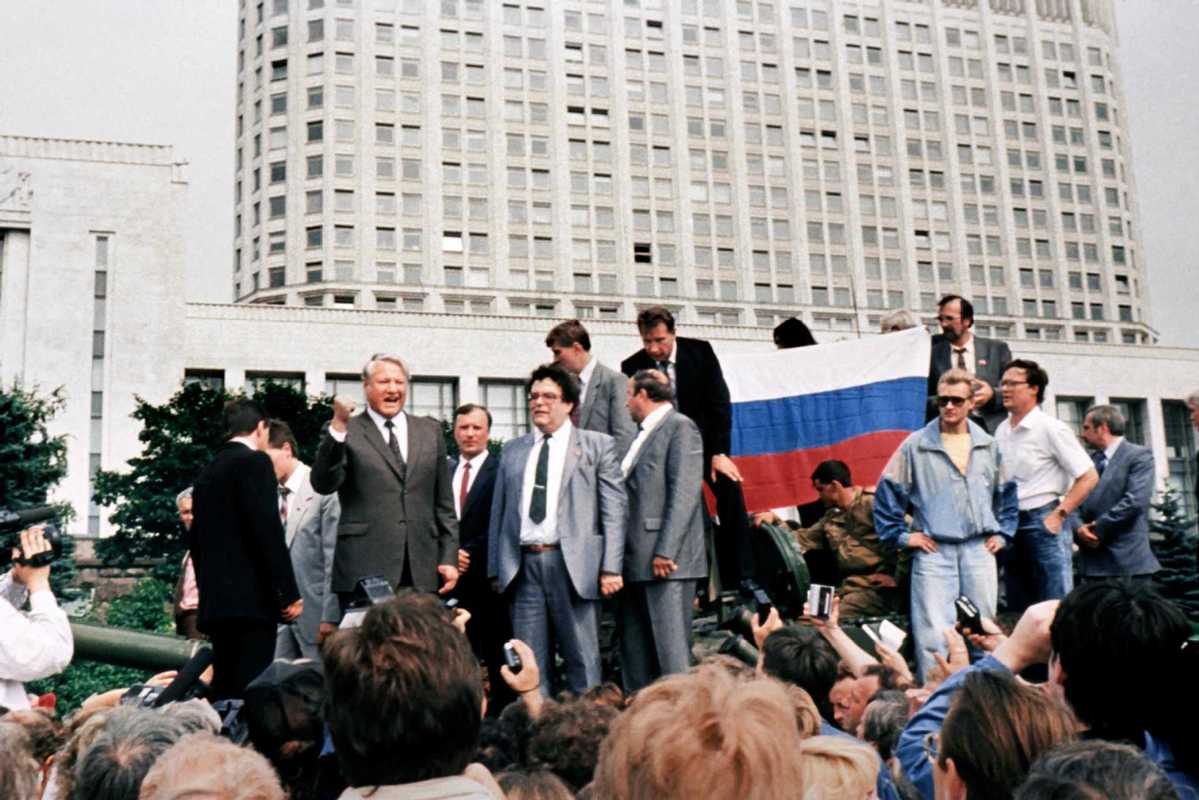
Before the collapse of the Soviet Union, then Russian leader Boris Yeltsin once told the United States and NATO that cooperation with the only Western military alliance was an integral part of Russian security, and called NATO membership a "long-term political aim" of Russia.
Russia followed a liberal internationalism after its independence. Then Russian Foreign Minister Andrei Kozyrev wrote in NATO Review, the alliance's official magazine, that "we see NATO nations as our natural friends and in future as allies."
Then US President George H.W. Bush made repeated statements that Russia would be granted entry into NATO as long as it undertook reforms.
CRACKS (1994-1998)
That NATO started eastward enlargement dented Russia's fantasies about the West, Kang noted. From late 1993, the Clinton administration began to push NATO eastward in order to compete with the Republicans, curry favor with the domestic military-industrial complex, and win over Polish and Czech American voters.
The NATO foreign ministers' meeting announced an expansion roadmap without prior consultations with Russia, a move that infuriated Yeltsin.
In 1995, an expert panel appointed by Yeltsin proposed two options for NATO expansion: either NATO should give Russia membership, or NATO should be placed under the authority of an expanded United Nations-led Organization for Security and Cooperation in Europe (OSCE), in which Russia would have the right of veto.
In recent years, the Russian side has repeatedly mentioned that NATO has reneged on its "no eastward expansion commitment." In February 1990, when then US Secretary of State James Baker visited the Soviet Union to negotiate the reunification of Germany, he proposed to then Soviet leader Mikhail Gorbachev that the United States and NATO would guarantee that NATO jurisdiction and military presence would not move an inch to the east after the reunification of Germany.
In Russia's view, "no eastward expansion" certainly includes the Eastern European countries east of then East Germany, so it was equivalent to the US commitment of NATO not expanding eastward. But in the United States' view, this commitment was only aimed at the reunification of Germany, and the issue of eastward enlargement was not on the agenda of all parties at that time, so the commitment does not apply to Eastern Europe.
CRISIS AND HONEYMOON (1999-2005)
The Balkans is the first wrestling arena between Russia and NATO, said the expert. In March 1999, despite repeated warnings from Russia, NATO flagrantly launched full-scale air strikes against Yugoslavia. In April that year, despite Russia's opposition, NATO issued a new strategic concept with emphasis on "out-of-area operations," marking the expansion of NATO's military operations from collective defense to external power projection, he noted.
In response, Russia immediately froze all relations with NATO and launched the biggest military exercise, Zapad-99, since the collapse of the Soviet Union. In October 1999, Russia released a new version of its military doctrine in advance, stressing for the first time that external military invasion was the main threat.
In fact, the Kosovo crisis did not change Russia's pragmatic attitude in cooperating with NATO. In August 1999, then Russian Prime Minister Vladimir Putin said that Russia should and will integrate itself into the civilized world, noting that his country would cooperate with NATO.
The 9/11 attacks in 2001 became an opportunity to warm up the relations between the two sides, said the expert, noting that Putin was the first among major power leaders to call in support of then US President George W. Bush, and after that, the United States and Russia set up a joint working group on counterterrorism.
In December 2004, a NATO-Russia action plan on terrorism was approved by the two sides, and Russia took part in NATO's counter-terrorism Operation Active Endeavour in the Mediterranean.
Meanwhile, then Secretary General of NATO George Robertson and leaders of some NATO member states supported Russia's accession to NATO.
This period is seen as a short honeymoon period between Russia and NATO, said Kang.
Also during this period, he said, three cracks in Russia's relations with the United States and NATO began to emerge.
One is the anti-missile system and strategic stability. In 2002, the United States unilaterally withdrew from the Anti-Ballistic Missile Treaty signed by the United States and the Soviet Union.
The second remains the eastward expansion of NATO. Following admitting Poland, Hungary and the Czech Republic in 1999, NATO started its second round of eastward expansion. In the year of 2004, the Baltic states of Estonia, Latvia and Lithuania joined NATO.
The third crack between Russia and NATO is the so-called "color revolution" in the "post-Soviet space." From 2003 to 2005, the "color revolutions" took place in countries such as Ukraine and Georgia.
CRACK ENLARGEMENT (2006-2013)
After 2006, the deployment of anti-missile system, the eastward expansion of NATO, and the "color revolution," these three cracks not only failed to repair, but continued to expand.
In 2006, the United States formally proposed to deploy anti-missile bases in Eastern Europe, and in January 2007, the United States started negotiations on anti-missile deployment with Poland and the Czech Republic.
One month later, in an address to the Munich Security Conference, Putin fiercely criticized the actions of NATO's eastward expansion and the US deployment of anti-missile systems in Eastern Europe. The speech was seen as a watershed in Russia's relations with the United States and NATO.
After taking office in 2009, then US President Barack Obama proposed to "reset" US-Russia relations, indicating a turn in Russia's relations with the United States and NATO. Since then, Russia and NATO began to working towards improving relations. However, not much progress was made.
At the end of 2009, then Russian President Dmitry Medvedev proposed to set up a new European security architecture to replace organizations including NATO and the OSCE, and end the Cold War once and for all.
Though Russia and NATO resumed military cooperation in the year 2010, the negotiations on the new security architecture between Russia, the United States and the European Union failed to make progress. Meanwhile, the United States and the West continued to instigate "color revolutions" in the Middle East as well as in Russia's close neighbors.
RAPID DETERIORATION (2014-2022)
The Ukrainian crisis that broke out in 2014 became the biggest turning point in relations between Russia and NATO, said the expert, noting that the two sides broke off security cooperation and turned to substantive military confrontation.
NATO began to provide military assistance to Ukraine after the crisis, including sending military advisers and instructors. At the Warsaw Summit in 2016, NATO nations decided to have multinational battalions stationed in the three Baltic states and Poland.
Meanwhile, the dispute between the United States and Russia over the implementation of the Intermediate-Range Nuclear Forces (INF) Treaty has also intensified, as the two sides accused each other of violating the historic arms control deal.
In 2019, the United States officially announced its withdrawal from the INF Treaty.
With Russia and NATO facing full-scale confrontation and the United States encouraging Ukraine to join NATO, Russia proposed three security dialogues with the United States, NATO and the OSCE at the end of last year, all of which were fruitless, Kang said.
On Feb. 24, the Russian army launched a special military operation in Ukraine, which, said Kang, marked the beginning of the largest armed conflict in the region since World War II.
In general, Kang said, the Russian elites hoped to integrate the country into the Western security community more than once, while the United States and NATO chose to turn Moscow down.
Driven by ideology and pushed by the military-industrial complex, Washington turned a blind eye to the repeated opposition from the domestic strategic community and from Russia. It pushed NATO eastward again and again, and instigated "color revolutions" around Russia repeatedly, forcing Russia into the corner, Kang said.

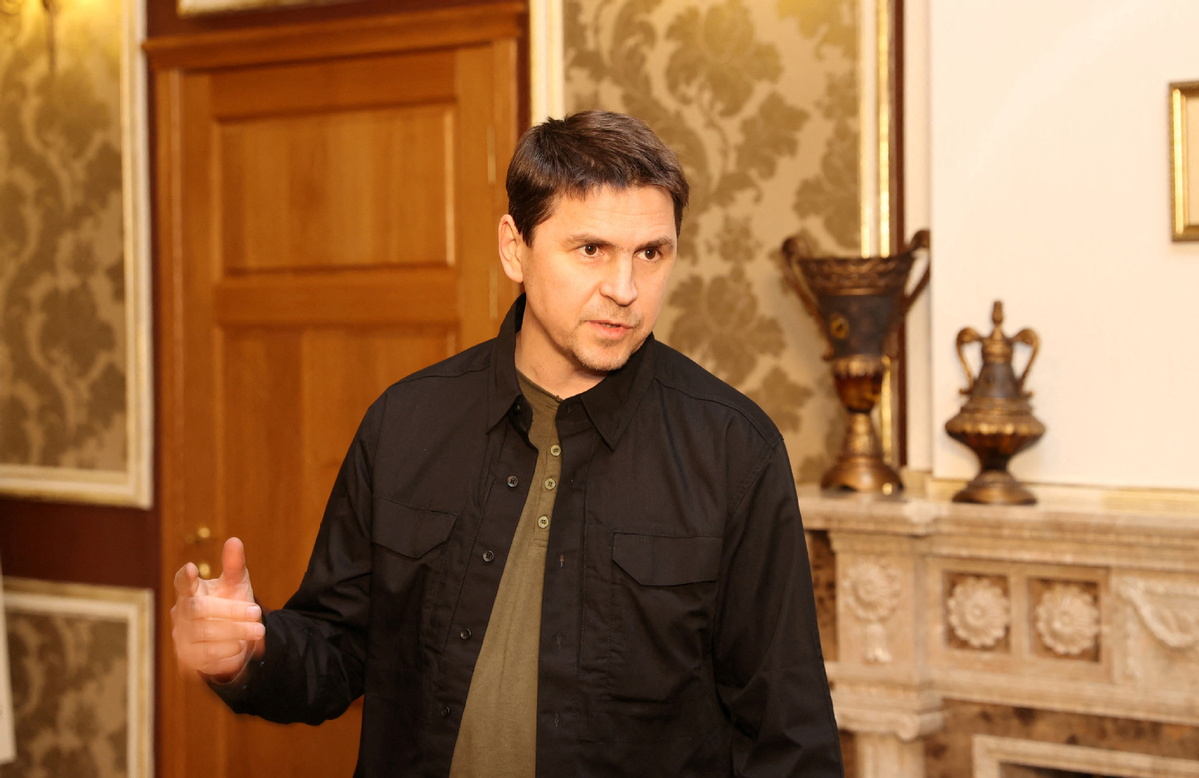
KYIV -- Ukrainian Presidential Advisor Mykhailo Podolyak said that Kyiv insists on a system of security guarantees for Ukraine as one of the key elements of negotiations with Russia, the presidential press service reported Saturday.
During an interview with German media, Podolyak stressed that such a system "is impossible without the participation of the United States in the first place."
According to the negotiator, the future of Crimea, certain areas of Donetsk and Luhansk should be decided only by the presidents of Ukraine and Russia.
He called on Ukraine's partners to provide air defense systems, give weapons to "adequately help" Kyiv, adding that sanctions, such as oil embargoes and restrictions on financial transactions, are also needed.
Earlier this month, Podolyak said that Ukrainian President Volodymyr Zelensky and his Russian counterpart, Vladimir Putin, may hold talks soon.
But Kremlin spokesman Dmitry Peskov said Monday that it is too early to talk about a meeting between the two presidents, as there is no breakthrough yet in the peace talks.
Ukrainian and Russian delegations held three rounds of peace talks in-person in Belarus since Feb 28, and the fourth one started on March 14 in a format of video conference.

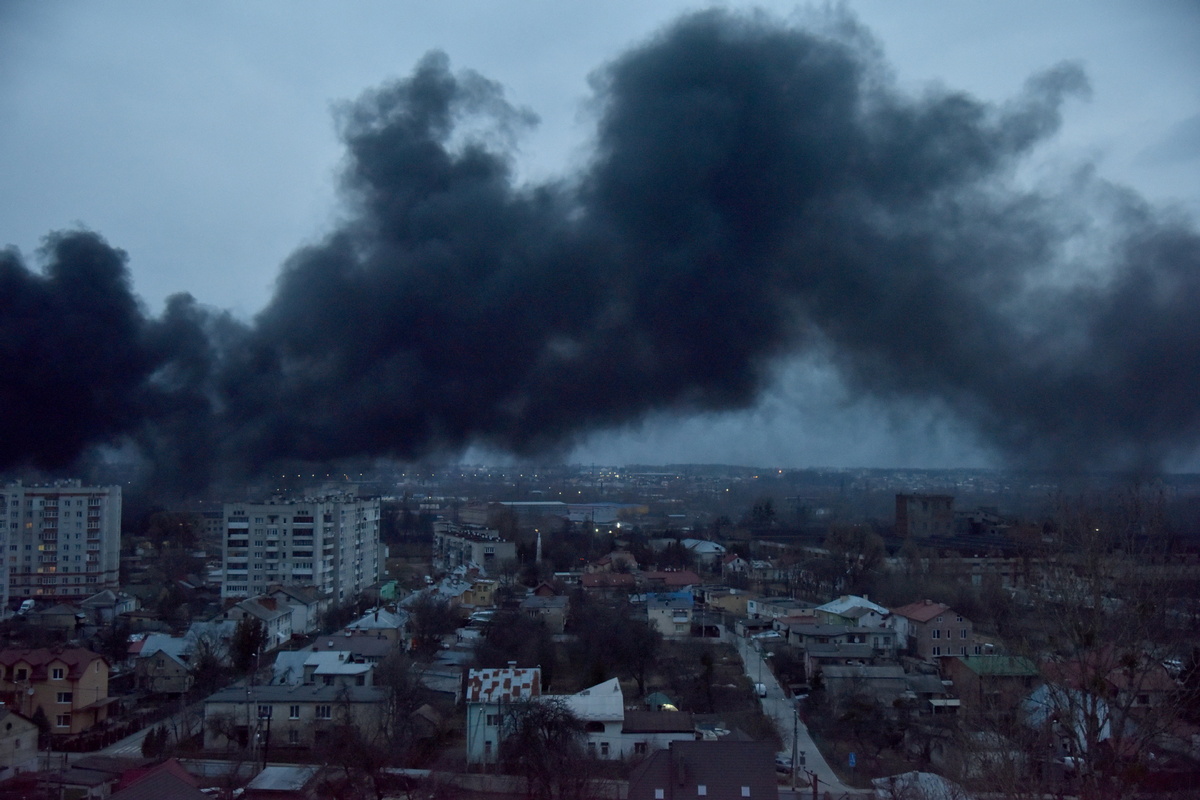
KYIV - At least five people were injured in missile attacks on Ukraine's western city of Lviv on Saturday, Head of the Lviv Regional Military Administration Maksym Kozytskyi said on Facebook.
Two missile strikes hit the city at about 4:30 pm local time (1430 GMT), Kozytskyi said, noting that residential buildings were not affected, according to preliminary information.
The threat of new attacks on the city persists, the official added, urging people to stay in shelters.
Kozytskyi said in an earlier post that three powerful explosions occurred on the city's eastern outskirts.
The news above has yet to be confirmed from the Russian side.

Files uncovered by Russia show US' role on biological weapons in Ukraine
Russia's Defense Ministry said on Thursday that the Pentagon was directly involved in developing and financing biological weapons components in Ukraine.
Documents received from Ukrainian employees working at the laboratories in question have been studied by Russian experts and show that Ukrainian biological projects were directly developed and approved by the Pentagon, the ministry's spokesman Igor Konashenkov said in a news briefing in Moscow.
One of these projects was aimed at carrying out molecular analysis of particularly dangerous infections endemic in Ukraine and involved sampling pathogens from old animal burial sites to obtain new strains of anthrax.
Furthermore, a pharmaceutical company contracted by the United States' defense establishment worked with the Ukrainian Defense Ministry to test unregistered medical drugs on Ukrainian service members, according to Konashenkov.
Igor Kirillov, the head of the Russian Radiation, Chemical and Biological Protection Force, presented documents at the news conference that indicated an investment fund of Rosemont Seneca Partners sponsored the military-biological program in Ukraine.
"The scale of the program is impressive. In addition to the US Department of Defense, the US Agency for International Development, the George Soros Foundation, and the Centers for Disease Control and Prevention are directly involved in the program's implementation in Ukraine," he said. "All these activities are carried out under the full control of the Pentagon."
Apart from experiments with viruses, the biolabs studied pathogens and information that can be used to develop biological weapons, the document said.
In the framework of a project called UP-8 conducted in Lviv, Kharkiv, Odessa and Kyiv, 4,000 servicemen were tested for hantavirus antibodies and 400 others for the presence of antibodies for the Congo-Crimean Fever virus.
In total, more than 16,000 biological tests taken in Ukraine were transferred abroad.
On March 10, the Russian Defense Ministry claimed it obtained documents indicating that US-sponsored biolabs in Ukraine conducted experiments with bat coronavirus samples.
Economic war
Russian Foreign Ministry spokeswoman Maria Zakharova said on Thursday that the economic war waged against Russia by the US government had threatened to completely collapse bilateral relations.
"This, of course, is not in our interests, because we proceed from the fact that diplomatic relations and, in principle, relations between states should serve national interests, the interests of the peoples living on the territory of our countries," Zakharova said.
Earlier, the US embassy in Russia was handed a note with a list of US employees declared personae non gratae, a measure that Russia said was taken in retaliation for Washington's expulsion of diplomats from Russia to the United Nations.
Kremlin spokesman Dmitry Peskov said on Thursday that the US must stop expelling Russian diplomats "if it wants Russia to stop expelling American ones".
"Our actions are not the root cause of this crisis. They are forced and retaliatory measures," Peskov said.

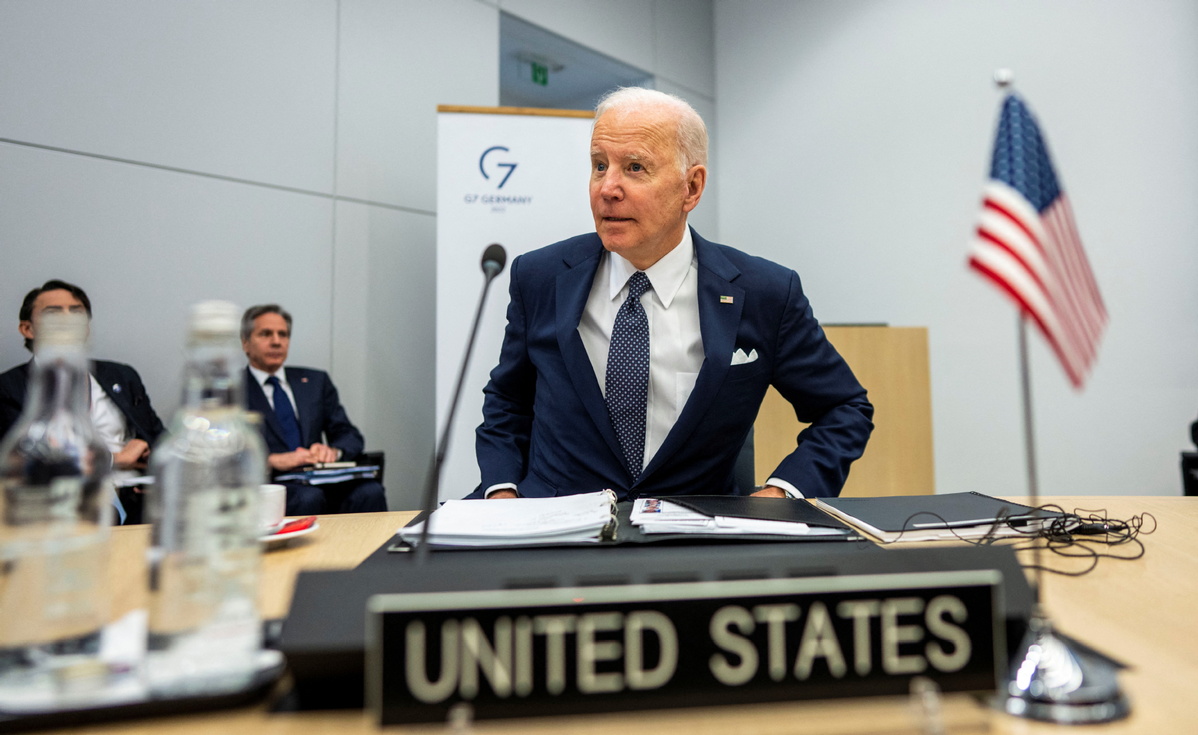
Western leaders spoke of tougher sanctions against Russia for its military action in Ukraine at the three summits attended by visiting US President Joe Biden, but disagreements on key issues remain.
Biden spent all day Thursday attending three summits-with NATO leaders, G7 leaders and European Union leaders.
In a statement after the NATO emergency summit, the military alliance voiced full support for Ukraine and urged Russia to accept a cease-fire and negotiations.
A statement after the G7 leaders' meeting, which was also held in NATO's Brussels headquarters, warned Russia not to carry out its threat to use "chemical, biological and nuclear weapons or related materials".
A statement after a meeting of Biden and EU leaders said they discussed the coordinated and united response of the EU and the US to Russia's military actions and EU-US cooperation to reduce dependence on Russian fossil fuels.
In a news conference on Thursday evening, Biden said he had achieved the goal of "absolute unity" on three key issues among NATO and European allies, namely, supporting Ukraine with military and humanitarian assistance, imposing the most significant sanctions regime ever and fortifying the eastern flank of NATO allies.
Ding Chun, director of the Center for European Studies at Fudan University, said the military conflict erupting in Europe has affected EU states in multiple ways, such as the influx of refugees, gas price hikes and a blow to the EU economy, which has not yet recovered from the COVID-19 pandemic.
"The EU and the US are not all the same in their approaches to the current situation,"Ding said, adding that the EU's energy dependence on Russia won't be resolved in the short term.
"While EU member states are united in opposing Russia's military actions, they have differences regarding the extent of economic sanctions," he said.
Unlike the US and Britain, EU leaders have not set a deadline to phase out Russian fossil fuels despite their pledge to reduce dependence on Russian energy.
Russia now supplies about 45 percent of EU gas imports, 25 percent of oil imports and 45 percent of coal imports.
While some Eastern European and Baltic states have called for an oil embargo on Russia, German Chancellor Olaf Scholz said that to stop using Russian fuels "from one day to the next would mean plunging our country and all of Europe into recession".
Belgian Prime Minister Alexander De Croo warned at the EU summit that an immediate and total ban of Russian oil and gas would have a "devastating impact" on the European economy.
"We are not at war with ourselves," he said.
On Thursday, Ukrainian President Volodymyr Zelensky again appealed for EU membership in his virtual address to the EU summit.
However, EU leaders just repeated their statement from a summit earlier this month in Versailles, France, to ask the European Commission to submit its opinion according to the EU Treaties.
Dutch Prime Minister Mark Rutte put a damper on Kyiv's hopes, saying in the early hours of Friday morning when leaving the European Council building that "EU accession is a process" and "there is no fast-track procedure for accession".
"If we were to do that, we would turn the access process into a political process, and that shouldn't happen," he said.
Agencies contributed to the story.

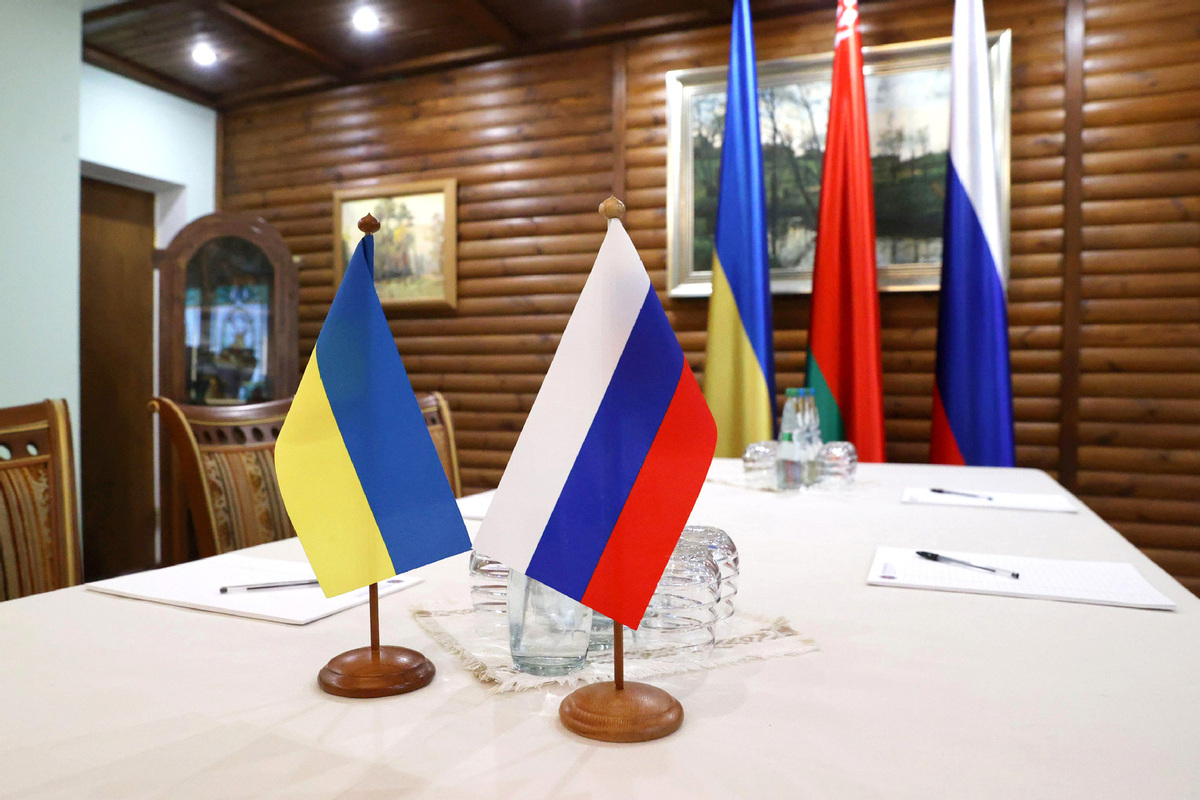
MOSCOW -- Russia's special military operation in Ukraine will continue until all tasks set by President Vladimir Putin are fulfilled, Deputy Chairman of the Russian Security Council Dmitry Medvedev said Friday.
"These targets are related to the future of Ukraine: the status of Ukraine as a neutral state, a state that does not pursue an anti-Russian policy, a state that is not militarized, and a state as our normal neighbor," Medvedev said.
Russia launched the special military operation a month ago primarily because these goals were not achieved through diplomacy, he said in an interview with Russia's RIA Novosti news agency and RT broadcaster.
The main tasks of the first stage of Russia's special military operation in Ukraine have been completed in general, and the combat potential of the Ukrainian Armed Forces has been significantly reduced, the Russian military announced on Friday.
The Russian military will "concentrate on the main thing -- the complete liberation of Donbass," said Sergei Rudskoy, first deputy chief of the General Staff of the Russian Armed Forces.
--Xinhua

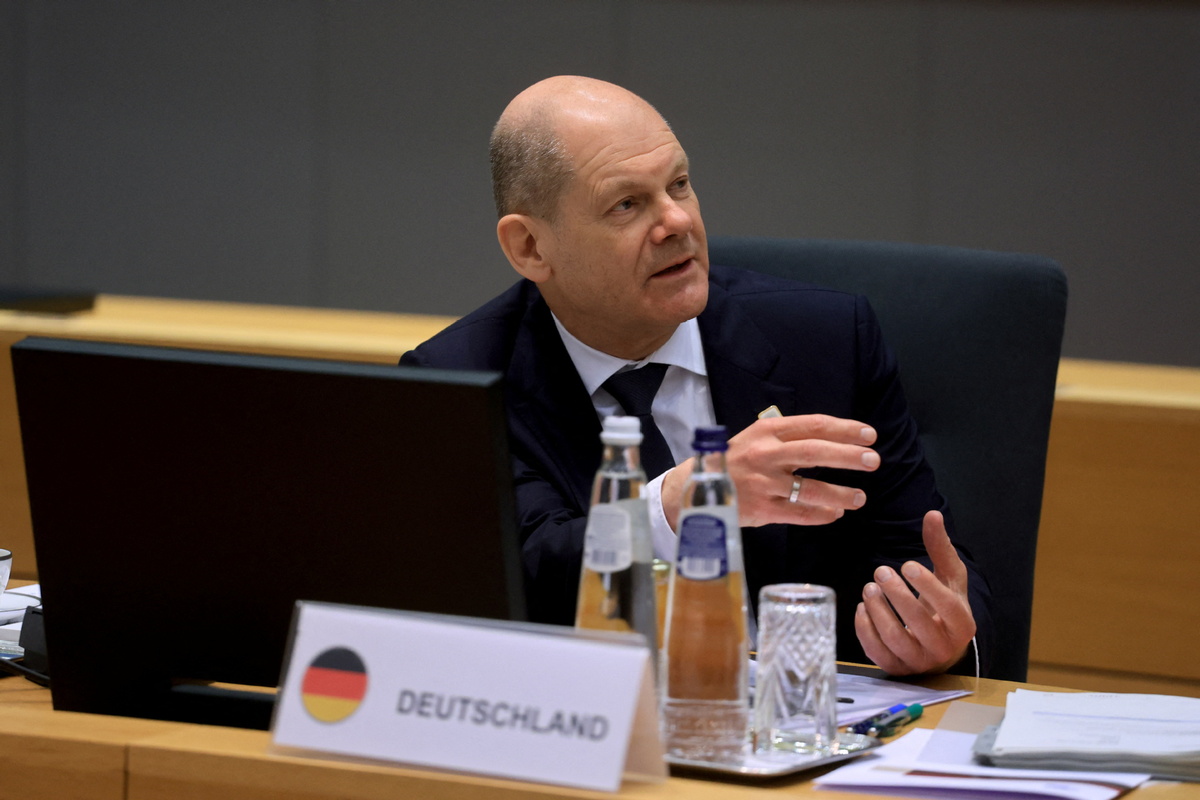
BERLIN - German Chancellor Olaf Scholz on Thursday rejected Russian President Vladimir Putin's announcement of transferring payment to rubles in natural gas deal.
Scholz made the remarks at a press conference after a meeting of the Group of Seven (G7) leaders in Brussels.
In response to Putin's recent announcement that Russia will only accept rubles for natural gas supplied to "unfriendly countries," Scholz said the currency of payment is part of relevant contracts.
He added that the payments were usually made in euros or dollars. "Most agreements and treaties are absolutely precise about the currency in which the payment has to be done," he said.
Putin said Wednesday at a meeting with government members via video link that Russia will reject US dollars or euros and only accept rubles for its natural gas supplied to "unfriendly countries," including the European Union members and the United States.
Putin decided to implement a set of measures to transfer payments to rubles, starting with Russian natural gas in the shortest possible time.
According to a joint statement by G7 leaders issued on Thursday, the G7 countries will take further steps to reduce their reliance on Russian energy and ensure secure alternative and sustainable supplies.
The statement also stressed solidarity and close coordination in case of possible supply disruptions.
It also noted that the Ukraine crisis places global food security under increased pressure.

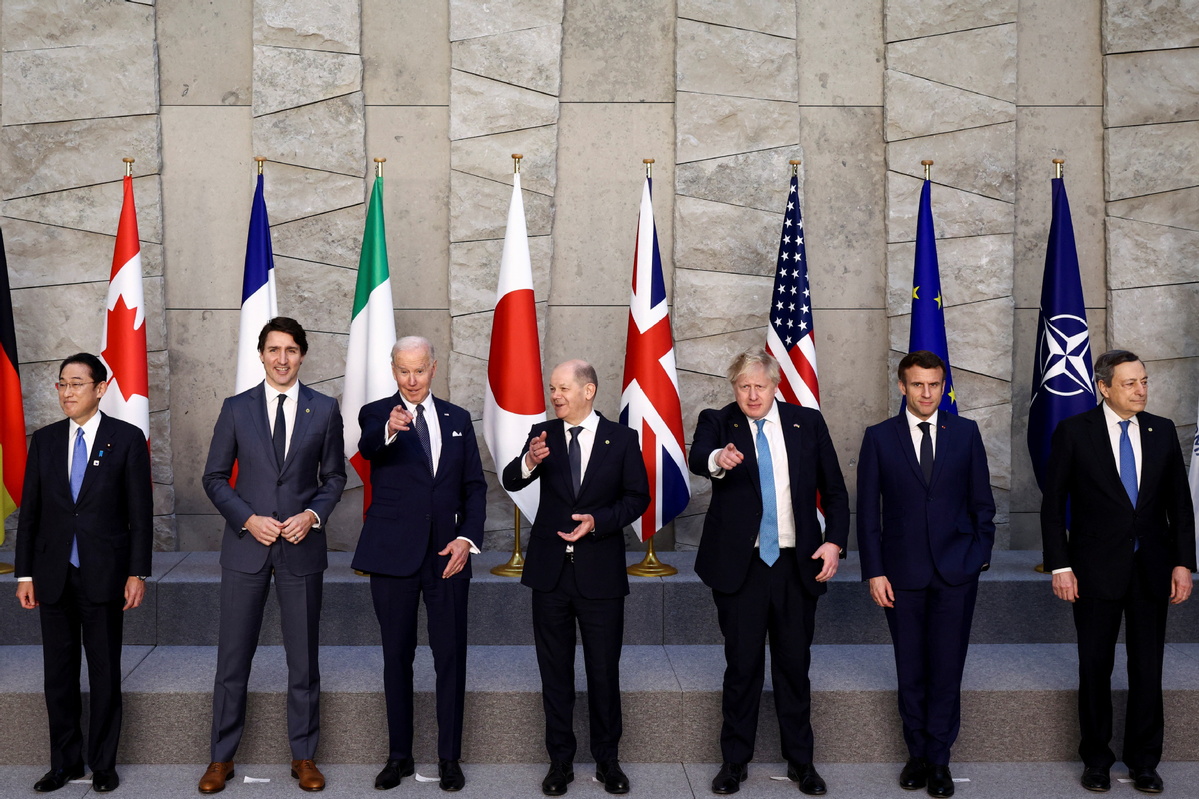
MOSCOW - The extraordinary summit of the North Atlantic Treaty Organization (NATO) held Thursday has confirmed the alliance's desire to contain Russia and prolong the military conflict in Ukraine, the Russian Foreign Ministry said.
"The decision announced at the summit to continue providing political and practical support to the Kiev regime confirms the alliance's interest in continuing hostilities," the ministry's spokesperson Maria Zakharova said in a statement.
NATO members have demonstrated their loyalty to Washington by vowing to follow its orders aimed at ultimately containing Russia, she said, adding Washington once again "disciplined" its allies by pressuring sovereign countries and further erasing Europe's strategic autonomy.
"They silently watched the United States destroy the Anti-Ballistic Missile Treaty, stood aside when Washington withdrew from the Intermediate-Range Nuclear Forces Treaty, allowed the Americans to withdraw from the Treaty on Open Skies," Zakharova said, stressing that NATO members have been slowly destroying the European security system.
NATO is using its "anti-Russian course" as a pretext to increase the purchase of weapons, which are being supplied by the US military industrial complex, she noted.
To cover up Washington's "dirty practices" regarding secret research on biological and chemical weapons, NATO has launched a groundless disinformation campaign accusing Russia of possible provocations, the spokesperson added.

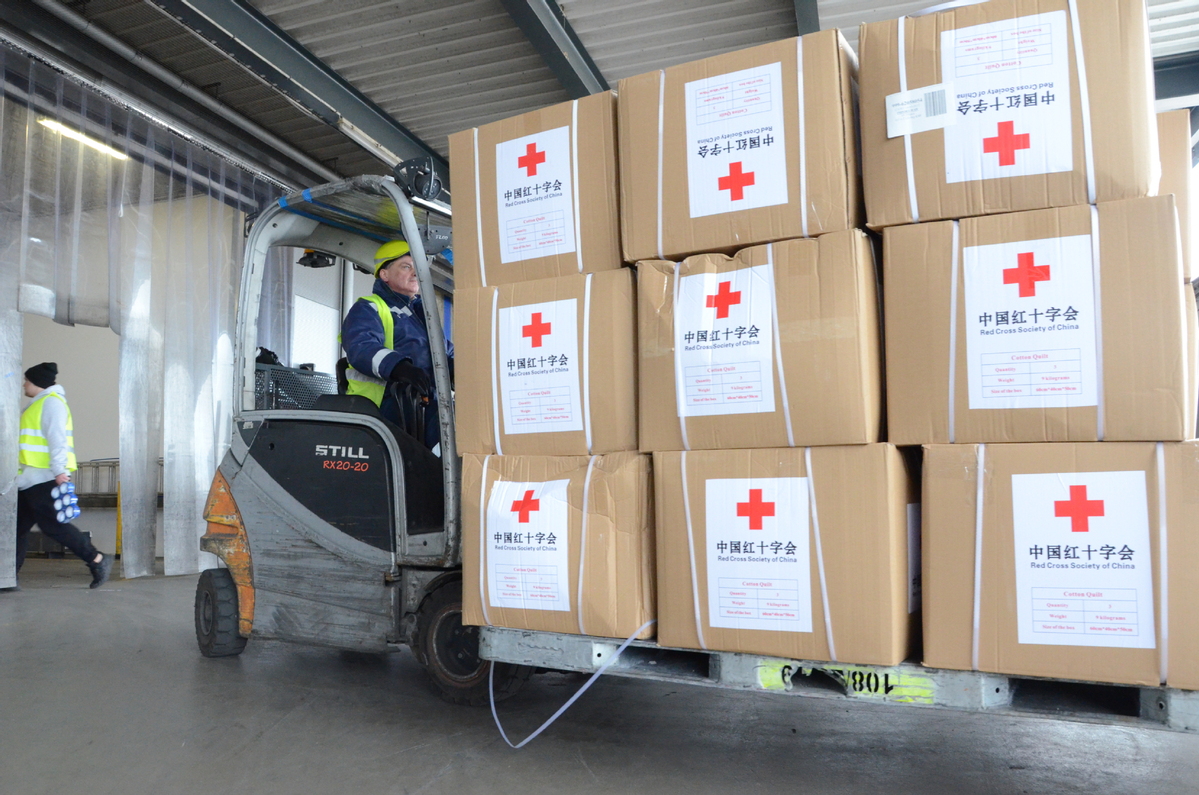
BEIJING - A Chinese military spokesperson on Thursday said the claim that China sent military aid to Russia is nothing but pure fabrication.
Both Chinese and Russian sides have clarified the issue. The rumor repeatedly spread by the United States against China exposed its sinister intention, said Wu Qian, spokesperson for China's Ministry of National Defense.
"We urge the US side to immediately stop this despicable smearing and do some deep reflections on its disgraceful role in the evolving Ukraine crisis," Wu said, adding that the United States should take concrete actions to push for the de-escalation of the Ukraine situation.

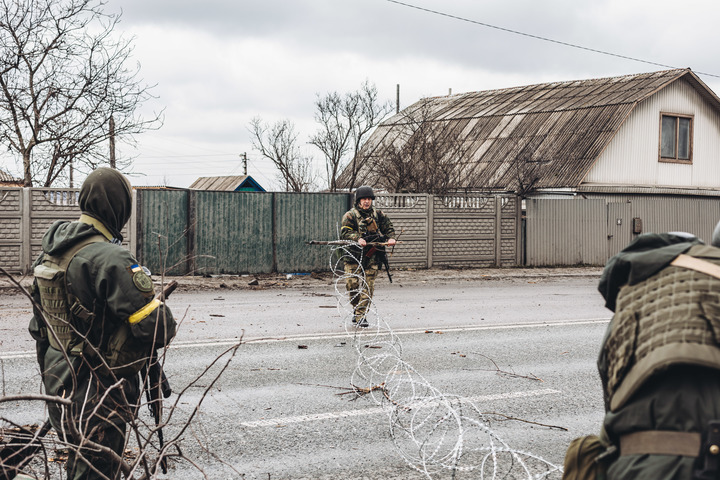
KYIV - Ukraine and Russia conducted the first prisoner swap since the start of the conflict, Ukrainian Deputy Prime Minister Iryna Vereshchuk said on Thursday.
Ten Ukrainian prisoners-of-war held by the Russian military were released in exchange for ten Russian soldiers captured by Ukrainian forces, Vereshchuk said on Facebook.
Besides, Ukraine handed over 11 civilian Russian sailors, who were rescued from a sunken ship near Odesa to Russia in exchange for 19 Ukrainian civilian sailors, Vereshchuk said.


While US leader seeks fresh measures at summits, experts see dangers for EU
US President Joe Biden was busy in Brussels with three summits on Thursday in which he was seeking to rally European allies for more economic action against Russia, but observers believe that a steeper escalation will only make the European Union poorer and weaker.
At a NATO emergency summit that ended early in the afternoon, the alliance's leaders agreed to bolster their eastern flank amid the Russia-Ukraine conflict.
A joint statement released after the meeting said that the allies remain "united and resolute" to oppose Russia's actions, "aid the government and the people of Ukraine, and defend the security of all allies".
They also agreed to set up four more battlegroups in Bulgaria, Hungary, Romania, and Slovakia.
NATO will provide additional support to Ukraine, which includes protective equipment against the potential use of chemical and nuclear weapons in the country as well as additional cybersecurity assistance.
Russia has accused the United States of collaborating on biological weapons programs in Ukraine, allegations that the US called disinformation that could serve as a possible pretext for Russia's potential use of such weapons.
Shortly after the NATO summit, Biden attended a G7 leaders' meeting, called by this year's chair Germany. The leaders of the US, Germany, the United Kingdom, France, Canada, Italy and Japan were expected to announce some sanctions mechanisms.
In the late afternoon, Biden was scheduled to attend a European Council summit focused on energy in relation to the Ukraine crisis.
In his invitation to leaders of the 27 EU member states, European Council President Charles Michel noted that in their recent meeting in Versailles, near Paris, they agreed to phase out their dependency on Russian gas, oil and coal imports as soon as possible.
While the US and the UK have announced a plan to phase out Russian energy, EU member states are sharply divided in their approaches, fearing that a ban on Russian energy will cause huge damage to their economies.
German Chancellor Olaf Scholz said on Wednesday that an immediate ban on Russian energy would trigger a recession in Germany and across Europe.
US National Security Adviser Jake Sullivan told reporters on Wednesday that the US is looking to surge supplies of liquefied natural gas to Europe to decrease its dependency on Russia gas.
"Tomorrow, I will discuss with President Biden how to prioritize LNG deliveries from the United States to the European Union in the coming months," European Commission President Ursula von der Leyen said on Wednesday, before meeting with Biden on Thursday.
Ukrainian President Volodymyr Zelensky spoke virtually to the NATO summit and was expected to do the same at the EU summit.
"The crisis in Ukraine has resulted in a significant erosion of European strategic autonomy to the US which has used the situation as a means to increase its influence over the continent," said Tom Fowdy, a British international relations analyst. "We see that Germany has all but discarded the balanced foreign policy legacy of Angela Merkel," he said.
"While many of these responses are inevitable to the situation, it is quite obvious Europe will be poorer and weaker."
Martin Jacques, a former senior fellow at Cambridge University's Department of Politics and International Studies, said: "Biden is clearly very keen to mobilize European countries against the Russian action. So far he has been very successful with big policy shifts in many countries, most notably Germany."
He said the summits were aimed at cementing "US-European relations in this endeavor with increased defense spending, more military aid to Ukraine, and further sanctions against Russia".
After Brussels, Biden is scheduled to visit Poland on Friday.
Agencies contributed to this story.

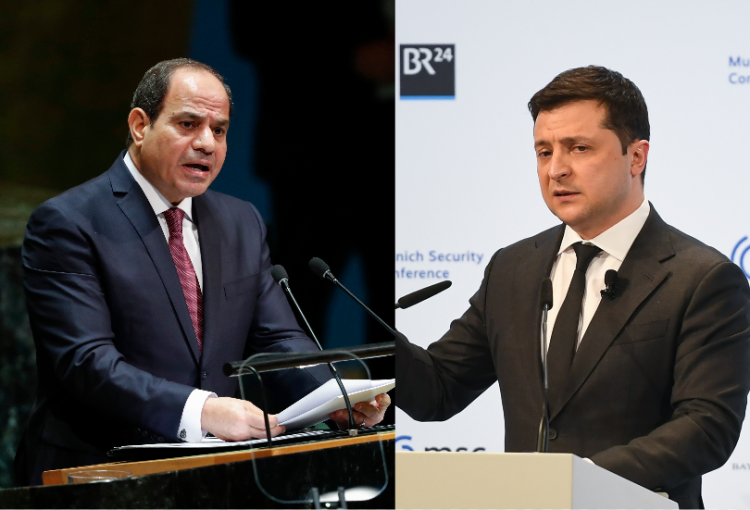
CAIRO - Egyptian President Abdel-Fattah al-Sisi received on Thursday a phone call from his Ukrainian counterpart Volodymyr Zelensky during which they discussed the latest developments of the ongoing Russia-Ukraine conflict, said the Egyptian presidency.
Zelensky briefed Sisi on "the developments in the course of negotiations" relating to the conflict, said Egyptian presidential spokesman Bassam Rady in a statement.
During the conversation, the Egyptian president stressed the necessity of giving priority to dialogue and diplomatic solutions, "affirming Egypt's support for all endeavors that would speed up the political settlement of the crisis" through discussions and negotiations.
Sisi said that Egypt is following "with great concern" the successive developments of the crisis and the consequent deterioration of the humanitarian situation in Ukraine.
For his part, Zelensky expressed appreciation for the efforts made by Egypt to continue hosting Ukrainian tourists in Egyptian resorts, providing them with all means of assistance and facilitating the procedures for their return to Ukraine's neighboring countries.
The ongoing Russia-Ukraine conflict started on Feb 24 when Russian President Vladimir Putin authorized "a special military operation" against Ukraine.
The United Nations recently said more than 3.6 million Ukrainians had fled their country due to the conflict.

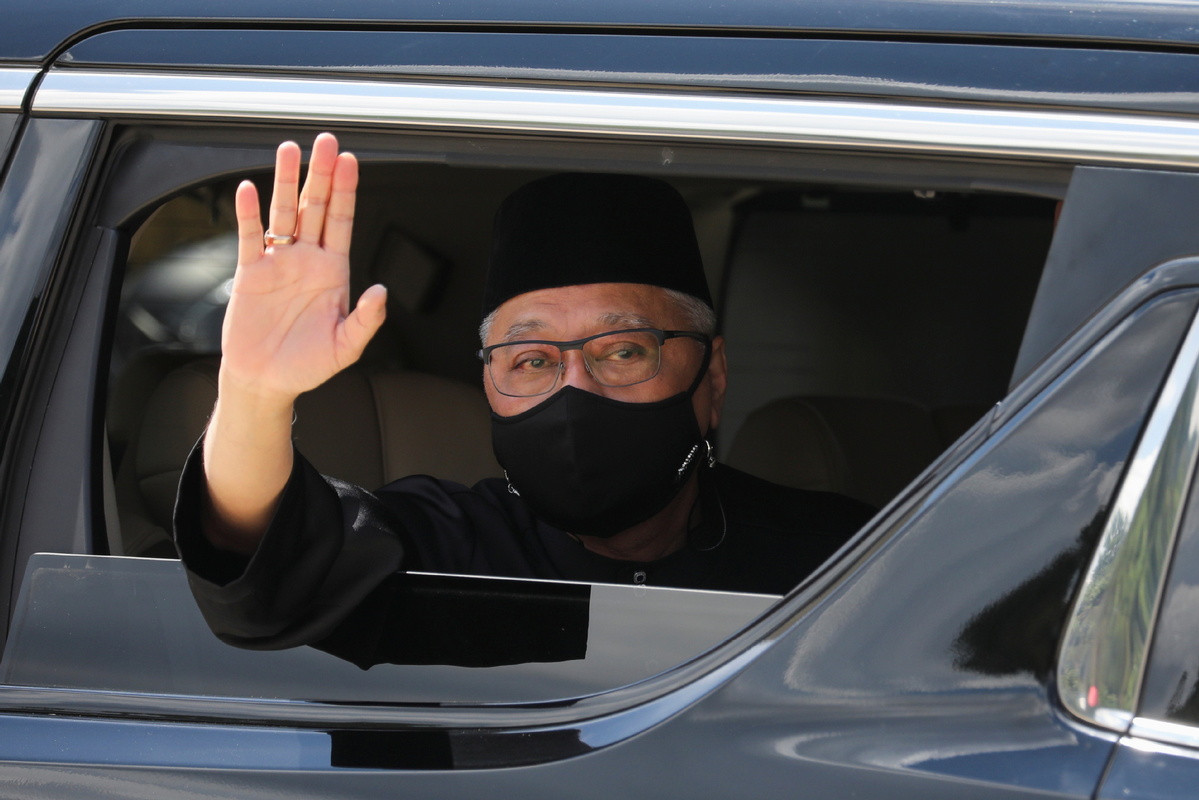
Malaysia's opposition to unilateral sanctions against Russia reflects the principle of noninterference upheld by the Association of Southeast Asian Nations, analysts say.
The country is one of the founding members of ASEAN. The regional bloc has not issued an official position on the sanctions in relation to the conflict in Ukraine, but individual members have made their positions clear.
Malaysian Prime Minister Ismail Sabri Yaakob said on Tuesday on an official visit to Vietnam that both nations do not support unilateral sanctions. "We recognize restrictions that could be imposed only by the UN Security Council," Ismail Sabri said at a news briefing.
"We discussed the Russian-Ukrainian conflict and agreed that Malaysia and Vietnam will remain neutral on this issue. As for sanctions against Russia, we do not support them."
Earlier this month, Malaysian Foreign Minister Saifuddin Abdullah said that his nation has no plans to impose sanctions against Russia, noting that "innocent people will be the ones who suffer" from sanctions.
Saifuddin also told the members of the Malaysian parliament that the country, as a member of the UN Human Rights Council, has asked for a cease-fire between Russia and Ukraine and for the continuation of peace negotiations.
Azmil Tayeb, senior lecturer at the School of Social Sciences at Universiti Sains Malaysia, said Malaysia's decision to remain neutral is "based on the ASEAN's noninterference principle, though that's not the official position of ASEAN as an organization".
Policy of noninterference
James Chin, professor of Asian Studies at the University of Tasmania in Australia, said: "Malaysia always tried to be neutral when it comes to conflict in other countries. It is also consistent with the longstanding ASEAN policy of noninterference in domestic affairs."
Malaysia has voted in favor of a UN General Assembly resolution demanding that Russia "immediately, completely and unconditionally withdraw all of its military forces from the territory of Ukraine within its internationally recognized borders". But Chin said that Malaysia's support for the UN resolution is a "separate issue" from the imposition of unilateral sanctions against Russia.
Apart from Malaysia and Vietnam, Indonesia has also stated that it does not support unilateral sanctions against Russia. Singapore is the only Southeast Asian country that has sanctioned Russia. The Singaporean government prohibited all financial institutions in the city-state from dealing with Russian banks.
Neither Russia nor Ukraine is a major trade partner of Malaysia. But Moscow has exported weapons and defense armaments to Malaysia and this might have affected Malaysia's position on sanctions, according to Oh Ei Sun, a senior fellow at the Singapore Institute of International Affairs.
Russia has also agreed to train and send a Malaysian astronaut to the International Space Station.
Oh said that another consideration is that Russia is a major exporter of fertilizer-a key input in oil palm farming, which is one of Malaysia's biggest industries.
"Malaysia can't just cut off financial ties (with Russia) … it can't afford to (impose) sanctions," he said.







