



Doctor helps people breathe easier at high elevations









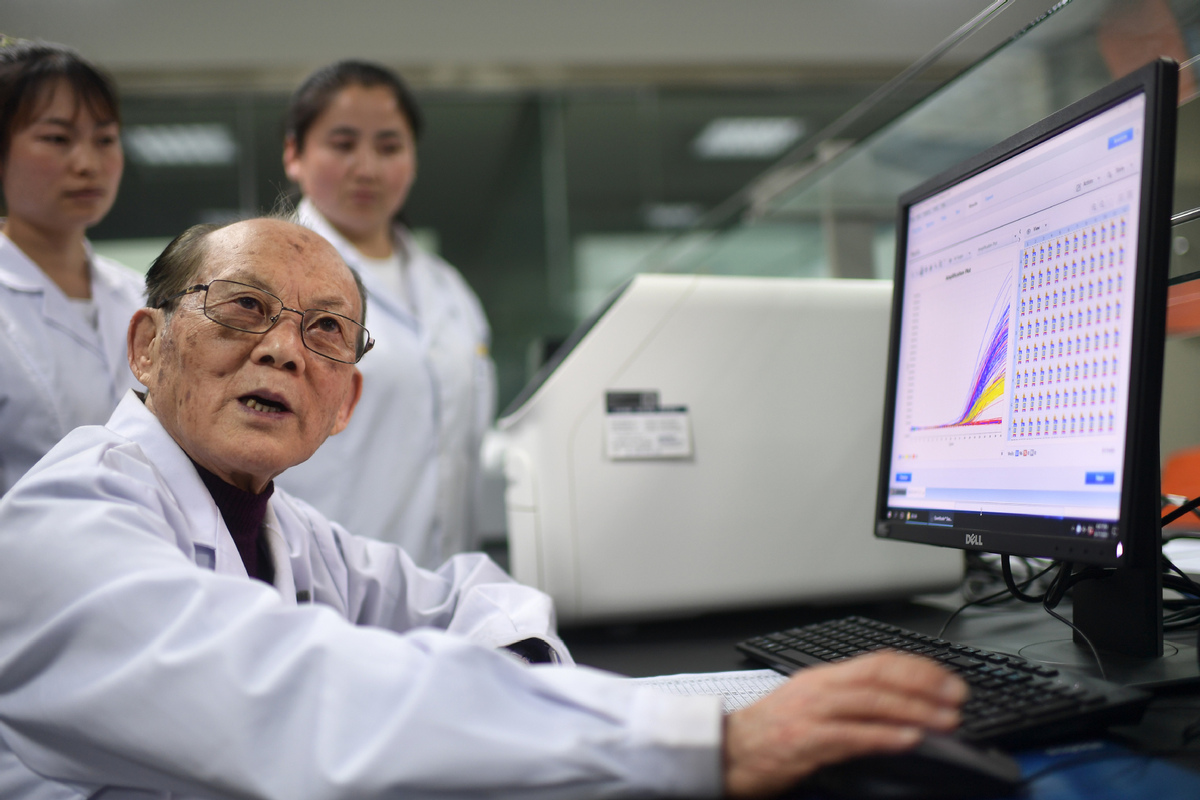
When he noticed that altitude sickness was also common among border soldiers and other migrants who came to take part in the region's economic development, he decided to look for a solution.
"To develop the region, you first had to solve the problem of adaptation to the high altitude," he said.
For decades, Wu spent his time observing and surveying the local population. His hard work paid off.
During construction of the Qinghai-Tibet Railway, the world's highest railway, in the early 2000s, Wu and his team devised a protection-and-first-aid protocol that allowed all 140,000 workers to avoid suffering the effects of acute altitude sickness.
Liu Fengyun, deputy director of the central laboratory of the Qinghai Province Cardiovascular and Cerebrovascular Disease Specialist Hospital, said no casualty during the construction was a "miracle".





- Cargo ship capsizes off Hainan coast, two crew missing
- China's Shenzhou XXI astronauts in good health, science goals on track after 3 months in space
- Sixth episode of photo series explores stunning landscapes across Hebei
- 19 people jailed over deadly 2023 Beijing hospital fire
- Shanghai launches first Pudong new year cultural festival
- Number of drug-related cases in China drops significantly in 2025