
The China Story
at your Fingertips
OPEN

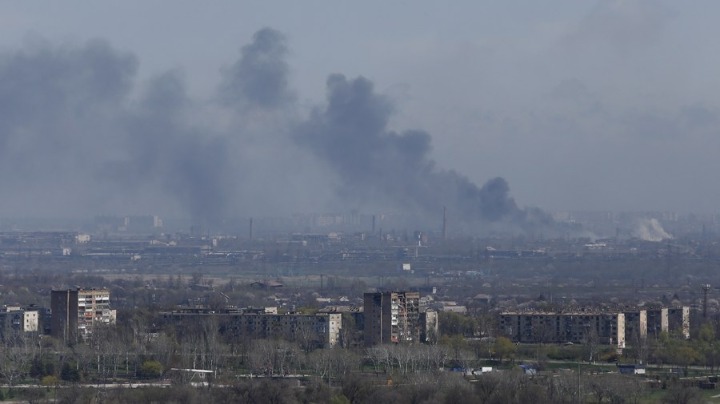
Russia's President Vladimir Putin says his country will continue its yearlong "special military operation" in Ukraine, and he accused the US-led NATO alliance of fanning the flames.
Russia-Ukraine conflict would have cost world economy $1.6 trillion in 2022, according to a study published by the German Economic Institute.

ROME -- World food commodity prices made a significant leap in March to reach their highest levels, as the conflict between Russia and Ukraine continues to push up energy costs and cause supply chain slowdowns.
The monthly food prices index, released Friday by the United Nations Food and Agriculture Organization (FAO), rose 12.6 percent to reach 159.3 points in March, compared to a baseline of 100 points for the average in 2014-2016 (adjusted for inflation.)
This is by far the highest total in the history of the index, which was launched in its current form in 1990.
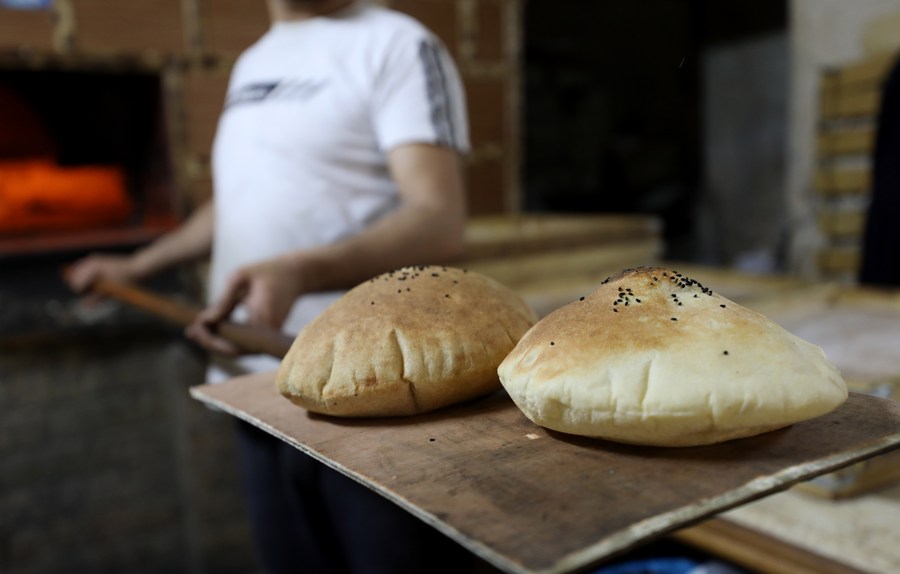
All of the five sub-categories in the index rose, with prices for grains and cereals - the largest component in the index - climbing a stunning 17.1 percent.
The FAO said the main factor behind this rise is that Russia and Ukraine are both major producers of wheat and coarse grains, and prices for these have soared due to the conflict.
Concerns over crop conditions in the United States were also a factor, FAO said. Rice prices, meanwhile, were mostly unchanged compared to February.

Meanwhile, prices for vegetable oils climbed 23.2 percent due to rising transportation costs and reduced exports, again due to the Russia-Ukraine conflict.
The other sub-indexes were all higher, but rose less dramatically. Dairy prices were 2.6 percent higher, meat prices climbed 4.8 percent, and sugar prices by 6.7 percent. The conflict and related issues were also factors behind these price rises, said the FAO.
The FAO's Food Price Index is based on worldwide prices for 23 food commodity categories, covering prices for 73 different products compared to a baseline year.



MOSCOW/KYIV -- The Russian Defense Ministry on Friday said it did not launch any "rocket attack" on a railway station in the city of Kramatorsk, which local authorities said had killed at least 39 people.
Allegations by the Ukrainian side that Russia carried out the attack are " provocation and absolutely untrue," the ministry said in a statement.
"On April 8, the Russian armed forces did not have any firing missions in the city of Kramatorsk," it said.
The Russian Defense Ministry's statement noted that the Tochka-U tactical missile system is not operational in "the Donetsk and Lugansk People's Republics" or in Russia but is actively used by the Ukrainian military.
At least 39 people, including four children, were killed Friday in the attack, which targeted a railway station in Kramatorsk town in Donetsk, spokesman for Ukraine's Security Service Artem Dekhtyarenko said earlier Friday.
Meanwhile, head of the Donetsk military-civilian administration Pavlo Kyrylenko said at least 87 people were injured in the attack.

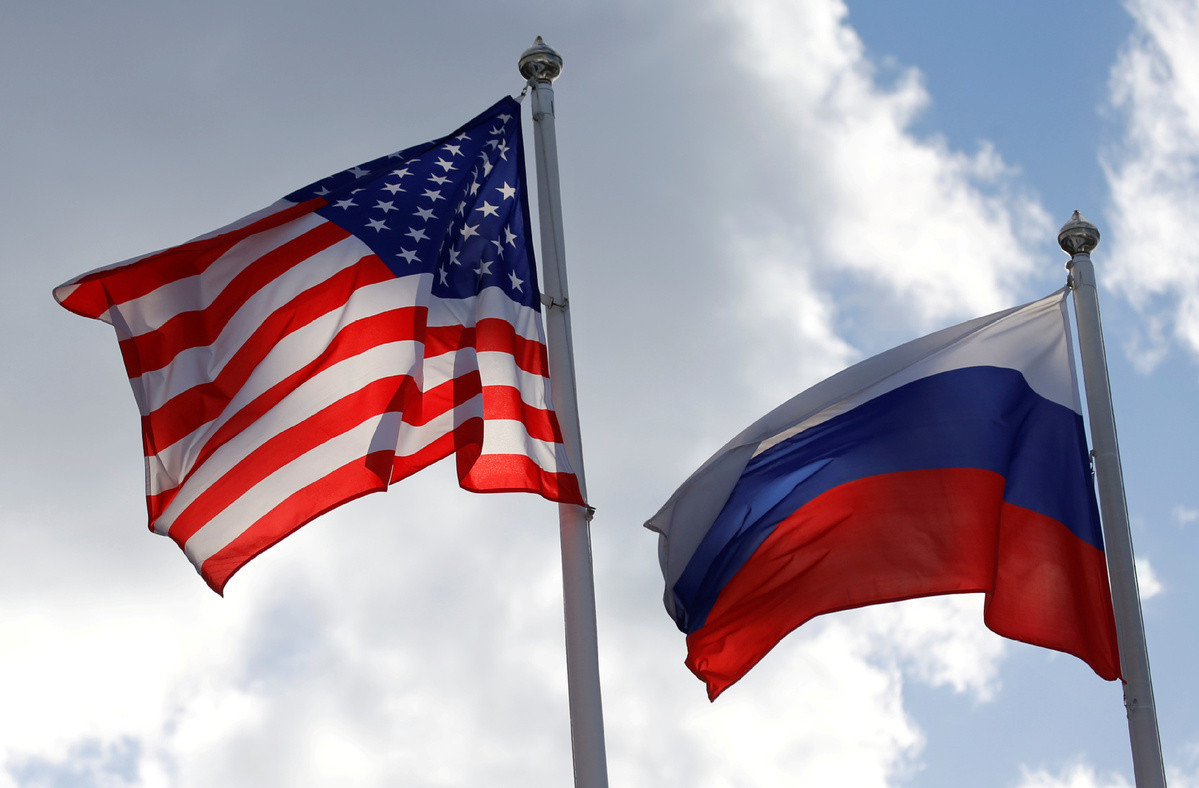
MOSCOW - The Russian Foreign Ministry said Thursday that Moscow would retaliate against Washington's latest package of sanctions, adding that the response would not necessarily be symmetrical.
"We will announce retaliatory measures in the near future... the blame for the destruction of Russian-US relations lies entirely with Washington," it said in a statement, citing Alexander Darchiev, who heads the ministry's North American affairs department.
Darchiev added that Washington's actions have become a routine practice, and the recent decision to impose a fresh package of sanctions against Russian officials and the country's financial sector show that the United States had clearly ran out of restrictive measures.
"Not a single aggressive attack against Russia will go unanswered," he said, adding that this would only unite the Russian people, and end in "a humiliating defeat" for the enemy.

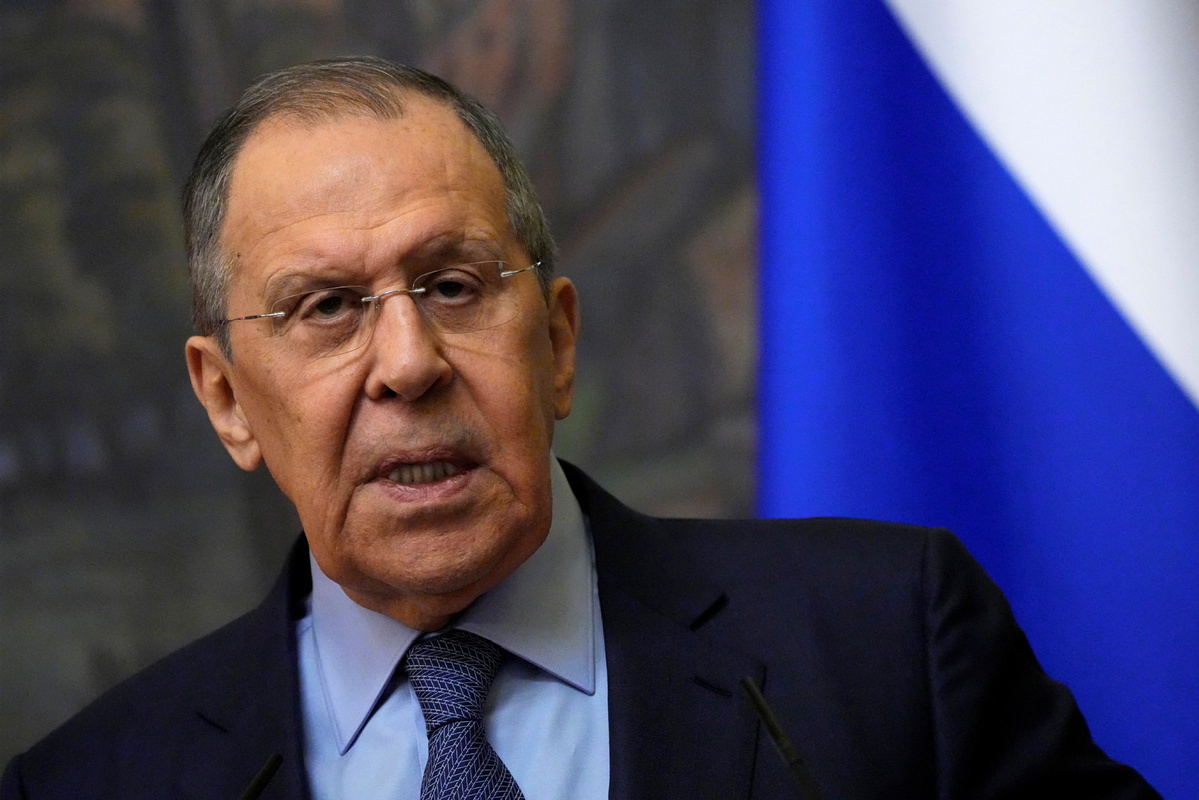
MOSCOW - Russian Foreign Minister Sergei Lavrov said Thursday that the draft agreement submitted by Ukraine on Wednesday demonstrated a shift in Kyiv's negotiating positions.
"Yesterday, the Ukrainian side presented its draft agreement to the negotiating team. It showed a departure from key provisions which were presented at the meeting in Istanbul on March 29," the Russian Foreign Ministry said in a statement citing Lavrov.
According to the minister, the previous document clearly stated that Ukraine's security guarantees would not apply to Crimea and Sevastopol, but this principle was absent in the revised draft.
Lavrov added that Moscow would nonetheless continue the negotiation process promoting its agreement, which includes the country's key demands.

China urged parties concerned about the Ukraine issue to create the necessary environment and conditions to promote peace talks rather than fan flames, State Councilor and Foreign Minister Wang Yi said when he had a phone call with French President's Diplomatic Counselor Emmanuel Bonne on Thursday.
Wang said one can't call for a ceasefire on one hand while using the other to continuously send advanced weapons, which leads to further escalation of conflicts. Claiming to support dialogue and negotiation yet imposing unilateral sanctions without limits should be avoided, Wang added.
Bonne said France attaches great importance to China's views on the current situation and would make concerted efforts with China to promote peace talks, achieve a ceasefire, and resolve the crisis.
France continues to show their commitment to creating and safeguarding peace by carrying out communication with parties concerned about the Ukraine issue over major affairs including Ukraine achieving neutrality and obtaining security guarantees, he added.
France upholds an independent foreign policy and will not fall into the logic of bloc politics, Bonne said.
In response, Wang said China supports France upholding the European Union's strategic autonomy and appreciates France's disapproving of bloc politics, saying that China also will not allow the resurgence of the Cold War mentality.
China also looks forward to an early ceasefire and the restoration of peace and has been making unremitting efforts to help this end in its own way, he added.
Noting that the root cause of the Ukraine issue lies in the imbalance of the European security, Wang said only by rebuilding a balanced, effective, and sustainable European security mechanism that lies in the principle of indivisible security, can Europe realize lasting stability and security.
The two sides expressed deep worries over the spillover effects of the Ukraine crisis. Wang said the international community should work together to prevent global food shortage and an eventual humanitarian crisis.
Bonne introduced France's initiative on tackling the global food security crisis and hoped France and China would strengthen their coordination in multilateral institutions, including the Group of 20 and the United Nations Food and Agriculture Organization.

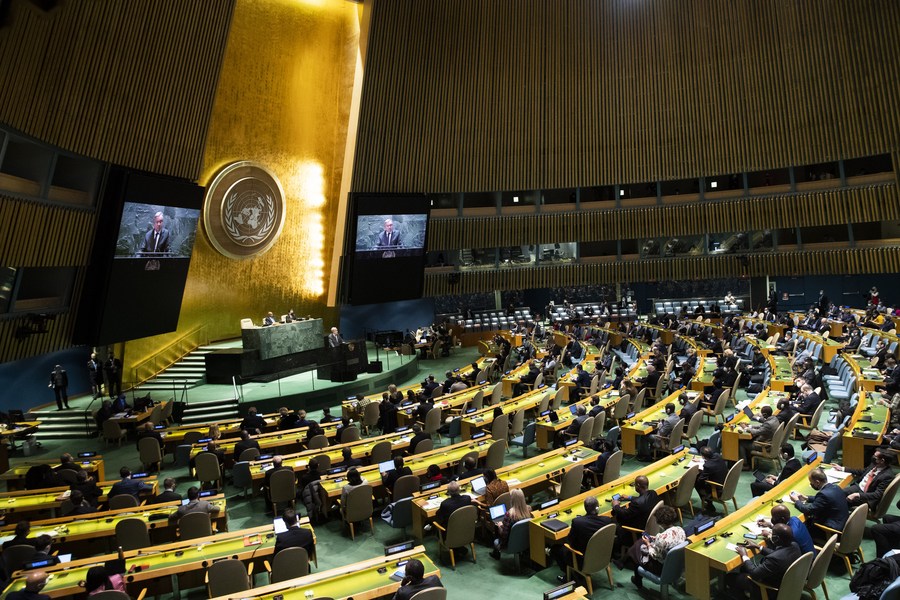
The United Nations General Assembly on Thursday adopted a resolution that allows the assembly to suspend the membership rights of the Russian Federation on the UN Human Rights Council.
The resolution was approved with two-thirds of the eligible members voting in favor in the US-led push, which garnered 93 votes in favor, 24 against and 58 abstentions.
China voted against the resolution.
The resolution will deprive a country's legitimate membership in the Human?Rights Council, said Zhang Jun, China's permanent representative to the UN.
"Such an important matter must be handled with the utmost delicacy, calmly, objectively and rationally, on the basis of facts and truth."
Zhang said the resolution "was not drafted in an open and transparent manner, nor did it follow the tradition of holding consultations within the whole membership to heed the broadest opinions".
"Under such circumstances, such a hasty move at the General Assembly, which forces countries to choose sides, will aggravate the division among member states and intensify the contradictions between the parties concerned. It is like adding fuel to the fire, which is not conducive to the de-escalation of conflicts, and even less so to advancing the peace talks," he said.
Zhang said approaching membership on the Human Rights Council in such a way "would set a new and dangerous precedent, further intensify the confrontations in the field of human rights, bring a greater impact on the UN governance system and produce serious consequences".
"Therefore, China will have to vote against this draft resolution," Zhang said before the vote.
"On the Ukraine issue, China always believes that the sovereignty and territorial integrity of all countries, including Ukraine, should be respected, that the purposes and principles of the UN Charter should be upheld, that the legitimate security concerns of all countries should be taken seriously, and that all efforts conducive to a peaceful settlement of the crisis should be supported," he said.
He reiterated that putting an early end to the fight is the urgent expectation of the international community. "It is also what China is striving for. China supports all initiatives and measures that will help ease the humanitarian crisis in Ukraine," he said.
China calls on all parties concerned to respect international humanitarian law and take concrete actions to ensure the safety of civilians and protect the basic rights and humanitarian needs of women, children and other vulnerable groups, Zhang said.
"The reports?and images of civilian deaths in Bucha (in Ukraine) are disturbing. The relevant circumstances and specific causes of the incident must be verified and established. Any accusations should be based on facts. Before the full picture is clear, all sides should exercise restraint and avoid unfounded accusations," Zhang said.
Zhang emphasized that dialogue and negotiation are the only way out of the Ukraine crisis. China always believes that the international community should remain rational and strengthen unity instead of setting up obstacles, let alone "adding fuel to the fire" by aggravating confrontations, he said.
"We regret to see that the conflict has caused civilian casualties and massive displacements and that the all-dimensional, indiscriminate and bottomless sanctions have brought serious, negative impact on the post-pandemic recovery, creating new and complex problems, reversing hard-won development gains, and making the realization of the 2030 Agenda even more difficult," said Zhang.
He pointed out that life amid the COVID-19 pandemic has become even more difficult, and while developing countries are not parties to the conflict, they are forced to get involved in this geopolitical competition and great-power rivalry, which is unfair.
"Some individual countries, while talking loudly about peace, are obsessed with creating bloc confrontations, including provoking tensions in the Asia-Pacific region. This self-contradictory and inconsistent approach is very dangerous and worrying and should be resolutely rejected," said Zhang.
China firmly opposes the politicization or instrumentalization of human rights issues, he said. It opposes selective and confrontational approaches, double standards on human rights issues, and the exertion of pressure on other countries in the name of human rights, he said.
"China calls on all parties to work together in the same direction, so as to create opportunities for peace and prospects for negotiation. China will continue to hold an objective and impartial position and play its responsible and constructive role in this regard," said Zhang.

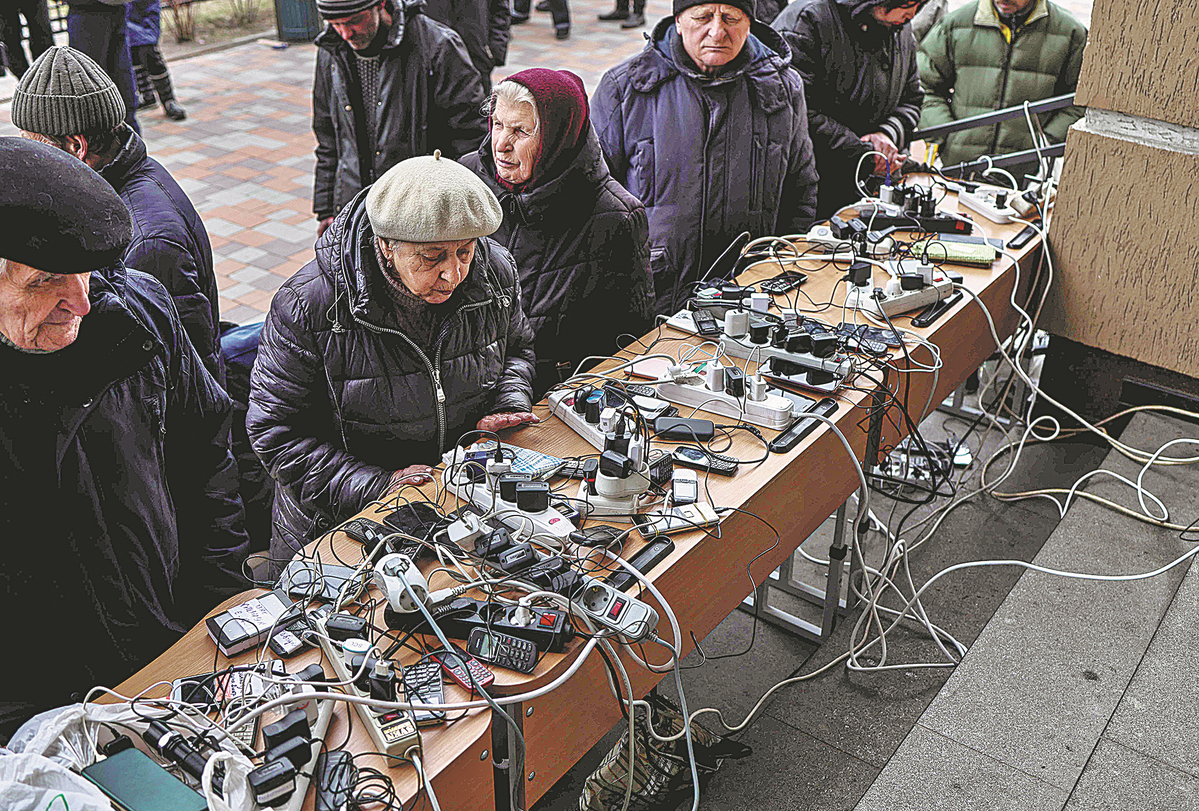
A senior Russian diplomat said the latest sanctions imposed by the United States on Russian banks are a direct attack on the citizens of Russia and also are damaging the global economy.
Anatoly Antonov, Russian ambassador to the US, said the Biden administration's nonstop sanctions show Washington's true aspirations. "An example is the restrictions against Sberbank and Alfa-Bank, where most Russians keep their savings. This is a direct attack on the Russian population, ordinary citizens," Tass news agency quoted him as saying.
By imposing new sanctions, Washington continues to damage the global economy, Antonov said, adding that the attempts of the US to make it difficult for Russia to service public debt are puzzling.
The US, as well as the United Kingdom, announced new sanctions against Russia on Wednesday. The White House also unveiled measures targeting Maria Vorontsova and Katerina Tikhonova, two adult daughters of Putin, plus the wife and daughter of Foreign Minister Sergey Lavrov and members of Russia's Security Council.
When declaring "full blocking" sanctions on Sberbank and Alfa-Bank, the White House said all new US investment in Russia was now prohibited.
The UK froze the overseas assets of Sberbank and Credit Bank of Moscow, and vowed to eliminate all Russian oil and gas imports by the end of the year.
The European Union is also poised to implement a fifth round of sanctions cutting off Russian coal imports-and European Council President Charles said that it must also "sooner or later" impose oil and gas sanctions.
Western powers have already pummeled Russia with debilitating economic sanctions, which forced Moscow on Wednesday to make foreign debt payments on dollar-denominated bonds in roubles, raising the prospect of a potential default.
Their actions followed an international outcry as Ukraine said its forces found hundreds of dead civilians around Kyiv, including the town of Bucha, after the pullout of Russian troops.
The Kremlin denies responsibility and has claimed Kyiv staged the civilian deaths-with Putin on Wednesday accusing Ukrainian authorities of "crude and cynical provocations" in Bucha.
Peace talks between the sides have so far gone nowhere, although Moscow says it is ready to continue.
The Russian withdrawal from areas around Kyiv and farther north is part of a shift toward Ukraine's southeast, in a bid to create a land bridge between Crimea and the Donbass region, military analysts believe.
Biden's National Security Advisor Jake Sullivan said on Monday that Russia probably plans to deploy tens of thousands of soldiers in eastern Ukraine as it shifts its focus to the country's south and east.
The goal is likely to "surround and overwhelm" Ukrainian forces in the region, Sullivan said.
However, NATO Secretary General Jens Stoltenberg said there was no sign Putin had dropped "his ambition to control the whole of Ukraine".
He added, "We are now in the critical phase of the war, which is that Russia is moving forces out of the north to reinforce them, to resupply them, to rearm them, and then to move them into the east, where we are expecting a major offensive."
Agencies contributed to the story.

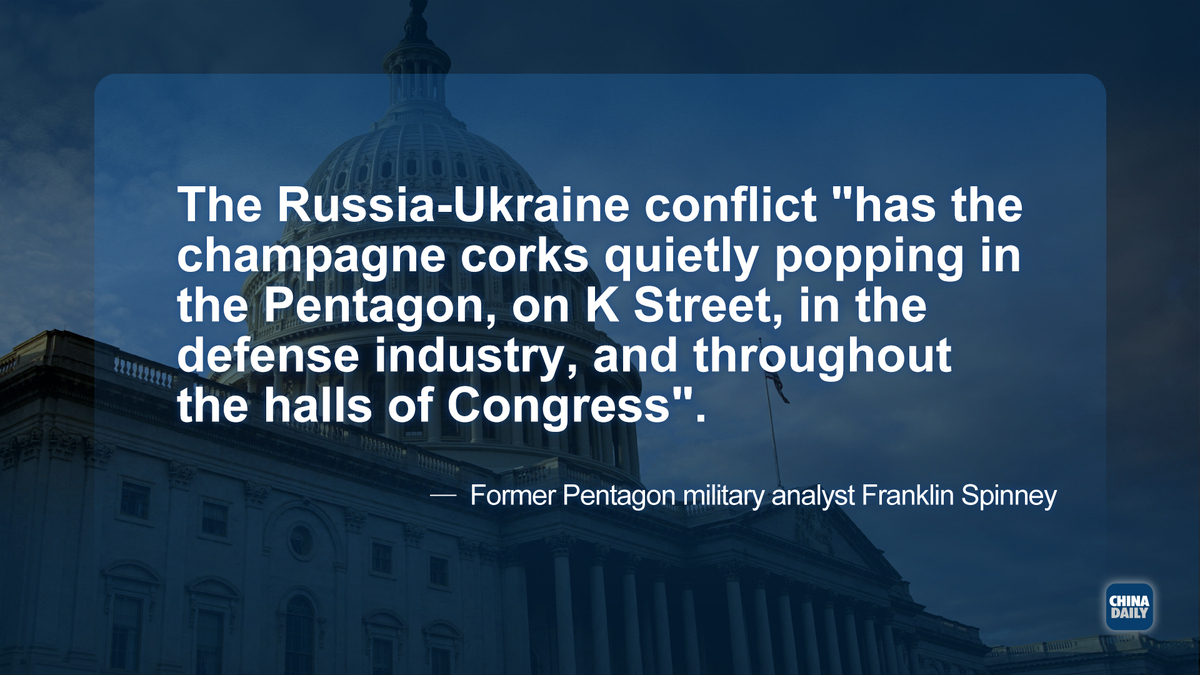
Franklin Spinney, a former Pentagon military analyst, published in his blog an article titled "How the Narcotic of Defense Spending Undermines a Sensible Grand Strategy" which states that the Russia-Ukraine conflict "has the champagne corks quietly popping in the Pentagon, on K Street, in the defense industry, and throughout the halls of Congress".
The people celebrating because of the big gain that comes along with the wars and conflicts are not only the weapon makers, but also US politicians, who are big beneficiaries of current crises, whether in Ukraine or in the Middle East.
US politicians tend to be the decision makers for issues such as war versus peace.
There is evidence that it can be in their personal interest to continue these wars and conflicts rather than prevent them to ensure the continuation of their fiscal profits and gains.
Congressmen personally invest in defense contractors
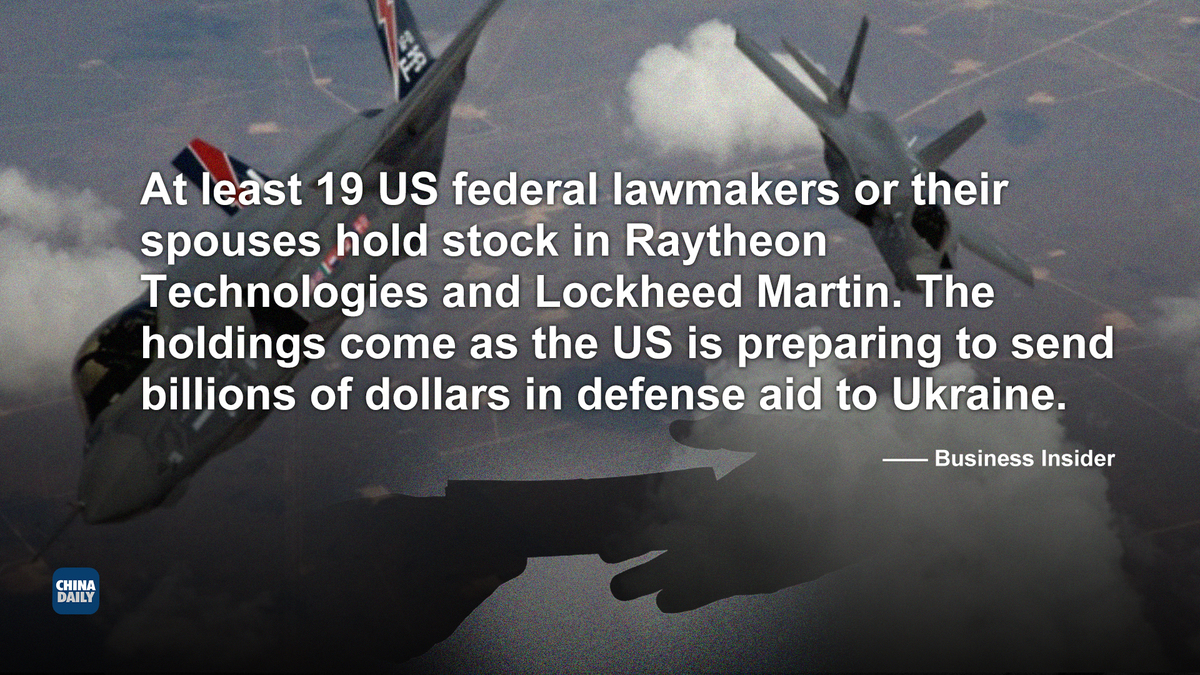
A report by Business Insider revealed that at least 19 members of Congress or their spouses hold stock in the companies making weapons that are heading to Ukraine.
The US and NATO have sent more than 17,000 anti-tank weapons to Ukraine, including Javelins, according to The New York Times.
Website Military.com said these members of Congress could make a profit on US arms shipments to Ukraine.
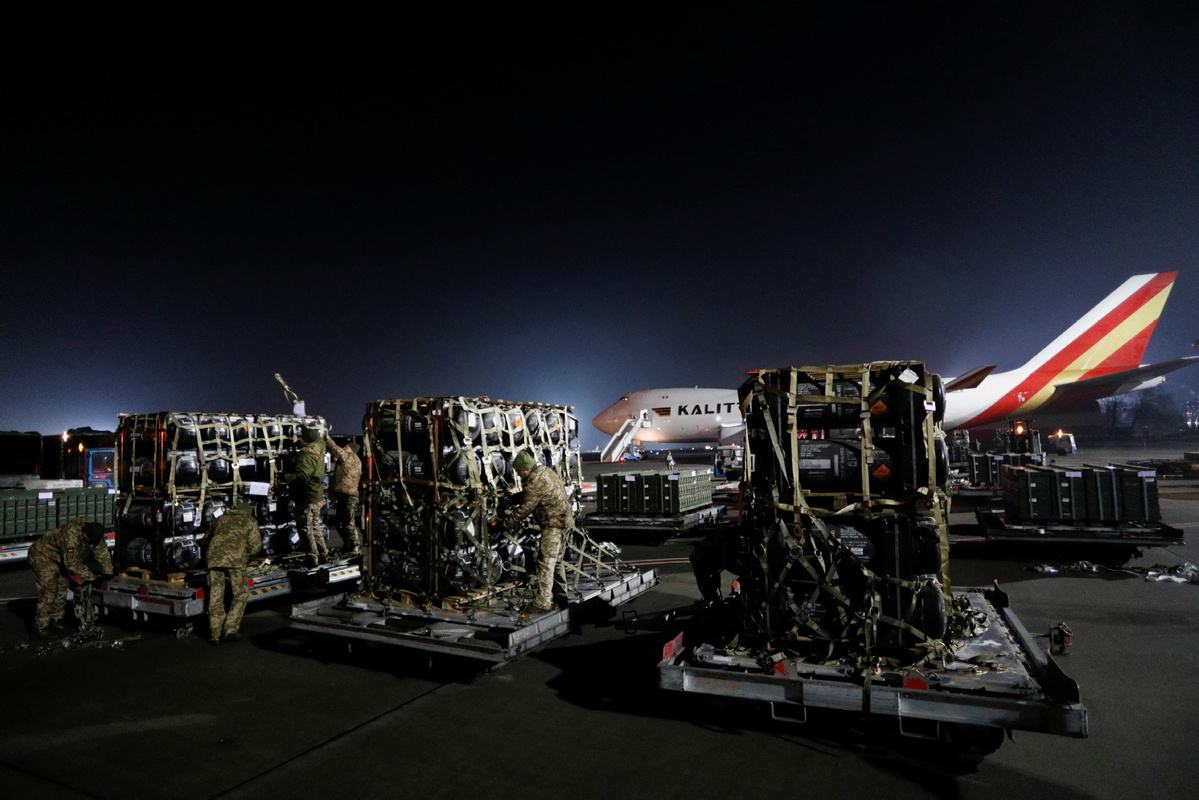
According to Business Insider, these US federal lawmakers or their spouses hold stock in Raytheon Technologies and Lockheed Martin. The holdings come as the US is preparing to send billions of dollars in defense aid to Ukraine. Both companies' stocks - especially that of Lockheed Martin - have risen since the Russian military operation in Ukraine began on Feb 24.
Business Insider reported that among those investing in the defense contractors is Republican Representative Marjorie Taylor Greene of Georgia, who bought between $1,001 and $15,000 in Lockheed Martin shares on Feb 22.
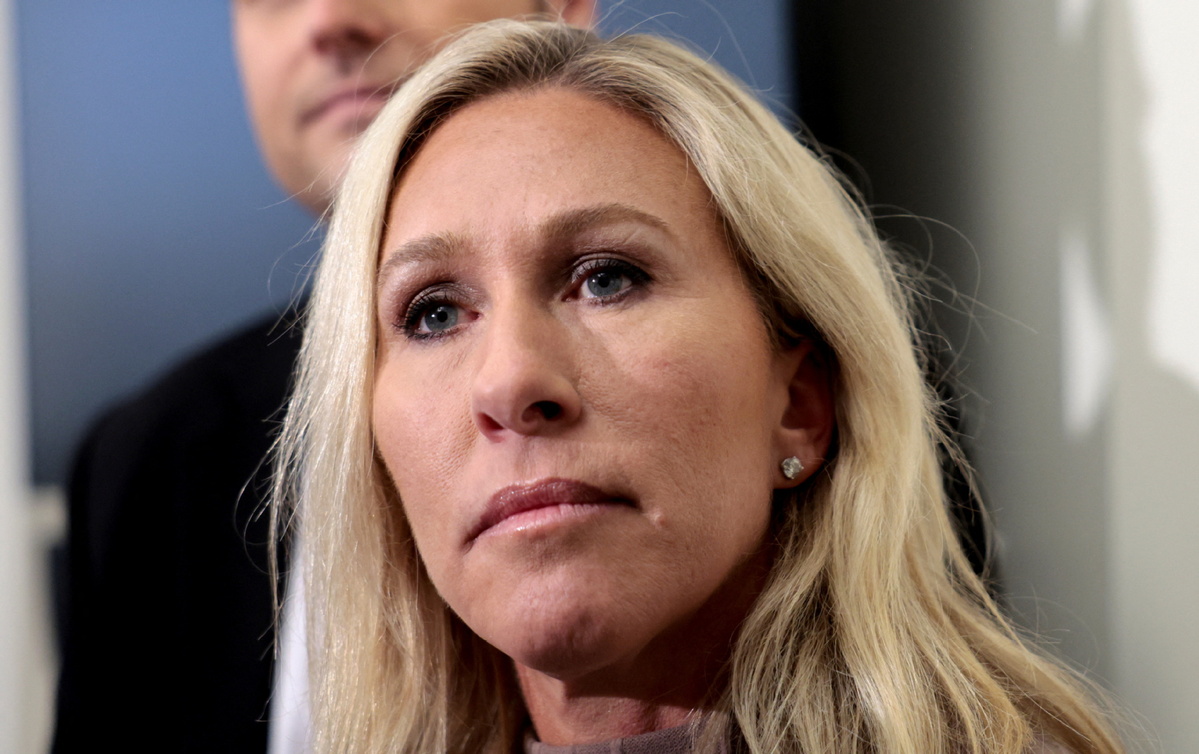
Two days after her purchase, Greene wrote in a Twitter thread: "War is big business to our leaders."
"Tragically, America's foreign policy strategy over the past 20 years has been more for corporate profit and not for America's security and our own national interest," she wrote.
Politicians involved in the military-industrial complex
US military-industrial complex (MIC) is a gigantic interest group formed after World War II by US defense contractors, the government, and the Capitol. Multispectral individuals and institutions of arms manufacturing companies, the Pentagon and Congress are intertwined in the MIC and promote militarization, arms sales, and political power.

The US had tried to incite wars around the world with the MIC and has successively launched wars in Afghanistan, Iraq and Syria. According to statistics released by the Security Policy Reform Institute, an American independent think tank, Lockheed Martin and the other four top defense contractors made total revenue of over $2 trillion from what Washington had invested in the war in Afghanistan.
According to Franklin Spinney, who served for nearly 30 years as an analyst at the US Department of Defense's Office of Program Analysis and Evaluation, the MIC is partly responsible for and actively benefiting from the Russian-Ukraine conflicts as the US ramps up defense spending.

Former Hawaii Congresswoman Tulsi Gabbard, a 2020 presidential candidate, told Fox News in mid-February that warmongers on both sides of Washington had been drumming up tensions and if a Russia-Ukraine war broke out, the military-industrial complex would make significantly more money than when they had been in fighting al-Qaida or making weapons for al-Qaida.
Gabbard alleged that some in the Biden administration "actually want Russia to invade Ukraine" because "the military-industrial complex is the one that benefits from this," the New York Times reported on March 28.
Congressmen under the lobby from weapon manufacturers
The profit pursuing MIC motivates the US politicians who formulate foreign policies to be in endless search for new enemies abroad, which is why the US violated its promise not to expand NATO.
Since the end of the Cold War, weapon manufacturers have been the most aggressive lobbyists for NATO expansion.

A lobbying operation named the Committee to Expand NATO emerged in the early 1990s and was headed by Bruce Jackson, vice president of Lockheed Martin.
"The way we have handled the end of the Cold War with NATO expansion conducted by a succession of US presidents; establishing the Committee to Expand NATO headed by a Lockheed vice president; encouraging the color revolutions, particularly in Georgia and Ukraine; and demonizing our adversaries, have combined to inflame tensions," Spinney said.
"Five presidents and their national security apparatchiks have played a key role by pushing NATO expansion," Lawrence Wilkerson, former chief of staff to US Secretary of State Collin Powell said. He added that this has led to the tragic outbreak of the current armed conflict in Ukraine which has brought great profit to arms manufacturers.
The New York Times covered Jackson's lobbying of the Clinton administration to encourage NATO leaders to vote on expanding the alliance to Hungary, Poland and the Czech Republic in July 1997.

A study from Brown University showed that weapon makers have spent $2.5 billion on lobbying over the past two decades, employing an average of over 700 lobbyists per year over the past five years.


The Kremlin has effectively fallen into a trap laid by the US and NATO that is intended to bring down Putin's government, wrote Robert H. Wade, professor of Global Political Economy at the London School of Economics.
This opinion is echoed by Joe Lauria, editor-in-chief of Consortium News, who says that without the crisis in Ukraine, the US could not attempt to destroy Russia's economy, orchestrate worldwide condemnation, and lead an insurgency to bleed Russia, all as part of an attempt to bring down its government.
Lauria pointed out that the US and NATO's ulterior motives in the Ukraine crisis is to end the rule of Russian President Vladimir Putin and replace it with one friendly to and subordinate to the US.
The US has a long-standing strategy for regime change in Moscow, with Ukraine as the pivot, Wade said in an article published on March 30 on the official website of European Politics and Policy, a multidisciplinary academic blog run by the London School of Economics and Political Science.
"On one hand, send sufficient military and other equipment to Ukraine to sink the Russian military in a quagmire. On the other hand, impose severe, far-reaching sanctions on Russia so as to cause major disruption to the Russian elite and a major contraction of living conditions for the Russian middle-class. The combination should last long enough for Russians to rise up to overthrow Putin."
Wade added that the US' weapons-plus-sanctions strategy needed a cause, and Russia's special military operation in Ukraine was the required casus belli.
Wade wrote that in December 2021, the Kremlin presented treaty proposals, which included an implementation of the eight-year old Minsk peace accords (which include a commitment that Ukraine does not join NATO); dissolving extreme right Ukrainian militias; and engaging in serious negotiations about new security architecture in Europe. The US and NATO, however, consistently refused to negotiate.
Zbigniew Brzezinski, national security advisor of former US president Jimmy Carter, revealed a bigger picture, presuming that control of Eurasia is vital for US "primacy" or "hegemony" in the world system.
In his 1997 book The Grand Chessboard: American Primacy and Its Geopolitical Imperatives he wrote: "Ukraine, a new and important space on the Eurasian chessboard, is a geopolitical pivot because its very existence as an independent country helps to transform Russia."
Brzezinski explained that without Ukraine being integrated into or closely allied to Russia, Russia was a "predominantly Asian imperial state". Whereas Ukraine being integrated into Russia gives Russia the opening to be (or resume being) "a Eurasian empire". So the long-held US aim has been to push Ukraine away from Russia, as a major step towards constraining Russian strategy, thereby sustaining US primacy.

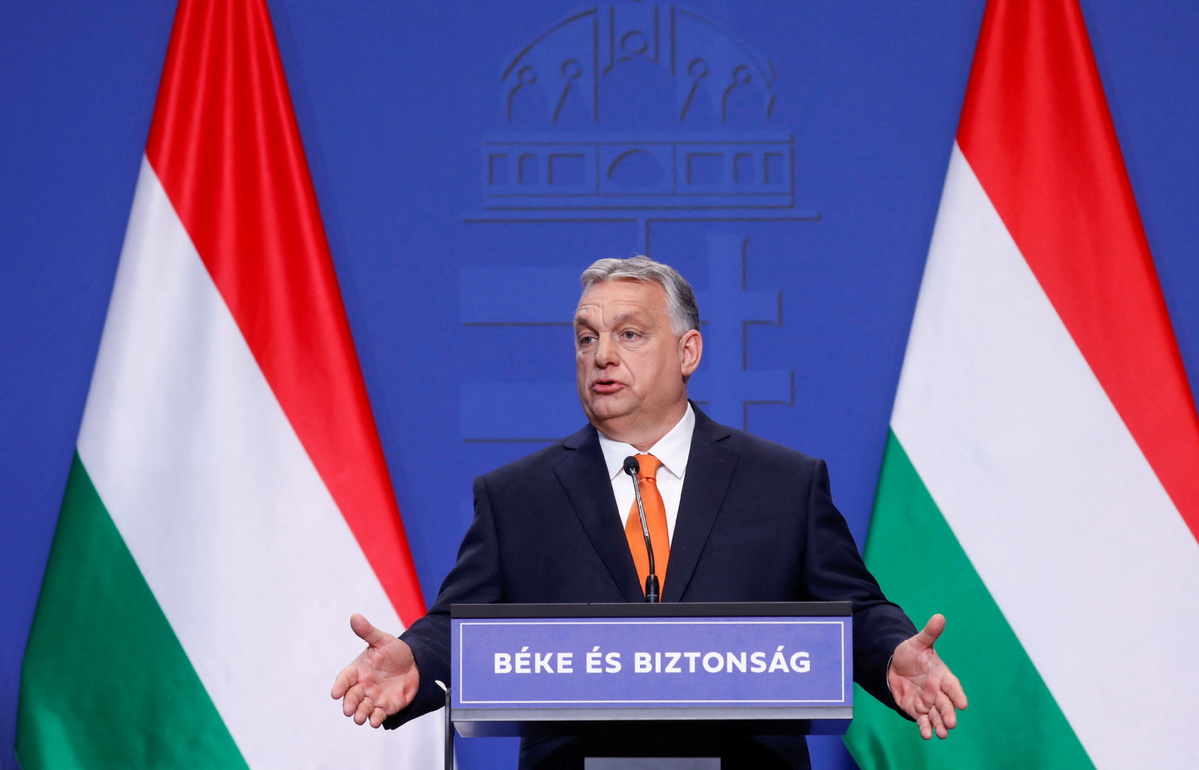
BUDAPEST - Hungary's Prime Minister Viktor Orban on Wednesday invited Russian President Vladimir Putin to a summit meeting in Budapest to make progress toward an immediate ceasefire between Russia and Ukraine.
"I suggested to President Putin that he should announce a ceasefire immediately," Orban told an international press conference following his landslide victory in the April 3 general elections, which secured him a fourth consecutive term as the country's leader.
Orban said that he spoke on the phone with Putin, who called him Wednesday morning to congratulate him on his election victory.
"I know (the ceasefire) is not going to happen by itself, so I invited Putin, the presidents of Ukraine and France, and the German chancellor to Budapest, the sooner the better," Orban said.
The aim of the summit would be an immediate ceasefire in Ukraine. "They should hold talks here in Budapest with one goal: not yet peace negotiations, which would take a longer time, but an agreement on an immediate ceasefire."
He also said that Hungary is so "obsessed" with peace because more than 200,000 ethnic Hungarians live in Ukraine's Transcarpathia region and Budapest has a "primary responsibility" for their lives.
Asked to respond to the proposal by certain EU member states that the sanctions on Russia's energy sector should be extended, Orban said, "Poland has a large seashore. If they so want, they can harbor tankers with huge amounts of oil and gas, and can make do without Russian imports." However, Hungary is a landlocked country, and it only has "pipelines, which are where they are, we cannot move them, so on this issue we disagree with our Polish friends."
Orban added that Hungary is ready to pay for Russian gas in rubles if necessary, unlike other European Union countries, which have rejected Moscow's request.

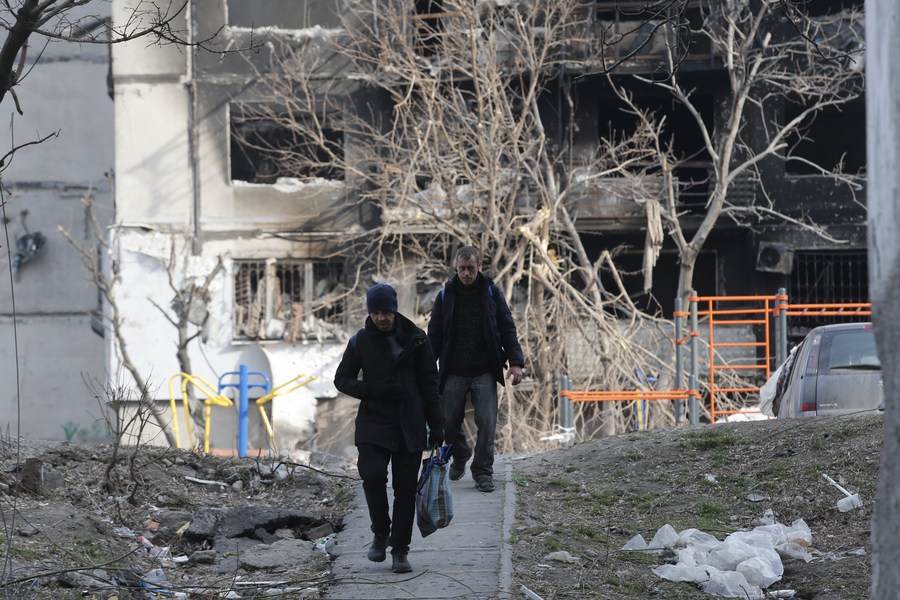
KYIV - Ukrainian President Volodymyr Zelensky instructed the government to formalize the cessation of Ukraine's trade with Russia, the presidential press service said in a statement Wednesday.
In fact, import and export operations between Ukraine and Russia have been completely terminated since the start of the conflict, the statement said.
According to Ukraine's Fiscal Service, Ukraine saw a 38.7 percent year-on-year growth in trade with Russia in 2021 with a value of $10.09 billion. Exports grew by 26.5 percent to 3.44 billion dollars, while imports increased by 45.9 percent to 6.65 billion dollars.


Russia and Ukraine have conducted an exchange of prisoners, with 86 captives from each side returning home, Russian Human Rights Commissioner Tatyana Moskalkova said on Tuesday.
Moskalkova didn't go into details on the freed prisoners, but said Russia was now seeking the return of seamen and truckers from inside Ukraine.
Talks for an exchange involving four employees of Russia's State Atomic Energy Corporation, also known as Rosatom, failed at the last minute, according to Moskalkova. They remain in Ukraine.
"The four Rosatom employees that I asked the Ukrainian side about have been found. They are alive. Their whereabouts are unknown. They were on the exchange list, but at the last moment they were excluded," she said.
Ukrainian media outlet Ukrinform quoted Ukraine's Parliament Commissioner for Human Rights, Liudmyla Denisova, as saying that the female soldiers released from Russian captivity had been tortured and mistreated. Moscow hasn't yet responded to Kyiv's accusations.
The prisoner exchange happened as Ukrainian President Volodymyr Zelensky challenged the United Nations Security Council to "act immediately" or "dissolve yourself altogether" during a blistering address on Tuesday in which he showed harrowing footage of dead bodies. Zelensky called on the 15-member Security Council to expel Russia "so it cannot block decisions about its own aggression, its own war".
Dressed in his now trademark military green T-shirt, Zelensky, speaking via video from Kyiv, gave a chilling rendition of the "atrocities "he said were carried out by Russian troops against civilians in Bucha, a town outside the Ukrainian capital.
Claims rejected
Dmitry Medvedev, the former president and deputy chairman of the Russian Security Council, said the Bucha situation is another example of Ukraine's fake propaganda.
"Numerous PR agencies and 'troll factories' sponsored by Western governments and their tame nonprofits and NGOs get a lot of money for cooking it all up," Medvedev said.
Vasily Nebenzya, Russia's permanent representative to the United Nations, stressed Russia's forces have never targeted civilian facilities in the military operation.
Nebenzya told the UN council that Moscow places "on your conscience the ungrounded accusations against the Russian military, which are not confirmed by any eyewitnesses".
He also denied allegations made by Zelensky of mass deportations.
China's Ambassador to the UN Zhang Jun on Tuesday said the reports and images of civilian deaths in Bucha are deeply disturbing.
"The relevant circumstances and specific causes of the incident should be verified and established. Any accusations should be based on facts. Before the full picture is clear, all sides should exercise restraint and avoid unfounded accusations," he said.
A high-stakes meeting of NATO foreign ministers was taking place in Brussels on Wednesday, as US officials warned that Russia's actions in Ukraine could be entering a protracted new phase.
US Secretary of State Antony Blinken said it was "an important moment" to coordinate with allies and partners "on a number of fronts".
A fuel depot in east-central Ukraine was destroyed on Wednesday in a Russian overnight airstrike, said Valentyn Reznichenko, the head of central Ukraine's Dnipropetrovsk regional military administration.
Also on Wednesday, a car crashed into the gate of the Russian embassy in Bucharest, Romania. According to Russia's TASS news agency, the car subsequently caught fire and the driver died.

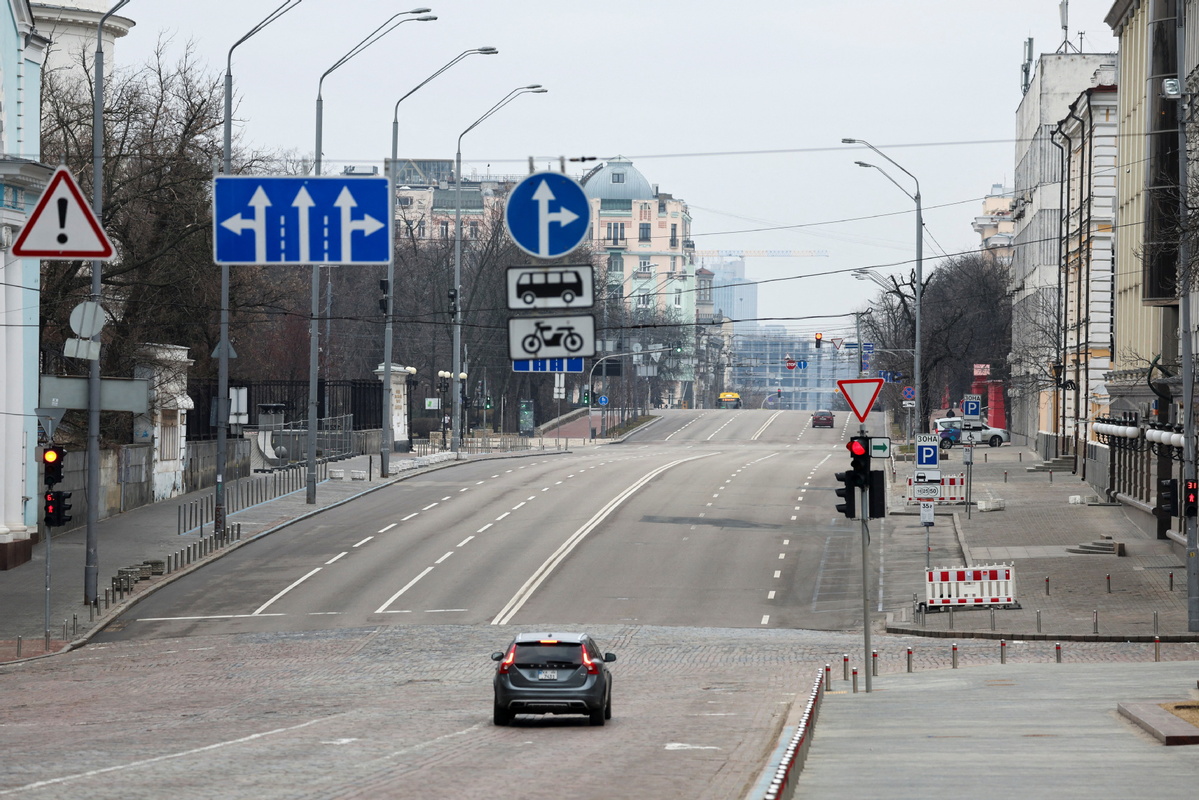
US and allies direct media to spread lies, but disinformation exposed, experts say
The United States-led Western countries have been spouting pure hypocrisy and double standards during the Russia-Ukraine crisis, and they are even trampling on values that they once claimed to cherish, such as freedom of speech, through the media outlets they control.
Moreover, Western countries have also spread disinformation and fake news to smear others based on their own interests. Western media outlets, under the guise of press freedom, have become the mouthpieces of money politics, observers said.
The US-led West has imposed pervasive indiscriminate economic and political sanctions on Russia over the Ukraine conflict. Among those is a series of sanctions on Russian media organizations such as RT and Sputnik and senior figures working for them. Major social media platforms, including Facebook and Twitter, have also banned Russian media outlets.
Western countries have even imposed sanctions on Russian sports, cats, dogs, and the classic ballet piece Swan Lake by Pyotr Ilyich Tchaikovsky who died over 100 years ago, indicating that values that the Western world has always cherished such as "freedom of speech", like "art knows no borders "for instance, no longer work.
While banning Russian media outlets, many Western countries' governments and mainstream media outlets have been churning out disinformation and fake news about the Ukraine crisis, which is totally "a propaganda campaign "and has hugely misled public opinion, said Ding Yifan, a research fellow at the Development Research Center of the State Council's Institute of World Development.
"It shows that the US-led West has been very hypocritical and imposed double standards on the issue of freedom of speech," he said. "What is worse, they have produced fake news to smear others."
These fake news items include a report circulating in Western mainstream media that Russia had requested "military equipment and other assistance" from China in the Ukraine crisis.
Biased reporting
"Western countries' control over their media has come to a point where things are more ridiculous than we imagined," Ding said. "It is obvious that a large amount of biased reporting and disinformation we have read on Western mainstream media is serving their governments' positions in the Ukraine crisis."
Western social media platforms, which were considered to respect freedom of speech, have also proved amid the Ukraine crisis that they are firmly controlled, although it is unclear whether it is by the government or the capital, he added.
Oleg Dmitriev, an adviser to Sputnik International News Agency, said that he, as a journalist and a scholar, is totally against the Western countries' banning of Russian media outlets over the Ukraine crisis.
While "accusing Russian journalists of propaganda and even threatening them with prison sentences", Western mainstream media have fake news that is coming from false sources published, he said.
He said that mainstream Western media, like CNN, BBC and Fox News, have failed to make objective reports about Russia for a long time.
They tend to believe that "Russians were doing something secret, the Russian threat, Russian hackers and Russian interference into things", and they just ignore the facts, he said.
"As journalists, you have to respect all points of view, all the facts, and banning of the media is the worst that you can think of," he said. "This is discrimination against Russian journalists."
Lara Logan, a journalist from the United States and winner of a number of Emmy Awards, said recently that Western media outlets do not recognize the real situation in Ukraine.
"I really think that there is a lot of disinformation that we haven't seen before … We are being driven into this box where we have to hate Vladimir Putin, believe everything bad that is said about him, and love Ukraine. And there's nothing in between," Logan said on Real America's Voice.
Tom Fowdy, a British political and international relations analyst, said that when the US government makes a claim or statement, the Western media have a habit of reporting whatever it says as a fact, as opposed to assessing the political agenda that may be behind it, or the evidence to back up such a claim.
While claims by countries such as China are subject to frequent attacks and scrutiny, or are dismissed as "propaganda" or "misinformation", everything the US says is reported as fact. This allows Western media to repeat the US narrative as it pleases without questioning it, which the Western public subsequently believes, Fowdy said.
Recognizing this issue, US government officials have developed a pattern of propaganda whereby they provide "anonymous leaks" to certain Western newspapers, which then publish such unverified claims under the tag of an "exclusive story", he added.


WASHINGTON - The United States on Wednesday imposed additional sanctions on Russia for its military operation in Ukraine, targeting the country's major financial institutions and the two daughters of Russian President Vladimir Putin.
According to a factsheet from the White House detailing the measures, the United States will impose full blocking sanctions on Russia's largest financial institution, Sberbank, and the country's largest private bank, Alfa Bank, freezing any of the two banks' assets in the US financial system and prohibiting Americans from doing business with them.
US President Joe Biden will sign an executive order banning new investment in Russia by Americans no matter where they live, the factsheet said, adding the executive order aims to "ensure the enduring weakening of the Russian Federation's global competitiveness."
Additionally, Americans will no longer be allowed to conduct business transactions with major Russian state-owned enterprises, whose assets subject to US jurisdiction will be frozen. The Department of the Treasury will announce the names of these entities Thursday.
Full blocking sanctions will be imposed on Putin's two adult daughters, Russian Foreign Minister Sergei Lavrov's wife and daughter, Russian Prime Minister Mikhail Mishustin as well as former Russia President and Prime Minister Dmitry Medvedev, who is now deputy chairman of the Security Council of Russia.
As a result, these individuals will be cut off from the US financial system and the Biden administration will freeze the assets they hold in the United States.
Separately, the Treasury Department on Tuesday barred Russia from making debt payments with US dollars from accounts at US financial institutions, making it harder for the Russian government to meet its financial obligations.
The White House said in the factsheet that the United States and its allies will still allow Western companies to operate in Russia in sectors related to basic food provision, medicine and health care as well as telecommunications services, so as to alleviate the sanctions' negative impact on ordinary Russians.
If necessary, the factsheet added, appropriate exemptions and carveouts will be issued to ensure humanitarian activities are not disrupted.

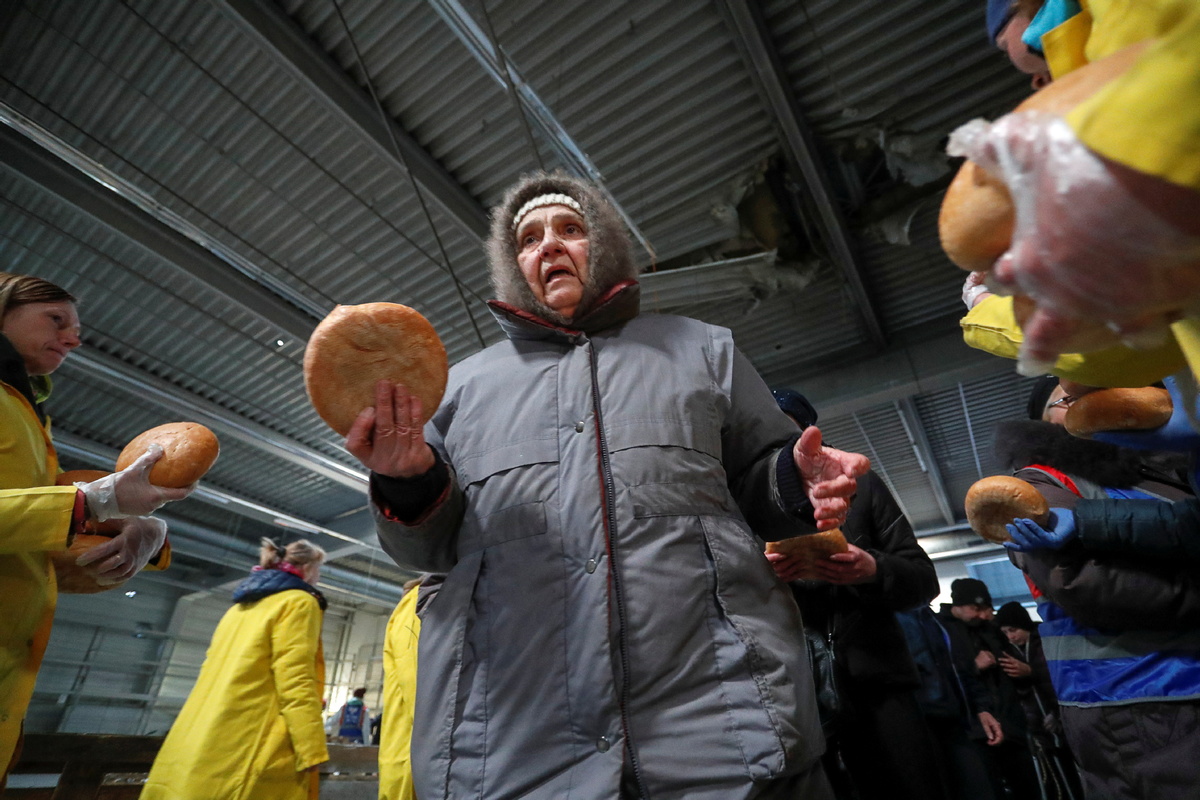
The European Union proposed its fifth round of sanctions on Russia on Tuesday, while member states expelled more Russian diplomats over what the EU called "heinous crimes" in Ukraine allegedly committed by Russian troops.
European Commission President Ursula von der Leyen described on Tuesday photos of dead civilians from Bucha and other areas in Ukraine as "gruesome".
"The perpetrators of these heinous crimes must not go unpunished," she said, adding that the EU has set up a joint investigation team with Ukraine to "collect evidence and investigate war crimes against humanity in Ukraine".
Any allegation should be based on facts and all parties should exercise restraint and avoid groundless accusations before a conclusion is made, Chinese Foreign Ministry spokesman Zhao Lijian told a media briefing on Wednesday with regard to the reports and images of civilian deaths in Bucha.
The truth and origin of the incident must be clearly investigated and humanitarian issues should not be politicized, he added.
Zhao stressed that China supports any initiative and measure conducive to alleviating the humanitarian crisis in Ukraine and would make concerted efforts with the international community to prevent civilians from suffering any harm.
The EU sanctions proposed by Von der Leyen include a ban on imports of Russian coal worth 4 billion euros ($4.35 billion) a year.
They also include a full transaction ban on four key Russian banks, and a ban on Russian vessels and Russian-operated vessels from accessing EU ports, but with exceptions for essentials such as agricultural and food products, humanitarian aid and energy.
However, Sberbank and Gazprombank, Russia's biggest and third-largest financial institutions, will be exempted because they handle mostly energy-related payments.
The new package also includes a ban on Russian and Belarusian road transport operators and a targeted export ban worth 10 billion euros in areas such as quantum computers, advanced semiconductors, sensitive machinery and transportation equipment, as well as import bans on Russian goods-including timber, cement, seafood and liquor-and a general EU ban on Russian companies' participation in public procurement in EU member states.
While Von der Leyen said that the EU is working on additional sanctions, including oil imports, oil and gas are off the table in these latest sanctions.
The EU relies on Russia for more than 40 percent of its natural gas imports, 25 percent of its oil imports and 45 percent of its coal imports.
Countries such as Germany, Austria and the Netherlands, which are highly dependent on Russian energy, have opposed sanctions on Russian energy amid fears of causing an economic recession, mass unemployment and poverty at home.
"The fifth wave of sanctions does not seem to provide any breakthrough. Barring Russian coal is not going to change Putin's behavior, if the past four packages of sanctions had failed to do so," said Lai Suetyi, an associate professor at the Center for European Studies of Guangdong University of Foreign Studies in Guangzhou.
"Gas is the real bomb, but such a bomb hurts both Russia and the EU itself."
Coal accounts for a small share of the roughly 99 billion euros that the EU spent on Russian mineral fuels in 2021.
Lai noted that sanctions are not the only tool now, as the US and its allies are trying to use the Bucha killings to force more countries to join their front against Russia.
Ambassadors from 27 EU member states were expected to meet on Wednesday to discuss the new package of sanctions, which would require their unanimous agreement.
On Tuesday, EU foreign policy chief Josep Borrell said he had decided to designate a number of officials from Russia's mission to the EU as "persona non grata" for "engaging in activities contrary to their diplomatic status".
On Tuesday, Italy, Denmark, Sweden, Latvia, Estonia, Spain and Portugal announced they would expel Russian diplomats, following similar moves on Monday by France and Germany. In total, more than 200 Russian diplomats and diplomatic staff members are to be expelled.
During a visit to Berlin on Tuesday, Italian Foreign Minister Luigi Di Maio said that Italy had expelled 30 Russian diplomats for "national security reasons".
Russian Foreign Ministry spokeswoman Maria Zakharova told TASS news agency that there would be an appropriate response from Moscow to the expulsions.
Zhao Jia contributed to this story.

MOSCOW - Russia and Ukraine are continuing negotiations but there remains a long way to go, Kremlin Spokesman Dmitry Peskov said on Wednesday.
"There is still quite a long road ahead ... The working process is continuing, but more viscously than we want," Peskov told a daily briefing, stressing that Moscow would like Kiev to be more active during the negotiations.
The withdrawal of Russian troops from the Kiev region was to facilitate the peace talks, he told France's LCI broadcaster earlier in the day.
Russia is interested in Ukrainian President Volodymyr Zelensky agreeing to Russia's conditions, which were clearly formulated by the Russian delegation, so that the military operation will come to an end, he said.

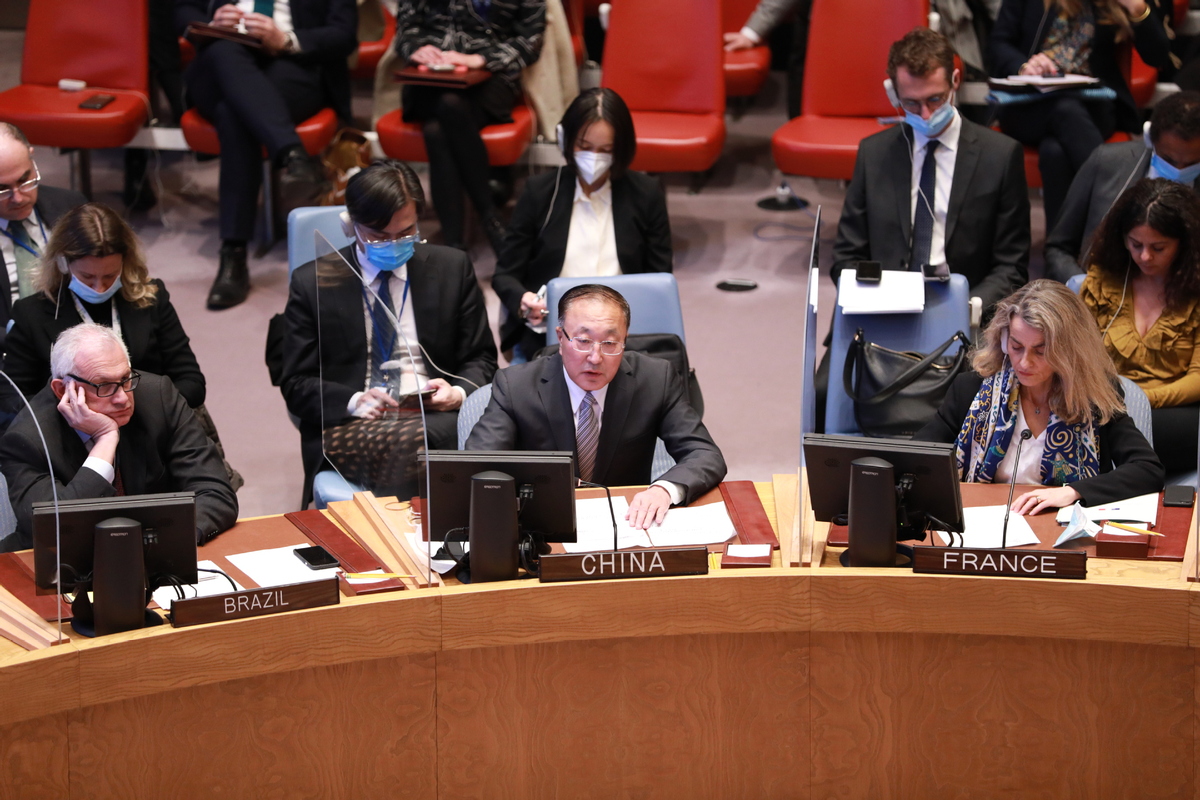
China's ambassador to the United Nations on Tuesday stated that his country is not pursuing geopolitical goals in the Russia-Ukraine conflict, but that its "only one goal" is peace.
"China does not seek geopolitical self-interest," said Zhang Jun, China's permanent representative to the UN, during a UN Security Council briefing on Ukraine. "It is not our mindset to watch the situation indifferently from the sideline, let alone do anything to add fuel to the fire.
"There is only one goal we sincerely look forward to, and that is peace. China will continue to promote peace talks and play a constructive and responsible role in helping resolve the crisis in Ukraine," he said.
"As we have stressed many times, dialogue and negotiation is the only way leading to the door for peace," Zhang said, noting that the Russian Federation and Ukraine have had rounds of negotiations.
Zhang said the international community "should create favorable conditions and environment for negotiations between the two sides, open up space for political settlement, and should not set up obstacles for peace, let alone add fuel to the fire in aggravation of confrontations. Every effort should be made to prevent the escalation of the local conflict," he said.
China attaches great importance to the humanitarian issues in Ukraine and supports all initiatives and measures conducive to alleviating the humanitarian crisis in Ukraine, Zhang said.
"As the conflict continues, we call on the parties to abide by international humanitarian law, protect the safety of civilians and civilian facilities, minimize civilian casualties, ensure safe and smooth humanitarian corridors for evacuees and humanitarian assistance, and guarantee the basic rights of women, children and wounded and detained fighters," said Zhang.
The envoy stressed that humanitarian issues should not be politicized.
"International humanitarian agencies should maintain neutrality and impartiality, actively mobilize and coordinate more resources and make unremitting efforts to save lives and protect civilians," he said.
Zhang pointed out that China has provided and "will continue to provide humanitarian assistance to Ukraine and its neighboring countries".
He emphasized that under international humanitarian law, civilians should be spared of any form of violence in armed conflicts. Attacks against civilians are unacceptable, he said.
"The reports and images of civilian deaths in Bucha are deeply disturbing. The relevant circumstances and specific causes of the incident should be verified and established. Any accusations should be based on facts. Before the full picture is clear, all sides should exercise restraint and avoid unfounded accusations," Zhang said.
"Sanctions are not an effective means to solve the problem but will instead accelerate the spillover of the crisis and bring new and complex problems," he said.
Zhang said the implementation of all-dimensional and indiscriminate sanctions is "tantamount to politicizing, instrumentalizing and weaponizing the world economy, and those sanctions have triggered a serious crisis in many fields, including global economy and trade, finance, energy and food".
"The sovereignty and territorial integrity of all countries should be respected, and small-and medium-sized countries should not be pushed to the forefront of confrontation between great powers," Zhang said. "All countries have the right to decide their foreign policy independently and should not be forced to take sides. The security of all countries is indivisible, and the security of one country cannot be achieved at the expense of the security of others.
"We call upon the United States, NATO and the European Union to engage in comprehensive dialogues with Russia to face head-on their differences accumulated over the years, find solutions to the problem and promote the building of a balanced, effective and sustainable regional security framework," the ambassador said.


Eased visa rules scrapped for officials, reporters from 'unfriendly' countries
Russian President Vladimir Putin has signed a decree that scraps simplified visa rules for officials and journalists from so-called unfriendly countries.
According to the decree, officials and journalists from some European Union countries as well as those from Norway, Switzerland, Iceland and Liechtenstein will no longer be able to apply for visas to Russia through a simplified procedure. The decree took effect on Monday.
The state-run RIA Novosti news agency reported that Putin's decree ends visa-free entry for EU citizens who hold diplomatic passports.
Putin has also instructed the Foreign Ministry to decide on imposing entry bans on foreigners or stateless people who "commit unfriendly acts" against Russia, with the action including legal entities, the agency reported.
Russia's list of unfriendly countries includes those in the European Union, the United States, Britain, Canada and Ukraine, among others. The list was expanded after the West levied punishing sanctions on Moscow.
Amid the country's conflict with Ukraine, more Russian diplomats are being expelled by Western countries.
Mediation efforts
On the diplomatic front, some Arab countries have expressed a willingness to mediate between Russia and Ukraine, Egyptian Foreign Minister Sameh Shoukry said at a news conference in Moscow on Monday.
Foreign ministers of Egypt, Algeria, Iraq, Jordan and Sudan met on Monday with Russian Foreign Minister Sergey Lavrov. Ahmed Aboul Gheit, secretary-general of the Arab League, also joined the meeting. The ministers were due to travel to Poland on Tuesday for talks with Ukrainian Foreign Minister Dmytro Kuleba.
Russia has removed about two-thirds of the troops it had around Kyiv, mostly sent back to Belarus with plans to redeploy elsewhere in Ukraine, a senior Pentagon official said on Monday.
"They have about a third left of the forces that they had arrayed against Kyiv," the official said on grounds of anonymity.
The Russian military has said it is now focusing its efforts on the eastern Donbass region.
Serhii Haidai, chair of the Lugansk regional military administration, said the situation in the Lugansk region in eastern Ukraine is "difficult "amid heavy Russian bombardment on Tuesday.
In a call with Kuleba, United Nations Secretary-General Antonio Guterres discussed the humanitarian situation in Bucha, a town on the outskirts of Kyiv.
Ukrainian prosecutors said at least 400 bodies have been recovered so far as a result of "the killing by Russian troops".
Ukrainian President Volodymyr Zelensky said on Monday it has become harder for his country to negotiate with Russia since Kyiv became aware of "the killings", according to CGTN.
According to Russian state news agency TASS, the United States plans to hold a session of the UN General Assembly on Russia's participation in the UN Human Rights Council as soon as Thursday.
Russia has rejected claims that its army was behind atrocities against civilians in Bucha amid widespread international outrage, claiming the footage was staged following Russian forces' retreat from the area.
Russian officials including Lavrov have repeated claims that the footage from Bucha was staged possibly with Western involvement.
Agencies contributed to this story.

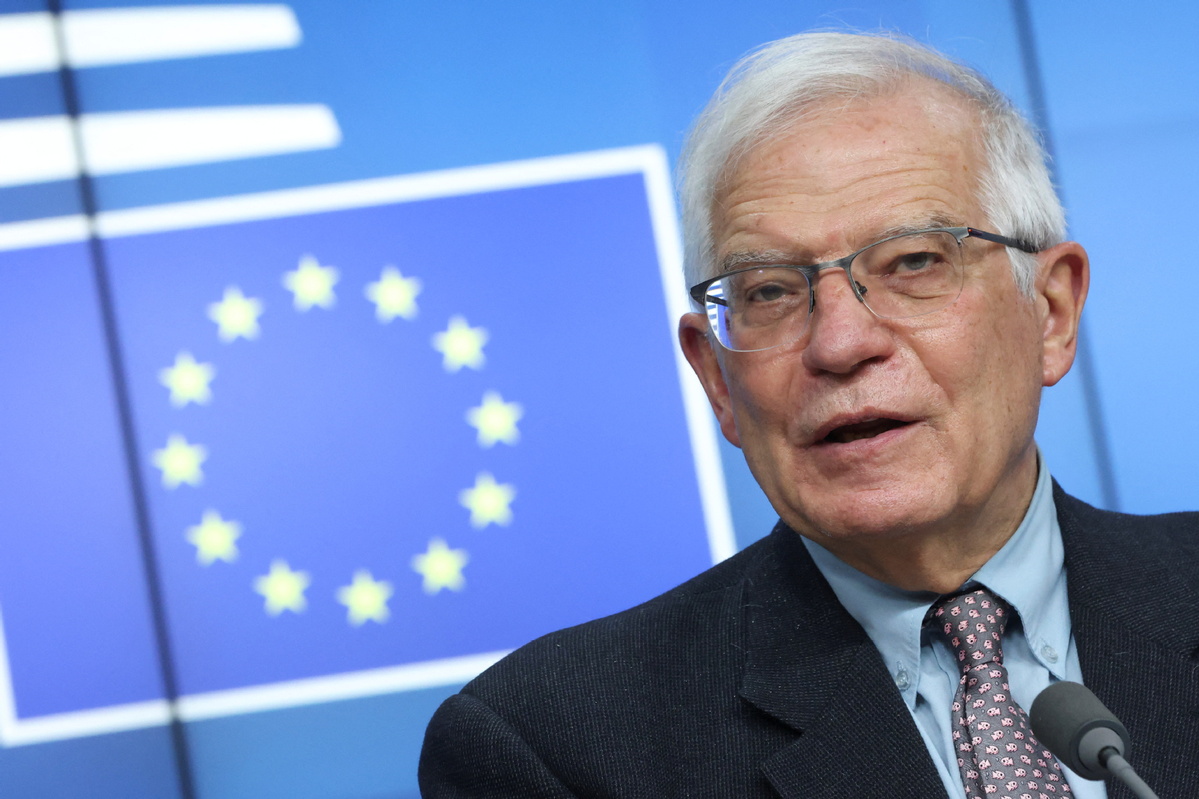
BRUSSELS - The European Union (EU) has declared a number of Russian diplomats working in Brussels "persona non grata" and ordered them to leave host nation Belgium, the bloc's foreign policy chief Josep Borrell said on Tuesday.
"Today, I decided to designate persona non grata a number of officials of the Permanent Mission of the Russian Federation to the EU for engaging in activities contrary to their diplomatic status," Borrell said in a statement.
The Russian Ambassador to the EU was summoned to communicate this decision, according to Borrell, EU's High Representative for Foreign Affairs and Security Policy.
Several EU member states also announced on Tuesday their decision to expel Russian diplomats.

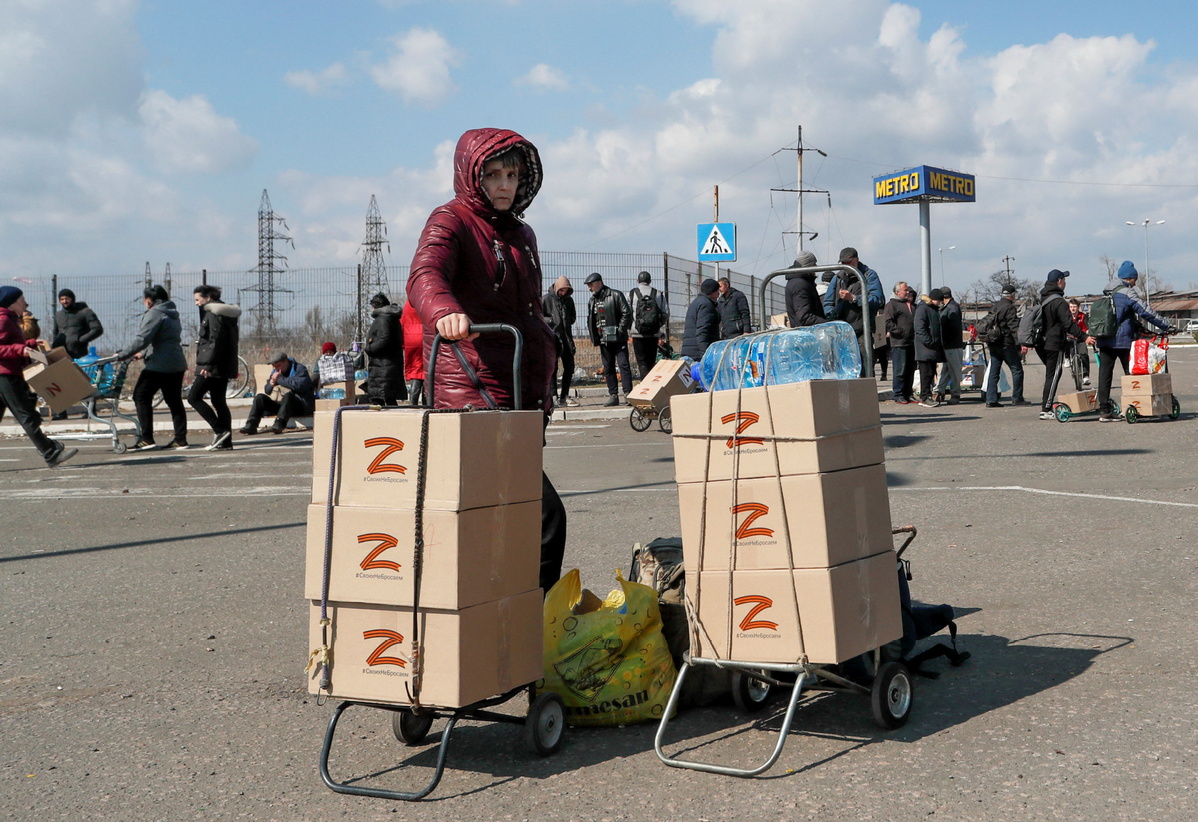
Beijing highlights need to step up efforts to build continent's security framework
Editor's Note: China Daily presents a series of analyses to make readers around the world better understand the how and why behind China's views and decisions on the Ukraine situation. This is the third installment of the series.
As the Ukraine crisis and its impact loom large, an increasing number of European policy insiders are discussing the region's strategic autonomy, a decades-old concept aiming to boost its independence from outsiders in shaping its own security, diplomatic and economic policy.
China has voiced consistent support in recent years for Europe's pursuit of greater strategic autonomy, and Beijing recently has highlighted the urgency of stepping up such efforts and building the region's security framework.
The concept of European strategic autonomy nowadays covers a wide range of areas such as security, economy, diplomacy, digitalization and climate change, but security now stands out as the weakest link, officials and analysts said.
Europe will see its independent role further compromised by geopolitical confrontation if the region fails to draw lessons from the current dilemma and reshape its interaction with the United States and NATO, they added.
"Since the end of World War II, European countries have been overly dependent on the US and NATO in areas such as security and defense, and in the face of current crisis, all nations should decide their position with a cool head and great prudence," said Feng Zhongping, director of the Chinese Academy of Social Sciences' Institute of European Studies.
"Although they have realized that they cannot rely too much on Washington, they have failed to reach consensus on topics such as defense and common security, not to mention building an effective security framework," Feng said.
During a virtual summit with French and German leaders on March 8, President Xi Jinping said China supports the two countries in promoting a balanced, effective and sustainable European security framework in the interests of the lasting security of Europe, and by upholding its strategic autonomy.
"China, for its part, has always supported European integration, supported an EU with greater unity and prosperity, and supported European strategic autonomy," Wang Hongjian, charge d'affaires ad interim of the Chinese mission to the EU, wrote in a signed article on March 31.
Observers noted that there is still divergence among European countries over strategic autonomy-countries such as France and Germany support the concept while some Eastern European countries disagree amid concerns they may lose defensive support from the US.
Behind Europe proposing this concept is the fact that it has long been framed by regional countries' alliances with the US, and it faced coercion, had to sacrifice some interests by giving up autonomy and suffered heavy losses in economy, diplomacy and security in past decades, experts said.
"Washington has succeeded in using the Ukraine crisis to gather European countries around it and boost unity among them, which undermines the continent's efforts in seeking strategic autonomy", said Zuo Xiying, a professor at the School of International Studies of Renmin University of China in Beijing.
"In the long run, Europe may boost its independent role to some extent after the current conflict is settled," Zuo said.
Building a framework
In the past month, Beijing has been underscoring the concept that "security is indivisible" in various international venues, calling for a balanced approach that takes into account the security concerns of various countries in Europe, and Russia.
This concept is key to building a balanced, effective and sustainable regional security framework that is currently not in place, analysts said.
At a virtual meeting with EU leaders on Friday evening, President Xi noted that Beijing advocates the vision of common, comprehensive, cooperative and sustainable security, and he said that a fundamental solution to the Ukraine crisis would accommodate the legitimate security concerns of all related parties.
Global and regional security frameworks should no longer be built based on a Cold War mentality, and China supports Europe, Russia, the US and NATO in holding dialogue to face up to the tensions that have built up over the years and find solutions, in order to build a balanced, effective and sustainable security framework in Europe, Xi said.
Dong Chunling, a research fellow on American studies at the China Institutes of Contemporary International Relations, noted that in the current Ukraine crisis, "countries involved focus on their own security rather than common security, which has led to a vicious circle in which each party seeks security but ends up with insecurity".
Washington has been pushing forward NATO's expansion since the end of the Cold War to contain Russia's rise and has pushed Russia into a corner, Dong noted.
"As a result, Europe's ability to pursue its strategic autonomy has been limited remarkably, and a stable European security framework has yet to be established," he added.
China's vision of common, comprehensive, cooperative and sustainable security, as advocated by President Xi, "offers Chinese wisdom for cracking the current security dilemma and shoring up sustained global security governance", Dong said.
In terms of Europe's security, "the pursuit of absolute security leads to absolute insecurity, and the 'law of the jungle' seeking winner-takes-all will only sow the seeds for greater conflict", Chinese Ambassador to Greece Xiao Junzheng told local television on March 17.
Wang Yiwei, director of the Center for European Union Studies at Renmin University of China, noted that NATO has expanded five times and sabotaged Europe's security framework, leading to the tragedy in Ukraine, the refugee crisis and division in the European continent.
"From China's point of view, Europe's security should eventually be settled by the Europeans themselves, and the continent's security should not target or bypass Moscow also," Wang said.







