Beijing-Tokyo forum to improve ties
(chinadaily.com.cn)
Updated: 2006-08-03 08:04
A high-profile forum on China-Japan relations opened in Tokyo on Thursday
(August 3) with top government officials, leading scholars and media executives
attending to discuss ways to promote mutual understanding and build new type of
bilateral ties.
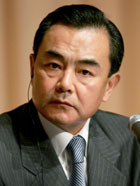
Wang Yi, Chinese
Ambassador to Japan. | Chinese Ambassador to Japan
Wang Yi and Japanese Chief Cabinet Secretary Shinzo Abe are to speak at the
opening of the forum.
The two-day forum -- Beijing-Tokyo Forum -- is jointly organized by China
Daily, Peking University and the Japanese think tank Genron NPO. Beijing and
Tokyo take turn to host the forum.
The theme of this year's forum is "Facing Asia's Future -- Building New
China-Japan Relations". Participants from the two countries will have frank and
in-depth discussion and exchanges on bilateral communications and cooperation,
resources, energy and environment and rebuilding mutual trust.

Japanese Chief Cabinet Secretary
Shinzo Abe. | This is the second forum. The first
was held in Beijing in August last year.
Chinese President Hu Jintao, at his March meeting with the heads of seven
Japan-China friendship organizations, said Beijing values the Sino-Japanese
relations and regards it as one of the important bilateral relations in the
world, and China has made unswerving efforts to improve the ties.
Hu offered talks with Japanese top leaders as soon as they make an
unequivocal decision to stop visiting the Yasukuni Shrine.
The relationship between China and Japan has been chilled in recent years due
to Japanese Prime Minister Koizumi Junichiro's repeated pilgrimage to the
Yasukuni Shrine, which honors 2.5 million Japanese war dead, including 14
Class-A World War II criminals.
Leaders of the two neighboring countries have halted exchanges of visit for
about five years, ever since Koizumi began paying homage to the controversial
war shrine soon after he took office in 2001.
|
