Dunhuang Museum
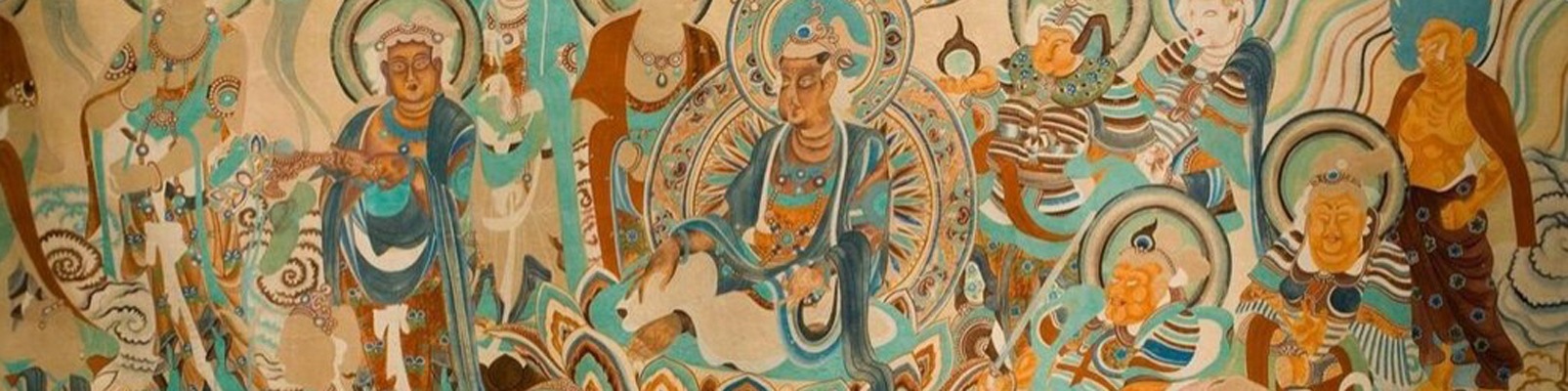
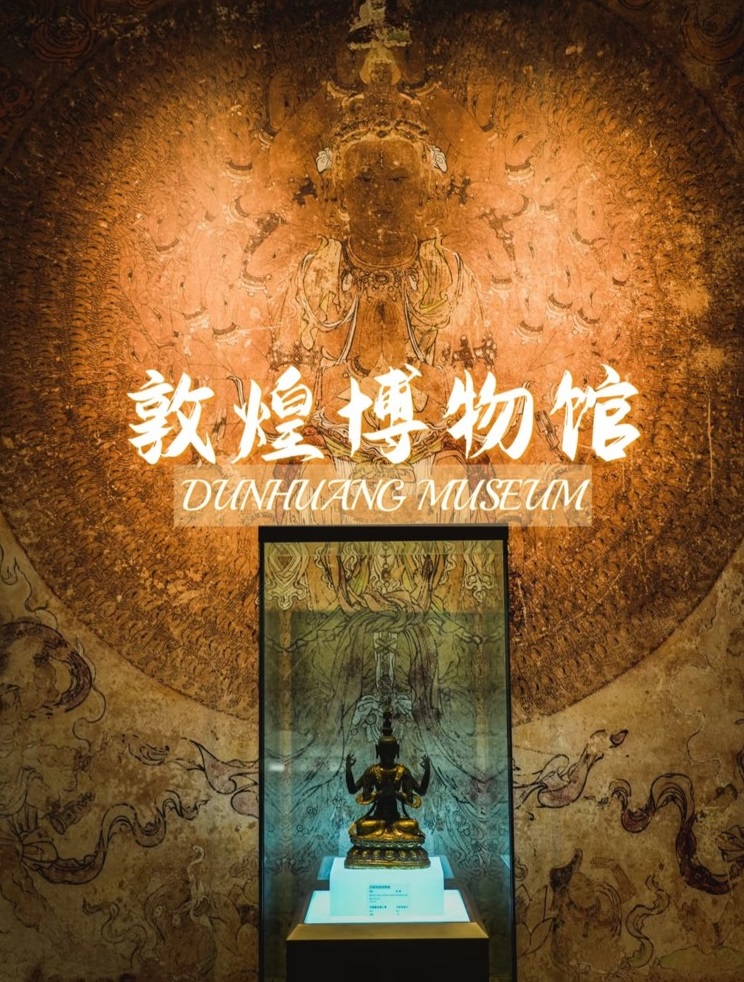
Stepping into the Dunhuang Museum is like opening a living chronicle of exchanges among world civilizations. Handwritten wooden slips inscribed by Han Dynasty (206 BC-AD 220) border garrison soldiers still carry the warmth of personal letters. The flowing skirts of Tang Dynasty (618-907) painted pottery figurines echo fashion trends of the imperial capital Chang'an, today's Xi'an in Shaanxi province. Silk Road artifacts bear witness to a golden age of global trade, when envoys crossed paths along the roads and merchants and caravans moved in an unbroken stream. Here, it becomes clear that Dunhuang was not an isolated ancient Chinese city, but a bustling global hub along the Silk Road. Civilizations from the Central Plains, the Xiyu (Western Regions), Persia, and even the Mediterranean once paused here, before carrying new stories onward.
Mogao Caves: The Sistine Chapel of the East
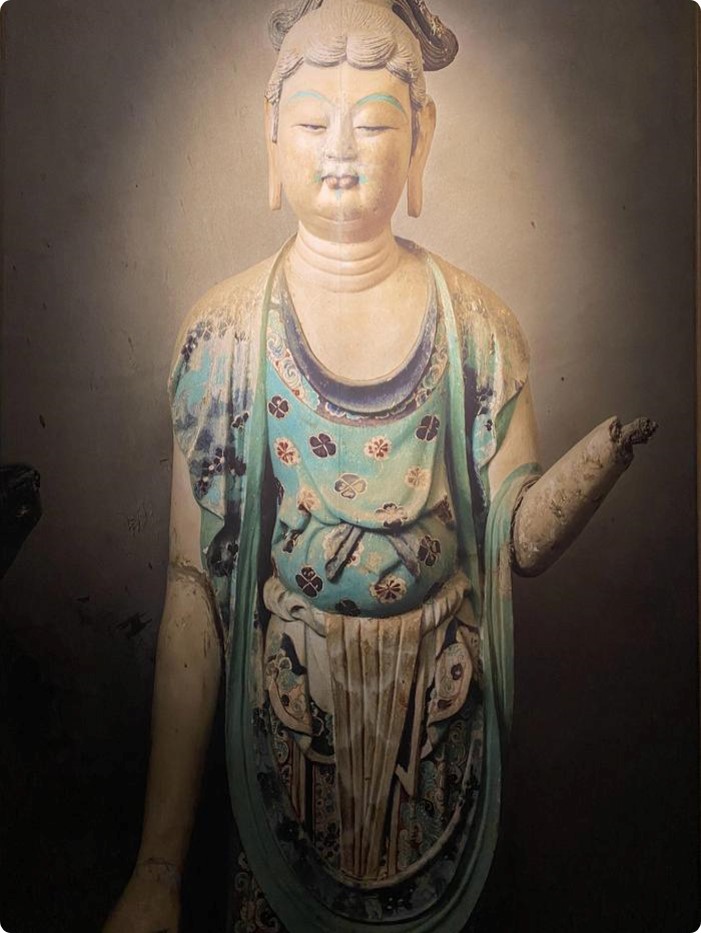
With 735 caves, 45,000 square meters of murals, over 2,000 painted sculptures, the Mogao Caves form a global epic of Buddhist art carved in stone. Standing before Cave 257, the Nine-Colored Deer seems to step out of the murals, its tale of kindness crossing borders just like Aesop's Fables. In Cave 158, the serene reclining Nirvana of the Buddha is surrounded by his disciples and celestial beings, their sorrow and reverence reflecting humanity's shared contemplation of, life and death. The ethereal flying apsaras evolve from the slender and elegant style of the Northern Wei Dynasty (386-534) to the voluptuous and resplendent style of the Tang Dynasty (618-907), their flowing silk robes tracing the journey of Buddhist art from India and its gradual fusion with Eastern aesthetics in China. The paradise scenes in the sutra illustrations, filled with pavilions, terraces, and joyous music and dance, present an ideal world painted by ancient artists, resonating with the Western visions of Utopia.
Yulin Caves and West Thousand Buddha Caves: Time Capsules of the Silk Road Art
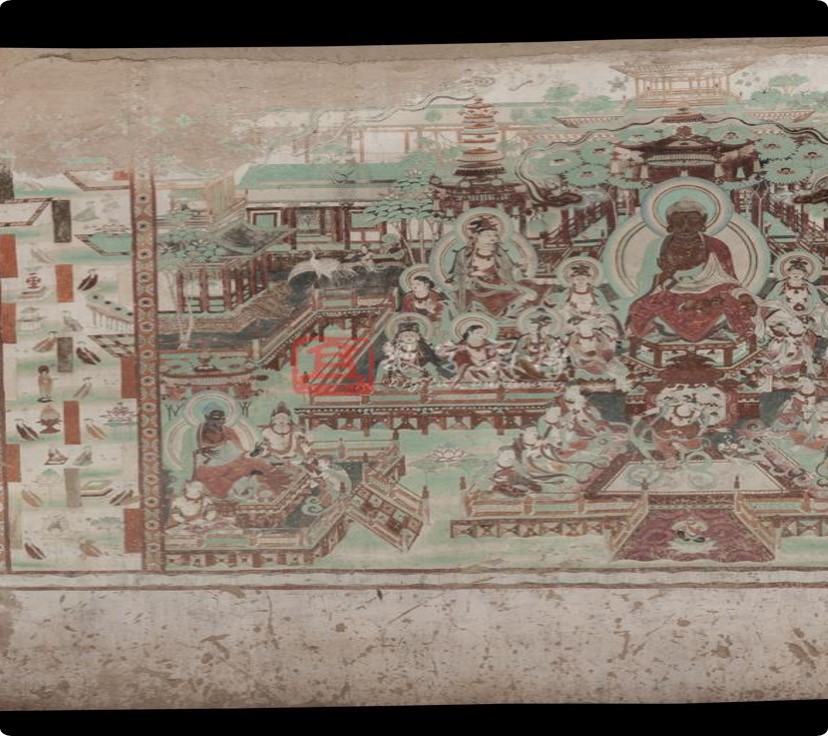
If the Mogao Caves are an encyclopedia of Silk Road art, the Yulin Caves feel like a private gallery of Tang Dynasty (618-907) murals. In Western pure land transformation tableau of Cave 25, musicians play traditional Chinese instruments pipa and konghou, while dancers' long sleeves seem to swirl in the air. This concert, from a millennium ago, recalls the splendor of Persian court performances. The Water-Moon Guanyin (Avalokitesvara) from the Western Xia (1038-1227) period, smiling while holding a flower under moonlight, captures a perfect moment between grassland culture and Buddhist art. In the West Thousand Buddha Caves, the bold vigor of the Northern Wei Dynasty (386-534), the elegance of the Northern Zhou Dynasty (557-581) and the refinement of the Song Dynasty (960-1279) coexist layer by layer. Together they reveal how Buddhist art transformed from the exotic styles of the Xiyu (Western Regions) to the graceful and gentle aesthetics of the Central Plains. It's like an artistic localization experiment spanning centuries.
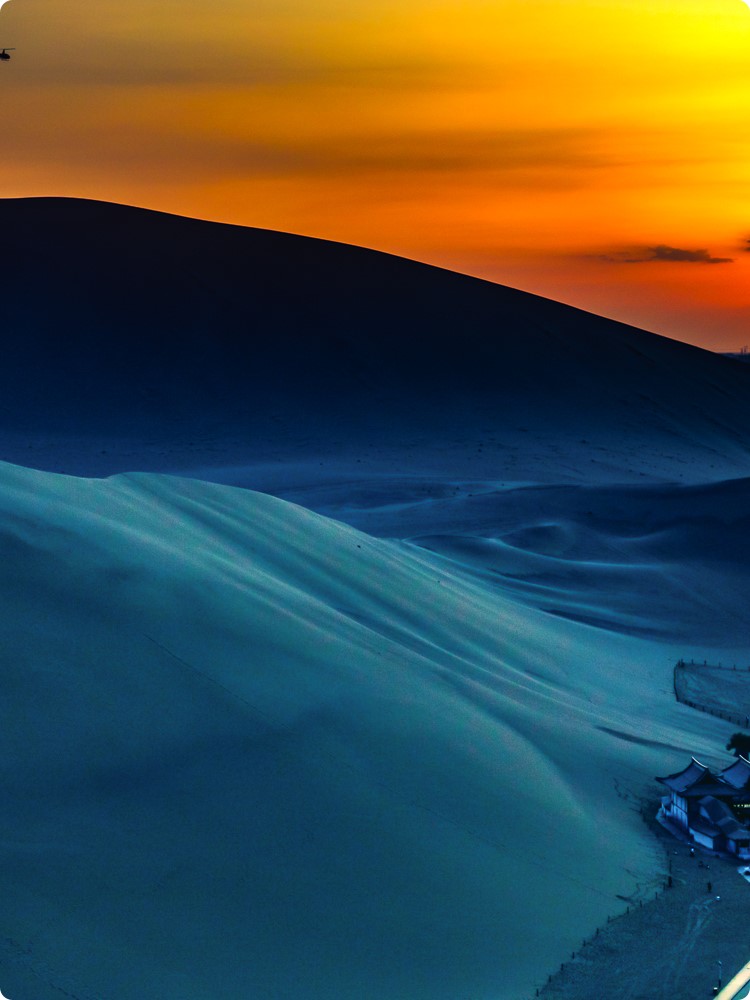
Mingsha Mountain and Crescent Lake: Eternal Romance in the Desert
As the sunset paints the sand dunes a warm gold, simply riding a camel into the sea of sand feels like stepping into the past. The soft chime of camel bells recalls millennia-old caravans carrying silk and porcelain while searching for water among the dunes. The Crescent Lake rests like a new moon at the heart of the desert. The miracle where sand never buries the spring, and the spring never dries up is the desert's gentlest gift to global travelers. At night, lying atop a sand dune as the Milky Way arcs overhead, the wind and the rustle of sand weave a natural melody, creating a starry romance that belongs to all humanity.
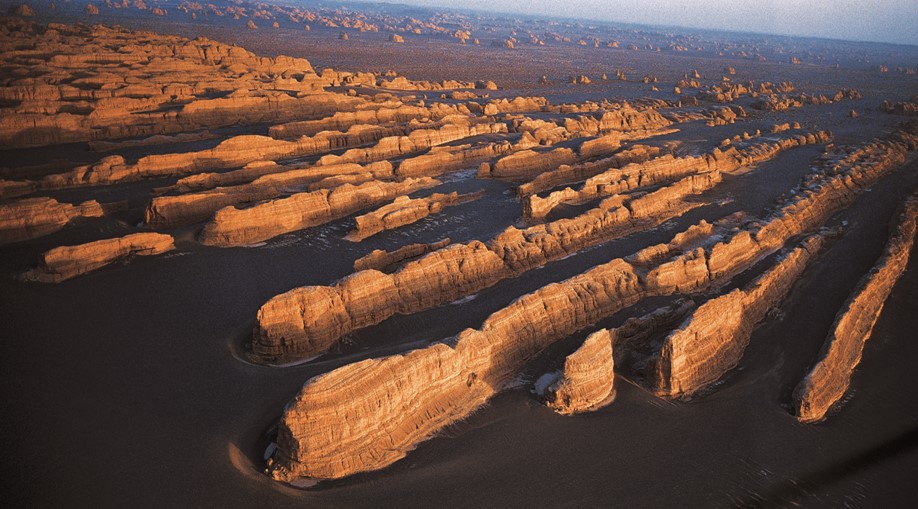
Yardang National Geopark: The Wind-carved Fantasy Castle
Often described as the most Mars-like place on Earth, Yardang landscapes were shaped by over 700,000 years of wind and erosion. The sculpted earth takes on fantastical forms, known locally as "golden lion greeting guests" or "fleet sailing to the sea". Standing before a rock outcrop resembling the Great Sphinx in Egypt, as fierce winds sweep sand and gravel across the rock faces, one can almost hear the echoes of ancient Silk Road caravan bells in this no-man's-land. Like the pyramids of ancient Egypt, each wind-sculpted rock here stands as a footnote to civilization written by nature.
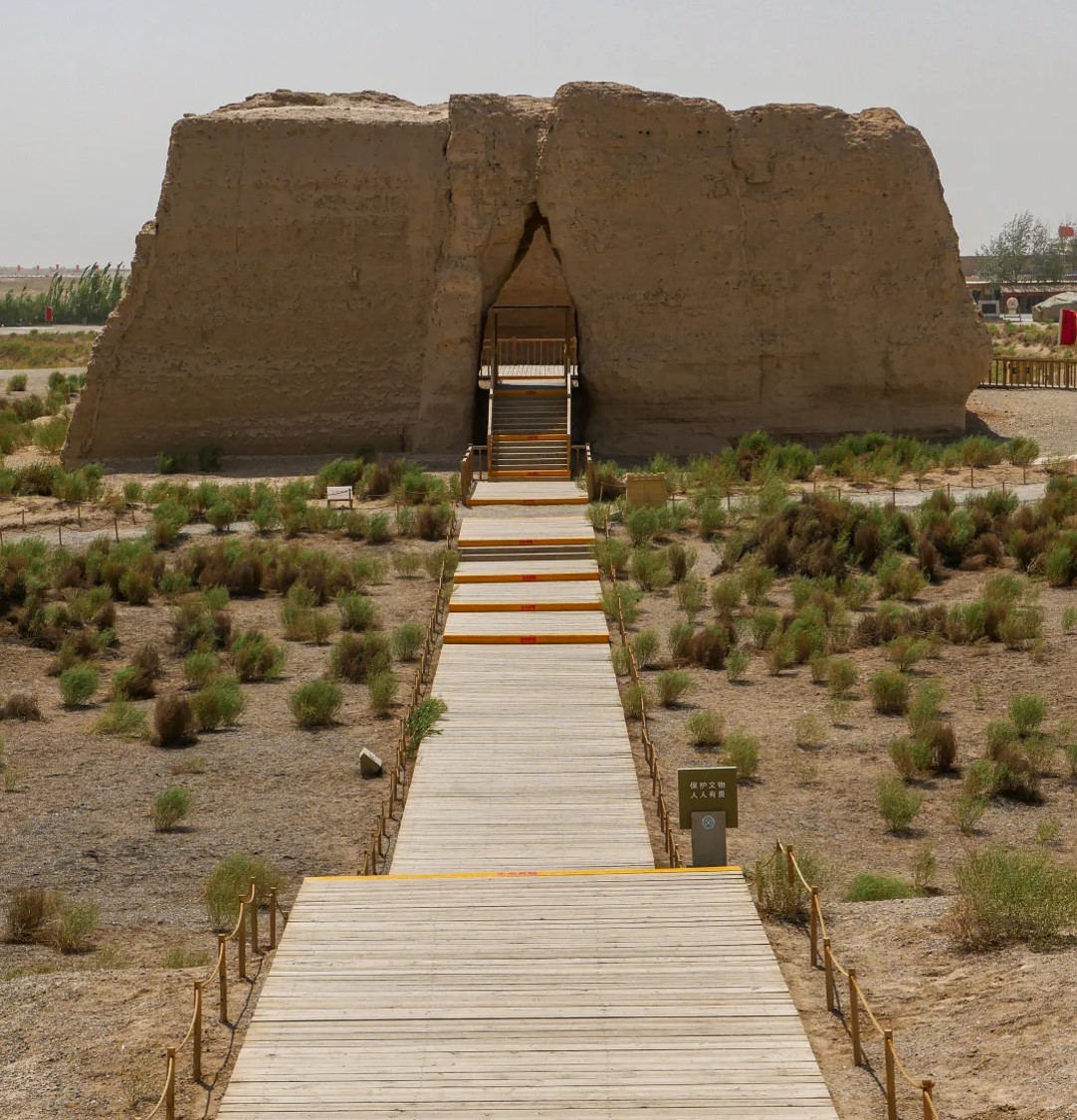
The Yumen Pass Site
"The Yellow River rises into the white cloud; a lonely town is lost amid the mountains proud." Tang Dynasty (618-907) poet Wang Zhihuan's poem has long become a symbolic Silk Road image in the hearts of travelers worldwide. Today, only rammed-earth city walls remain, yet they still speak of the courage of Han Dynasty (206 BC-AD 220) emissary Zhang Qian, whose journeys to the Xiyu (Western Regions) opened the ancient Silk Road, and general Huo Qubing's heroic deeds in the Hexi Corridor. Running your hand along the packed-earth texture of the walls, your fingers may brush against the handprints left by Han Dynasty (206 BC-AD 220) garrison soldiers. Picking up a Han-era pottery shard from the Gobi feels like retrieving a fragment of global trade memory buried by wind and sand.
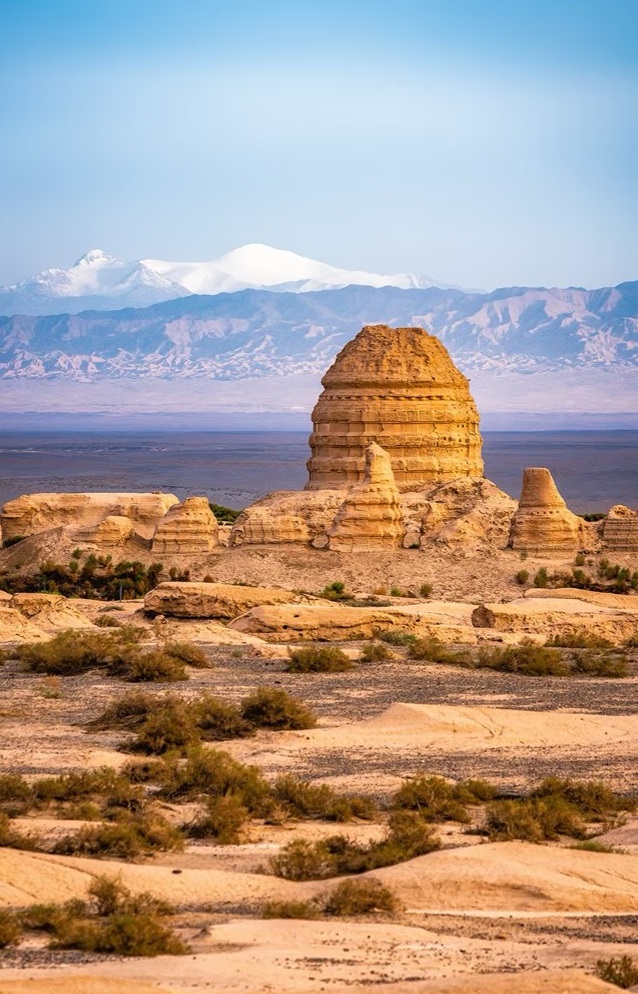
Suoyang City Ruins: A Living Military Museum
Often linked to a Pompeii on the Silk Road, Suoyang preserves remarkably intact city walls, moats, and beacon towers. These structures bear witness to the practice of stationing troops at the frontier to open up wasteland during the Han (206 BC-AD 220) and Tang (618-907) dynasties. The ridges of ancient fields and traces of irrigation systems within the city tell how people carved oases in the Gobi. The remnants of pagodas and murals at the T'Er Temple site record Buddhism's spread along the frontier. Like ancient ruins of the Middle East, every brick and stone here testifies to the continuity of civilization.
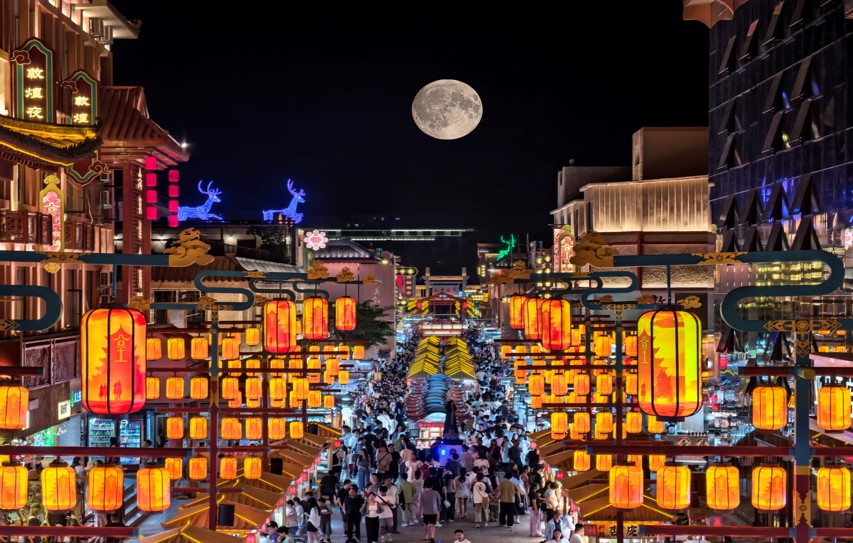
Dunhuang Night Market: A Global Party of Silk Road Flavors
As night falls, the lanterns of Shazhou Night Market light up one by one, recreating the bustling vibrancy of the ancient Silk Road marketplaces. A bowl of donkey meat with yellow noodles offers a fusion of Central Plains wheat cuisine and Western spices. Dried Li Guang apricots carry the sweetness of Dunhuang's sunshine, while apsara-themed cultural souvenirs allow visitors to take home a trace of millennia-old romance. The food and wares here are living relics of global cultural integration.
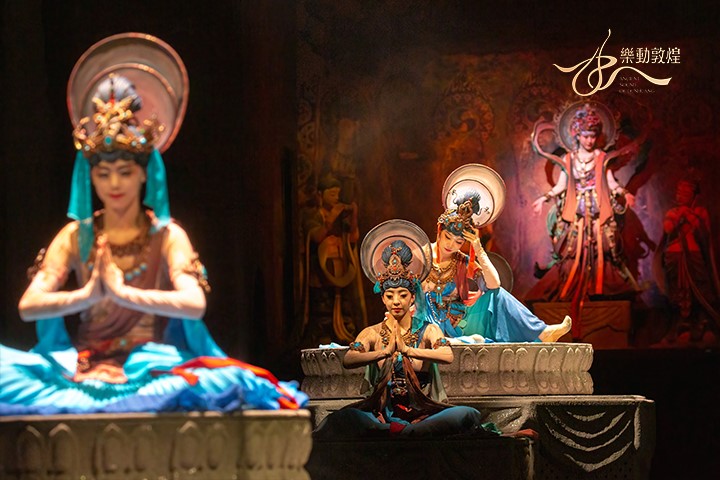
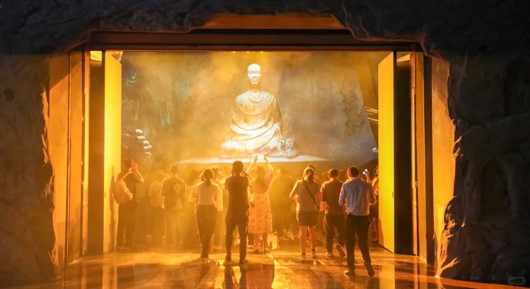
Ancient Sound of Dunhuang: The Silk Road Reborn from Murals
When the lights glow in the cave-style theater venue, performers dressed up like musicians from Dunhuang murals begin to play traditional Chinese instruments, and apsaras with colorful ribbons float past. This immersive performance animates the "static art" of the Mogao Caves. Dancers spin while playing a reversed pipa, konghou strings and jiegu drums resonate together. Through intertwined light and shadow, the performance becomes a dialogue with a millennium-old civilization, a Silk Road dreamscape shared with audiences around the world.
Interested in visiting Dunhuang? Feel free to call the inquiry line at (+86) 155 6977 1025.