



Hubs can enhance innovation competitiveness









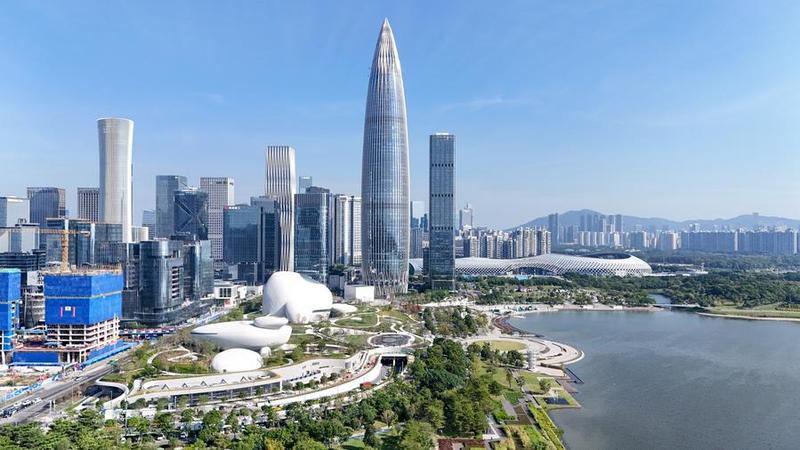
Editor's note: China will develop international technological innovation centers in the Beijing-Tianjin-Hebei region, the Yangtze River Delta and the Guangdong-Hong Kong-Macao Greater Bay Area. Zhou Chengxiong, a researcher at the Institutes of Science and Development of the Chinese Academy of Sciences, spoke to China Economic Times about what these innovation hubs need to do to be competitive. Below are excerpts of the interview. The views don't necessarily represent those of China Daily.
Setting up the three international technological innovation centers is necessary to enhance the country's international competitiveness. Innovations in cutting-edge fields such as artificial intelligence, quantum information and commercial aerospace require large investments in time as well as money, and involve high risks.
Developing international technological innovation centers in the Beijing-Tianjin-Hebei region, the Yangtze River Delta and the Guangdong-Hong Kong-Macao Greater Bay Area will help these areas pool resources and form collaborative synergy to achieve technological breakthroughs. Through collaboration, different cities can combine their efforts in basic research, technology development, pilot testing and large-scale commercialization to form a more resilient and complete innovation system.
The three innovation centers are catching up with hubs in other parts of the world in terms of original innovation, but challenges still exist, including reliance on others for key technologies, difficulties in commercializing some basic research results and a lack of original theories and era-defining technological achievements.
To address these challenges, the centers should follow differentiated development paths. The Beijing-Tianjin-Hebei region should gather national and strategic resources, expand the innovation system led by national laboratories, share Beijing's research resources with Tianjin and Hebei, and strive to become a source of original innovation.
The Yangtze River Delta should establish an industrial innovation alliance across different provinces, and boost support for basic research, pilot testing and final application of innovations in industries. Guangdong, Hong Kong and Macao need to deepen the alignment of their rules and regulations to facilitate and encourage innovation.
The three innovation centers should further reform the management of scientific research, establish unified standards for talent assessment, develop a unified market for technology trade and remove regional barriers to the sharing of research instruments and to intellectual property financing.
Local governments should set up funds for the development of industries, encourage leading companies to establish consortia for innovation and issue more subsidies for the research and development work of small and medium-sized companies.
The three innovation centers should encourage companies to increase their investment in R&D, support universities and enterprises in jointly building platforms for research in cutting-edge interdisciplinary fields and promote collaboration to make breakthroughs for key technologies.
They should also set up specialized pilot testing platforms and organizations providing technology transfer services to translate innovations into real applications at a faster pace, and improve the way benefits are shared among companies, universities and research institutes.
Greater efforts are needed to establish a cross-regional law enforcement mechanism to protect intellectual property, with tougher penalties for violations.