


2025 in review: Resilience amid headwinds
Global climate governance navigates a turbulent 2025, experts say










For global climate governance, 2025 was a year of stark contradictions. It marked the 10th anniversary of the landmark Paris Agreement, yet the spirit of multilateral cooperation that birthed it faced its most severe test amid escalating geopolitical tensions.
Scientific data from last year revealed the earth reached several grim milestones, underscoring a warming planet that persisted despite humanity's response.
While 2025 itself may not reach 1.5 C above the preindustrial level set by the Paris climate accords, the average global temperature from 2023 to 2025 is projected to surpass this threshold, according to the Copernicus Climate Change Service. This would mark the first time a three-year period has been recorded breaching this critical limit.
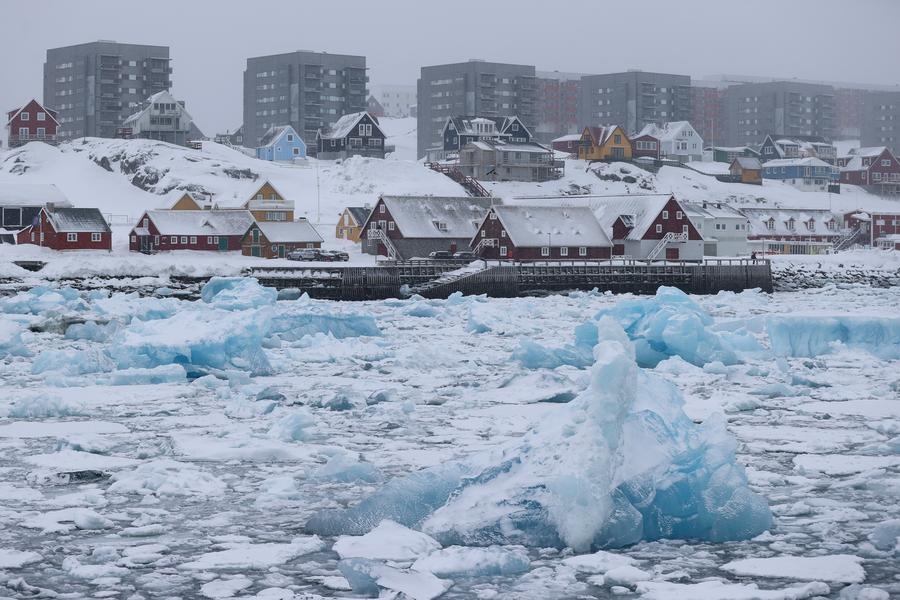
Up north, the Arctic experienced its warmest year from October 2024 to September 2025 since records began in 1900, according to the US National Oceanic and Atmospheric Administration's December Arctic Report Card.
Record-breaking temperatures were accompanied by a surge in climate-related disasters. The beginning of 2025 saw devastating wildfires tear through the Los Angeles area, while Europe endured a summer of record-breaking heat-waves. Toward the end of the year, Southeast and South Asia grappled with the most severe flooding in recent years.
The Global Tipping Points Report 2025 points out that the world is facing a new reality, with global warming expected to exceed 1.5 C within a few years. The report, a collaboration involving over 160 researchers, warns that overshooting this limit places the world in a danger zone where further climate tipping points pose catastrophic risks.
Zhang Jian, vice-president of the Institute of Climate Change and Sustainable Development at Tsinghua University, said that the Sixth Assessment Report of the Intergovernmental Panel on Climate Change finds with high confidence that as global average temperatures continue to rise, so will the frequency and intensity of extreme climate events.
Zhang said that climate change is a typical example of nontraditional security, closely linked to a wide range of economic and social sectors.
"Its impact extends beyond rising global average temperatures to encompass more frequent extreme weather events, ecosystem degradation, and increased resource pressure, leading to systemic shocks to economic stability and food security. These risks, compounding each other, pose significant challenges to economic development and social stability," he warned.
Momentum eroded
This escalating climate crisis demands immediate, coordinated global action, analysts said. However, the very multilateral cooperation needed is being undermined by rising geopolitical risks and weakening economic growth momentum.
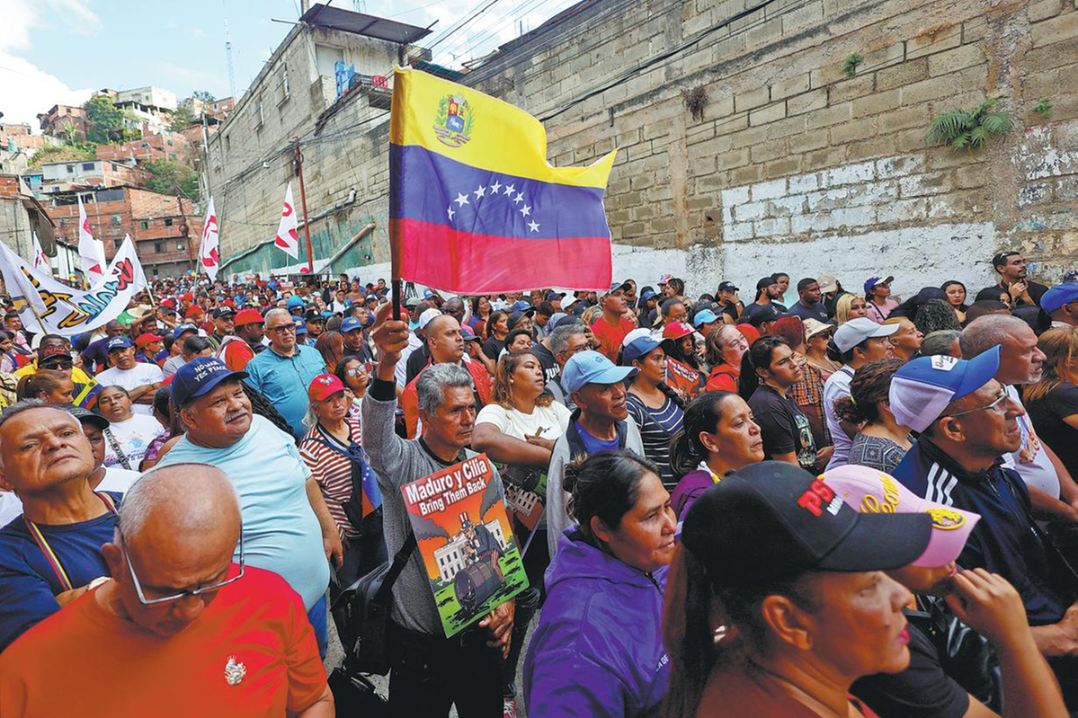
The year 2025 began with a major setback when US President Donald Trump signed an executive order to withdraw from the Paris Agreement, a move he first initiated in 2017. Accompanying this formal exit was a rollback of environmental regulations and cuts to climate science funding.
Zhang noted that the US government's announcement of its second withdrawal from the Paris Agreement has put pressure on global climate governance and created uncertainty for financial and capacity-building support within international climate cooperation.
Ma Jun, founding director of the Beijing-based Institute of Public and Environmental Affairs, described the US retreat as a significant problem. "It directly reduces climate funding and affects the global emission reduction process, as the US is no longer bound by the Paris Agreement and will not implement related emission reduction requirements."
Ma also warned of longer-term damage caused by these moves to climate-related scientific research, which underpins the global consensus needed for joint action.
Apart from the U-turn of the US, experts noted a profound shift in the international community's attitude toward climate change since the Paris Agreement's adoption in 2015.
"Current geopolitical tensions have fragmented global governance, including on climate change, weakening or even collapsing mutual trust between countries," Ma said.
"In 2015, there was a belief that climate change was an existential threat facing humanity collectively, and there was hope to address it together through multilateral mechanisms," he explained. "But now, climate governance has become much more complex, involving not only development rights but also competition arising from the green economic transition process, among other aspects."
All these changes have weakened the impetus for climate governance from governments, according to Ma.
Sun Yixian, an associate professor of international development at the University of Bath, attributed recent backsliding in climate action of some Western countries to the problem of benefit allocation during the green transition.
These countries' policies more often reflect their interest group politics, Sun noted. "Similar phenomena also exist on a global scale. Countries that feel they don't gain enough from the green transition may try to delay or block it."
He also highlighted the negative effects of going against multilateralism demonstrated by the current US foreign policy on global climate governance. "For example, the tariff war the US has initiated aims to engage and negotiate with each country individually, which undermines the norms of multilateral international cooperation, significantly increases the cost of interstate coordination, and fuels zero-sum competition instead of collaboration."