


Global dialogue as fine as porcelain
Artists of Dehua county receive support in their works going overseas, as they innovate the centuries-old craft known as 'ivory white', Yang Feiyue reports.









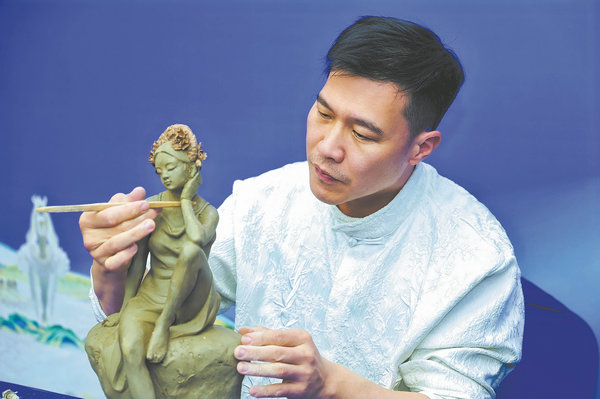
On a chilly December afternoon in Beijing, the air in the Yellow River hall of the Ministry of Culture and Tourism is warmed by intense focus.
Li Jinfeng, a porcelain artist from Dehua county of Quanzhou in eastern Fujian province, leans over his worktable, holding a bamboo tool as fine as a strand of hair.
He is sculpting the detail of a Xunpu village woman from the province's southern region into a piece of creamy, luminous white clay.
The woman's head is slightly tilted, her fingers seemingly brushing against the flowers that adorn her hair. Most mesmerizing is the layered, delicate floral crown — each petal taking form under Li's expertise.
Guests from Jordan, Turkiye, and Italy gather around Li's table, forming a quiet circle as they witness the centuries-old craft freeze a cultural moment into a work of art.
"The texture of Dehua white porcelain, what we call 'ivory white', is perfect for capturing such fine detail," Li explains to the crowd who attends the launch ceremony for Beauty in Diversity, Porcelain as a Bridge, the 2026 Blanc de Chine Dehua porcelain international cultural exchange activity hosted by the Quanzhou culture, radio, television and tourism bureau and the Dehua government.
"It can convey the softness of petals and the fineness of hair," says the artist.
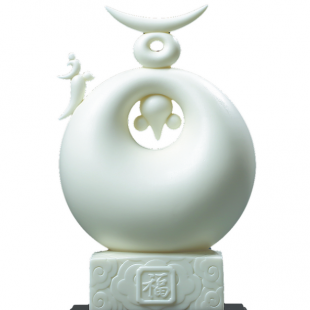
Known in the West as Blanc de Chine, this porcelain from Dehua county is celebrated for its unique white hue and jade-like translucency, a quality derived from local high-purity kaolin clay, with a history stretching back to the Song (960-1279) and Ming (1368-1644) dynasties.
For centuries, Dehua's Buddhist statues, tea sets, and scholarly objects were exported worldwide. However, by the late Qing Dynasty (1644-1911), its international visibility declined slightly due to geopolitical disruptions, including wars and maritime restrictions.
But production soon resumed, and Dehua porcelain regained international recognition through exhibitions, diplomatic gifts, exports, and cultural exchange efforts in the 20th and 21st centuries.
Li has devoted nearly three decades to the art of porcelain. Some of his representative works, like the Beauty in Books series, which blends classical female figures with books, and the solemn Ksitigarbha Bodhisattva statue, have found homes in galleries and private collections in France and the United Kingdom.
"The fact that my works are taken overseas is closely tied to Dehua's systematic efforts to go global," he says.