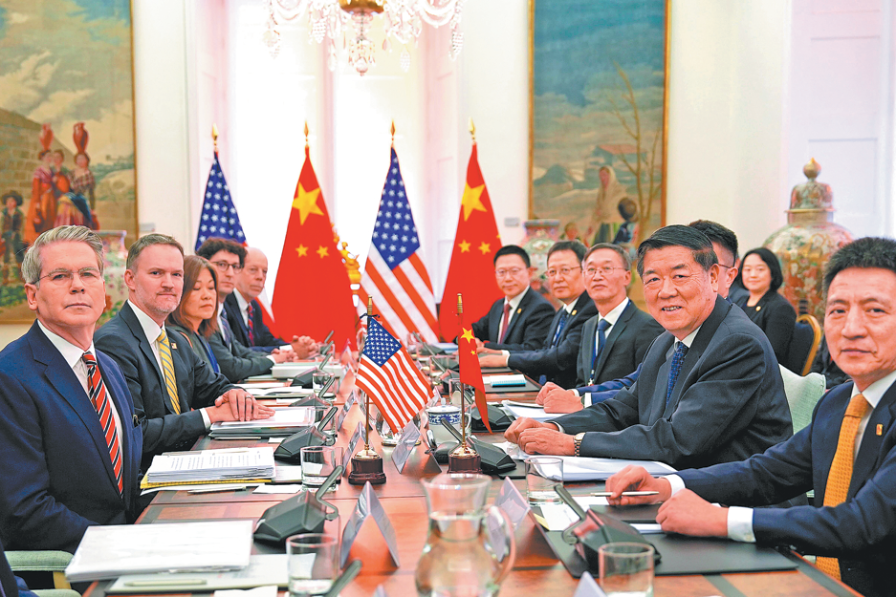



China defends curbs on dual-use goods exports
Restrictions could deal heavy blow to key Japanese industries, experts say









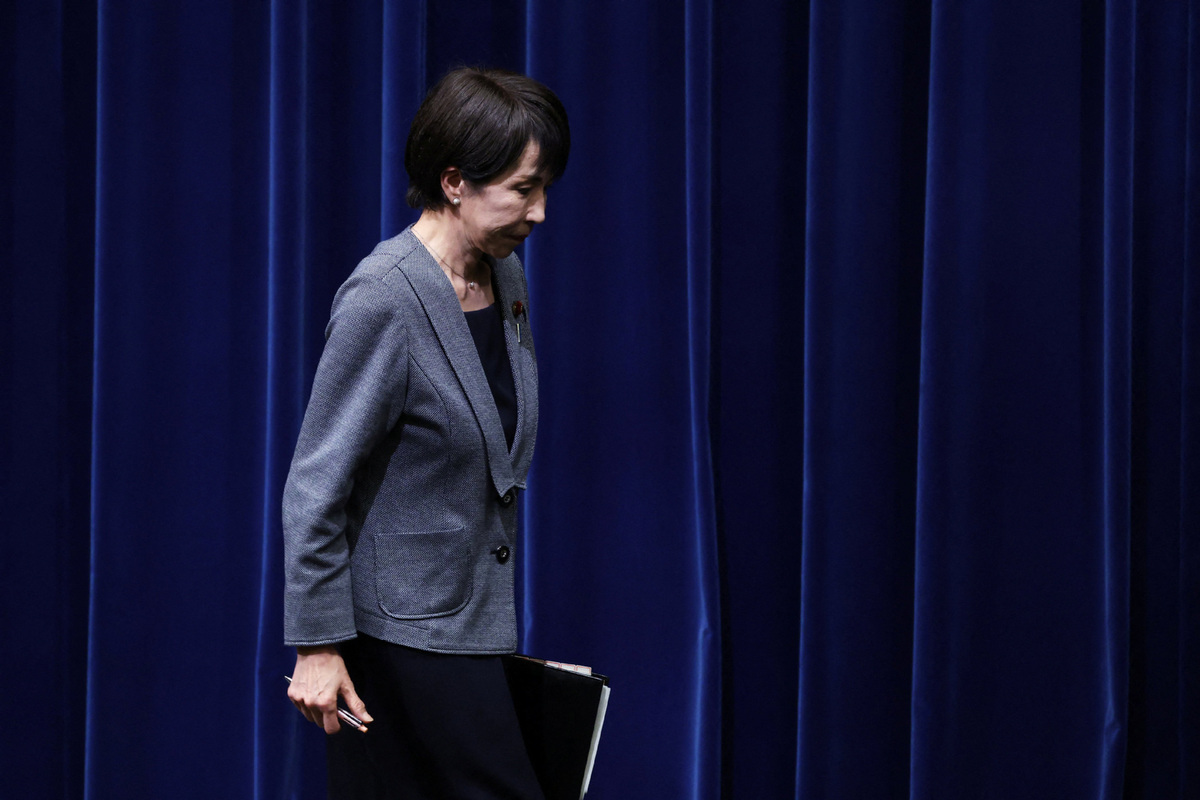
China's Foreign Ministry defended its right to take measures to ban exports of dual-use goods on Japan, which experts believe will deal a heavy blow to key Japanese industries.
It is completely legitimate and reasonable for China to take measures to ban exports of dual-use goods that can serve military purposes to Japan, the ministry's spokeswoman Mao Ning said on Wednesday.
Mao stressed that Japanese Prime Minister Sanae Takaichi's erroneous remarks on China's Taiwan infringed on the country's sovereignty and territorial integrity, blatantly interfered in its internal affairs, and sent a military threat against China.
During a parliament session in early November, Takaichi said that a "Taiwan contingency" could trigger a "survival-threatening situation" for Japan, implying military intervention in the Taiwan Strait.
The Japanese Ministry of Foreign Affairs protested against China's latest measure, but Mao urged Japan to face up to the root of the issue, reflect upon and correct its wrongdoing, and retract Takaichi's erroneous remarks.
China's Ministry of Commerce announced on Tuesday that Beijing has decided to strengthen export controls on dual-use items to Japan, effective from Tuesday, to safeguard national security interests and fulfill international nonproliferation obligations.
"China prohibits the export of all dual-use items to Japanese military users, for Japan's military use, and for any other end-users and end-use purposes that help enhance Japan's military capabilities," the ministry said.
Dual-use items refer to those that can be used for both civilian and military applications.
Should rare earth elements be included in the restrictions, the potential impact on the Japanese economy could be even more significant, experts warned.
Broader economic fallout
Japanese economists have expressed concern over the broader economic fallout.
Hidetoshi Tashiro, chief economist at Japan's Infinity LLC and CEO of Terra Nexus Project Management Services, said that due to a lack of a clear definition of dual-use goods to be exported to Japan, it is hard to know the exact scope of the controls." As a result, it is difficult to determine which products are subject to restrictions, discouraging firms from placing or accepting orders," he said, adding that the ban could lead to an overall contraction in trade.
According to estimates by Takahide Kiuchi, executive economist at Nomura Research Institute, the dual-use items could cover semiconductors and electronic components, precision machinery, EV-related lithium compounds and rare earths, telecommunications equipment, and personal computers.
Japanese trade figures show that in 2024, imports from China of electrical machinery and telecommunications equipment totaled 7.7 trillion yen ($49.2 billion), while personal computers and peripherals accounted for 2.4 trillion yen, precision optical instruments 0.4 trillion yen, and rare earths 0.2 trillion yen. Together, these imports amounted to about 10.7 trillion yen, representing roughly 42 percent of Japan's total imports from China that year.
China is also considering tightening export permit reviews for certain rare earth-related items to Japan, a source familiar with the matter told China Daily on Tuesday.
Tashiro noted that Japan's automotive industry could be forced to significantly cut production or even halt operations if rare earth supplies are disrupted.
The impact would quickly spread to a wide range of parts manufacturers. Tashiro said the broader electronics industry would face similar challenges, especially the semiconductor manufacturing equipment sector.
Nomura Research Institute estimates that if China's restrictions on rare earth exports to Japan were to last three months, Japan could suffer losses of about 660 billion yen, with both nominal and real GDP reduced by an annualized 0.11 percent. If the restrictions were extended to one year, losses could reach approximately 2.6 trillion yen, dragging down the GDP by 0.43 percent. Tashiro warned that prolonged or expanded export controls would significantly increase unpredictability in trade.
Tokyo stocks ended lower on Wednesday, with the benchmark Nikkei stock index closing down 1.06 percent from Tuesday.