



Real estate stabilization key objective









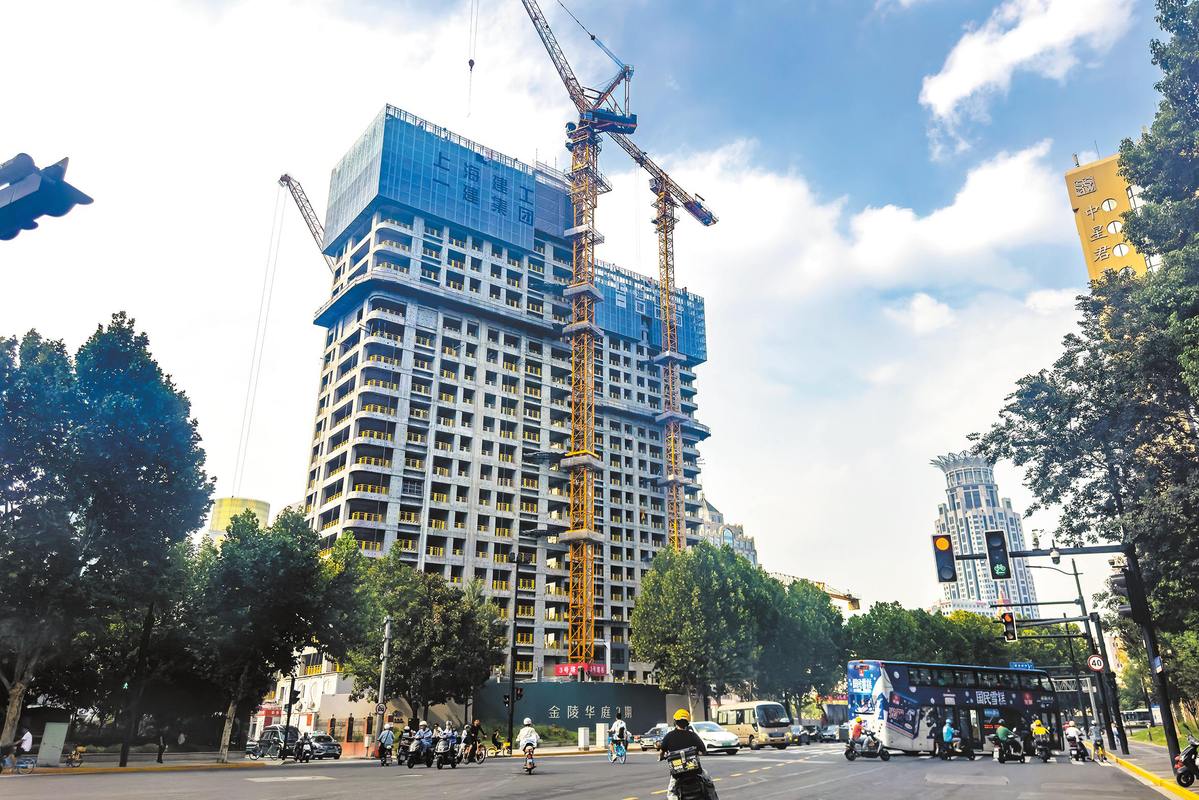
China is likely to roll out more forceful measures to stabilize its real estate sector in order to reinforce market confidence and prevent a sustained decline in property values from further dampening consumption, analysts said.
Their comments came after Qiushi Journal, a flagship magazine of the Communist Party of China Central Committee, published a commentary in its first issue of 2026, stressing that real estate policies must be introduced in "a decisive and comprehensive manner", rather than employing a piecemeal "drip drip" rollout.
The article, entitled "Improving and Stabilizing Real Estate Market Expectations", reaffirms the property sector's dual role as a "key component of household wealth" and a "cornerstone of the national economy".
"A sustained downturn in the property market extends beyond affecting developers and local government finances. It ripples through the household economics of millions," said Robin Xing, chief China economist at Morgan Stanley.
Xing said that residential real estate constitutes a substantial share of household wealth in China. When property values fall, homeowners perceive a palpable reduction in personal net worth, which undermines financial confidence, fueling precautionary saving and cooling consumption.
By strengthening macro-regulation of the real estate market with more forceful and targeted measures, the Qiushi article said that China could improve and stabilize market expectations, shorten the adjustment period as much as possible and tamp down market fluctuations.
Market watchers said that reducing housing inventory has become the most pressing priority for stabilizing China's real estate market, requiring support from a broader and more diverse set of policy tools.
Speaking at a national conference in late December, Minister of Housing and Urban-Rural Development Ni Hong said authorities will implement a targeted, city-by-city approach to manage new housing supply and reduce existing housing inventory.
Shanghai-based E-House China R&D Institute said the time needed to unload existing new housing inventory in 100 major cities reached 27.4 months in November — nearly twice the 14-month period widely regarded as a healthy upper limit.
Analysts expect supportive policies — such as further relaxation of home purchase restrictions, easing financial burdens on homebuyers and government-led purchases of existing properties for conversion into affordable housing — to be unveiled at a faster pace.
Wang Qing, chief macro analyst at Golden Credit Rating International, suggested that further easing of homebuying restrictions in inner ring areas of Beijing and Shanghai could be considered.
Wang expects that more sought-after property markets in these major cities serve as important national barometers. Their stabilization would likely create a positive ripple effect, helping to anchor expectations and guide sentiment in smaller cities facing greater market pressure.
"More importantly, measures such as targeted cuts to existing mortgage rates and fiscal interest subsidies should be rolled out to ease the burden of housing loans for households,"Wang said. "That is crucial for stimulating demand and shifting market sentiment at this stage."
Ni, with the top housing regulator, said the government will "increase the supply of government-subsidized housing to create a safety net for eligible low-income urban families, while implementing city-specific policies to meet the basic housing needs of groups — including new urban residents and young people."
Yuan Haixia, dean of the research institute at China Chengxin International Credit Rating, said that with China's urbanization rate still roughly 15 percentage points lower than the 80 percent level typical of advanced economies, ongoing rural-to-urban migration is expected to underpin long-term demand in the property sector.
This shift, Yuan said, has created huge new urbanites — both migrants and recent city dwellers.
"The scale of their housing needs is significant," she said. "While it remains important to encourage homeownership through the commercial market, it is equally crucial to supply around 100 million units of government-subsidized housing to meet the needs of this key demographic."
wangkeju@chinadaily.com.cn