


US attacks on Venezuela violate international law









The capture of Venezuelan President Nicolás Maduro and his wife by US forces operating in Venezuela, and his forced transfer to the US for trial, pose a significant challenge for international law.
The US has described the operation as a judicial "extraction mission" undertaken by law enforcement operatives supported by the military. Yet this was a military operation of considerable scale, involving strikes on military targets in and around Caracas, the capital, and the forcible abduction of a sitting president by US special forces. It is clearly a significant violation of Venezuelan sovereignty and the UN Charter.
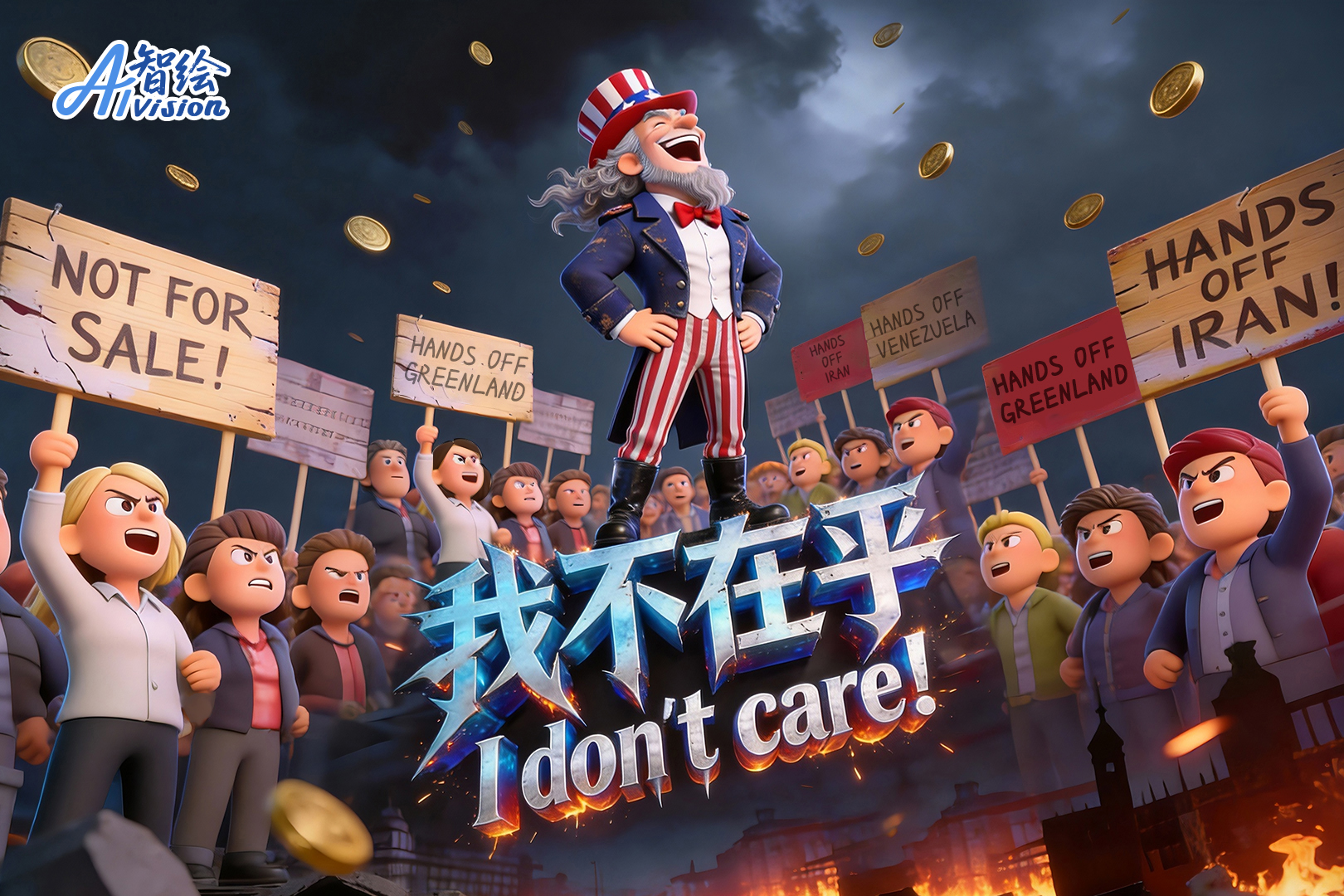
This fact is compounded by President Donald Trump's announcement during his news conference of Jan 3 that the US will "run" Venezuela and administer a political transition, or regime change, under the threat of further, more massive uses of force. In addition, there seems to be a determination to use the threat of force to extract funds and resources in compensation for supposed "stolen" or nationalized US assets and oil.
It is difficult to conceive of possible legal justifications for transporting Maduro to the US, or for the attacks. There is no UN Security Council mandate that might authorize force. Clearly, this was not an instance of a US act of self-defense triggered by a prior or ongoing armed attack by Venezuela.
The White House asserts that it is defending the American people from the devastating consequences of the illegal importation of drugs by "narco-terrorists" — consequences that could be compared to an armed attack against the US.
However, in international law, only a kinetic assault with military or similar means qualifies as a trigger for self-defense.
This leaves the argument of "pro-democratic intervention". Notably, the US did not use "pro-democratic" action as a "formal legal justification" when it invaded Grenada in 1983 and displaced its government. Neither did it do so when it invaded Panama in 1989 and captured the then president Manuel A. Noriega, with a view to putting him on trial for drugs offenses.
Washington avoided doing so because it feared creating a precedent that would justify "pro-democratic" interventions by other countries which it might oppose. Instead, it relied on an unconvincing claim to self-defense.
In the case of Venezuela, the US alleges that Maduro "stole" the presidential poll of 2024, that opposition candidate Edmundo Gonzalez Urrutia was the true victor, and that Venezuelan authorities falsified the result of 2025 parliamentary elections.
But in classical international practice, those who exercise effective control over a country's population and territory will be treated as the government. Considerations of legal or political legitimacy matter less. Accordingly, most governments have abandoned the practice of formally recognizing newly established governments, however they come to power. If they are effective, they are the government.
However, in the 1990s, with the end of the Cold War, the doctrine articulated by the Universal Declaration of Human Rights gained in currency.
In 1990, Jean-Bertrand Aristide was elected president of Haiti. But he was soon displaced in a coup mounted by a military junta. In 1994, after many failed diplomatic attempts to restore the democratic outcome of the elections, the UN Security Council formally authorized a US-led force to facilitate the departure of the generals. Faced with the imminent US invasion, they gave in and power was restored to Aristide.
This doctrine cannot be invoked in cases of creeping authoritarianism or in response to claims that elections have not been free and fair. It only applies in cases of counter-constitutional coups or where there is an election result that remains unimplemented by a sitting government.
The doctrine is generally only applied where the UN Security Council, or at least a credible regional organization, has granted a mandate — to avoid individual states seeking regime change in pursuit of their own agendas. Clearly, in this instance, there was no mandate from the UN or the Organization of American States.
Maduro and his wife will however find little comfort in the fact that they were removed from Venezuela by way of an internationally unlawful intervention. US courts consistently apply the so-called Ker-Frisbie doctrine, which holds that they will exercise jurisdiction, irrespective of the means by which the body of the defendant was procured for trial.
The US will also refuse to extend Maduro the immunities that automatically apply to a serving president when travelling abroad. This too, is legally controversial. But as Noriega experienced before him, the US authorities are unlikely to be deterred by this fact.
Overall, this episode further erodes international confidence in the principle, agreed after the horrors of the 20th century's world wars, that states must not enforce their legal claims or political demands through the use of force.
The fact that the US now claims to "run" Venezuela and to put in place its future government under the shadow of the gun, along with the demand to dominate the oil sector and extract compensation, will reawaken uncomfortable memories of previous US dominance in the region.
The UN Secretary-General has noted that the rules of international law have not been met in this instance, calling it a "dangerous precedent". Many other governments and international institutions are speaking out in a similar vein, though some others have expressed support.
It will be interesting to see whether the UK and other European US allies will be able to overcome the recently developed sense of diplomatic deference to President Trump and stand up in defense of the international rule of law. This may well be the moment when Western Europe realizes that the US has decisively abandoned the core values that united them for the past century.
The author is a professor of International Law and International Constitutional Studies in the University of Cambridge. The original version first appeared on the website.
https://www.chathamhouse.org/2026/01/us-capture-president-nicolas-maduro-and-attacksvenezuela-have-no-justification
The views don't necessarily represent those of China Daily.
If you have a specific expertise, or would like to share your thought about our stories, then send us your writings at opinion@chinadaily.com.cn, and comment@chinadaily.com.cn.