


Into China's dreamscape beyond the clouds
Zhangjiajie is emerging as a must-see destination for global travelers, Xu Lin and He Chun report.









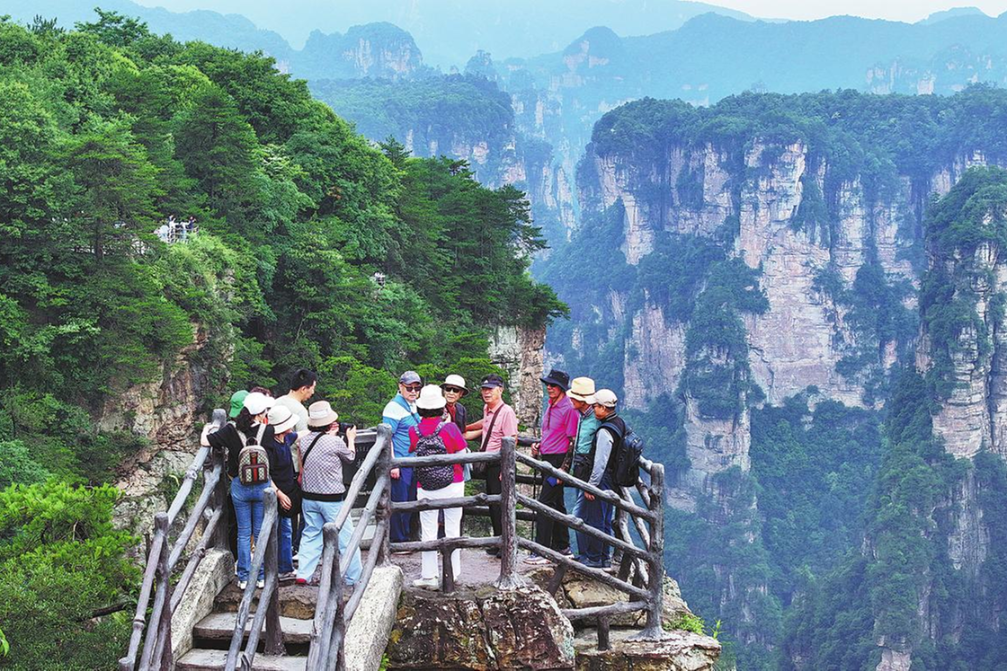
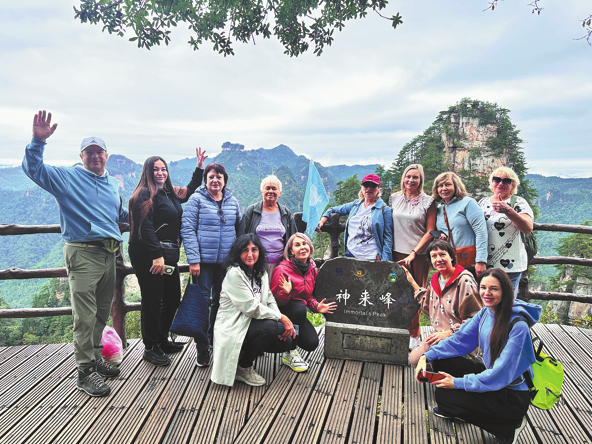
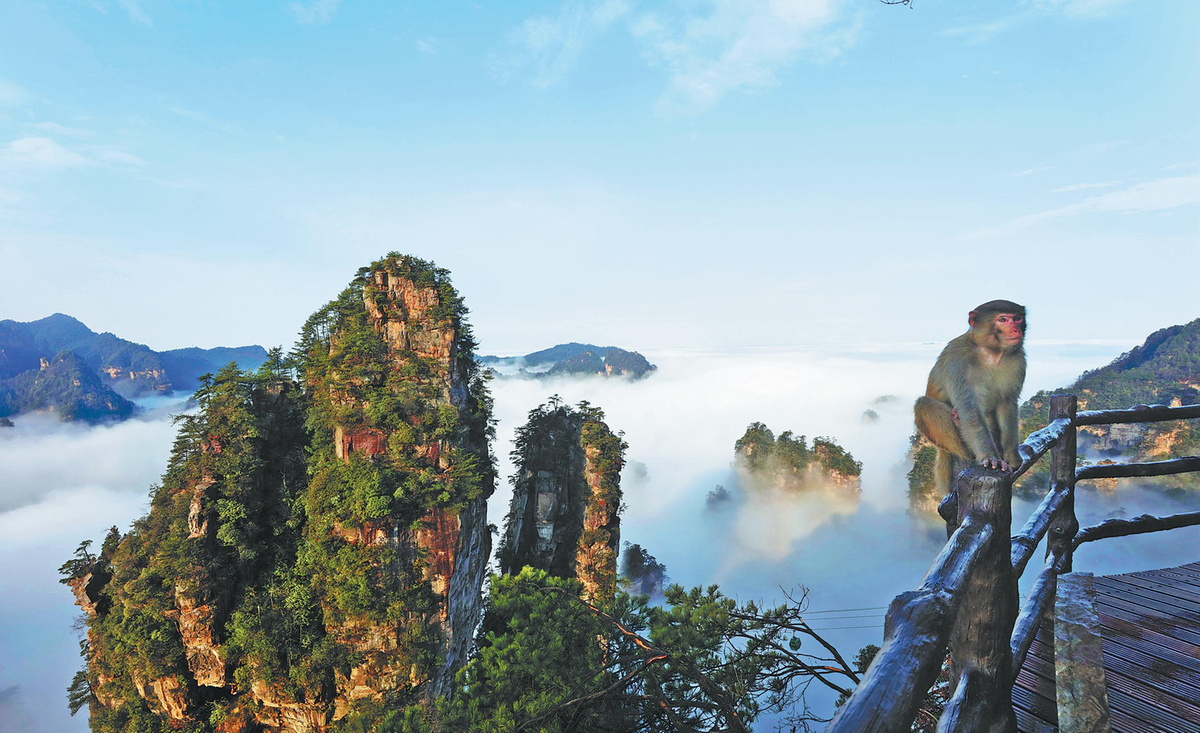
Against the backdrop of towering, otherworldly sandstone pillars and peaks at Zhangjiajie National Forest Park, Hunan province, a group of inbound tourists stands transfixed, their eyes soaking in the sweeping, mist-shrouded landscape.
The park is a core part of the Wulingyuan Scenic and Historic Interest Area, a UNESCO World Natural Heritage site. These surreal karst formations and peak forests are said to be the inspiration for the floating Hallelujah Mountains in director James Cameron's Hollywood blockbuster, Avatar.
"I'm thrilled to visit China and experience its rich culture. The landscapes here are diverse and the mountains are magnificent. This is a once-in-a-lifetime experience," says Lea Sutter, a ceramist from France. Her journey was made seamless by China's 30-day unilateral visa-free policy.
Australian tourist Jared Gaskell shares the same feeling. "This policy allows me to easily visit this wonderful country. What drew me to China was seeing many social media posts about its picturesque scenery," he says.
He takes the 326-meter-high Bailong Elevator, the world's highest outdoor lift on a sheer cliff face. It carries tourists to the top in about two minutes, unveiling a panorama of the national forest park's towering sandstone pillars and peaks.
"The outdoor elevator is absolutely amazing, I can't believe how fast it is and the breathtaking views that I see," he says.
In early November, China announced the extension of its unilateral visa-exemption arrangements for more than 40 countries to Dec 31, 2026, as previous arrangements for some nations were set to expire at the end of 2025.
Boosted by visa facilitation policies, rich cultural and tourism activities and improved services, "China Travel" continues to gain momentum among inbound tourists.
Epitomizing this trend, Zhangjiajie city has emerged as a standout destination.
Official data shows that from January to November last year, the city received about 1.25 million inbound visitors from 192 countries and regions, with a year-on-year increase of 31.1 percent. South Korea is the city's top source market, while Malaysia, the United States, Singapore, Indonesia and Russia are also its key source countries for inbound tourists.
"An obvious change in recent years is that inbound tourists traveling to the city come from diverse countries and regions, not just from Southeast Asia," says Ding Shibiao, 57, deputy general manager of Hunan Star Tours International Travel Service Co. The travel agency mainly receives inbound tour groups from Europe, North and South America.
He recalls that a growing number of inbound tourists had come to Zhangjiajie since around 2010, which prompted him to switch from working as a Mandarin tour guide to an English-speaking one at that time.
"The surge in inbound tourists means more job opportunities and higher incomes for us in the tourism industry. Furthermore, engaging with visitors from different countries and regions has also expanded tour guides' horizons, allowing them to learn about unique customs and cultures," he says.
"Inbound tourists tend to appreciate the picturesque scenery slowly rather than getting a fleeting glance. They are also curious about the daily lives of local residents, such as grocery shopping, square dancing and practicing tai chi," he says.
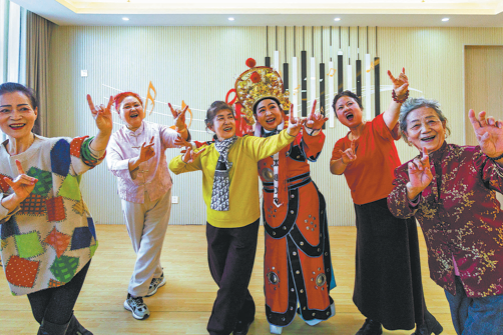
They also show great interest in the customs and rituals of the ethnic groups in Zhangjiajie, with cultural performances serving as a key way for this exploration. "Foreign tourists rely on subtitles to grasp the story, but the art itself transcends all boundaries," Ding says.
Set against the majestic backdrop of the canyon of Tianmen Mountain, the Tianmen Fox Fairy Show is a large-scale outdoor spectacle staging the legendary Chinese folk love story of Liu Hai and the Fox Fairy with breathtaking special effects.
Charming Xiangxi, or Charming Western Hunan, is a grand indoor ethnic song and dance extravaganza. It vividly showcases the daily life, wedding and funeral rites and religious practices of local ethnic groups such as Tujia and Miao.
According to Ding, most inbound tour groups spend three days in Zhangjiajie city, which is one of their destinations in China. The primary advantage of winter travel at this time in Zhangjiajie is the smaller crowds, and the snow-clad landscapes.
Ding has observed significant improvements in infrastructure within scenic areas in recent years. These enhancements include the addition of multilingual signs and services, which cater to a diverse range of international tourists, as well as the implementation of convenient payment options that facilitate transactions for inbound visitors. The number of high-grade hotels is also on the rise, offering refined services.
Tuo Jiming, marketing director of the administrative bureau of Zhangjiajie National Forest Park, outlined an ambitious vision to transform the park into a world-class scenic area, with strategic efforts that go beyond infrastructure.
"We will develop world-class trekking routes and collaborate with international associations of geology, photographers and outdoor adventure, to promote the unique landscape of Zhangjiajie," he says.
Tailored small-group tours, such as hiking, photography, and geological study programs, will be designed for markets like Europe and North America.
Leveraging the region's exceptional ecosystem, the national forest park will cooperate with global health institutions to develop wellness products such as forest therapy.
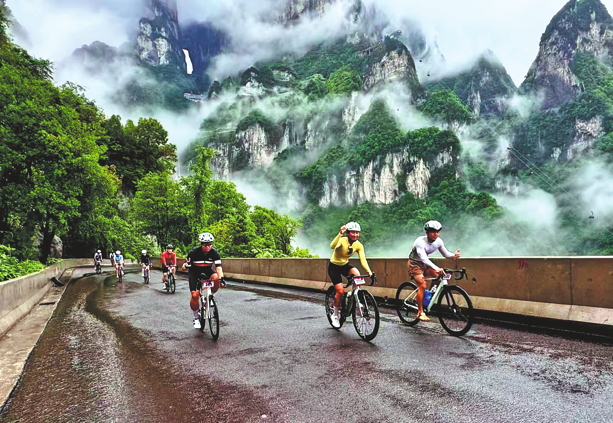
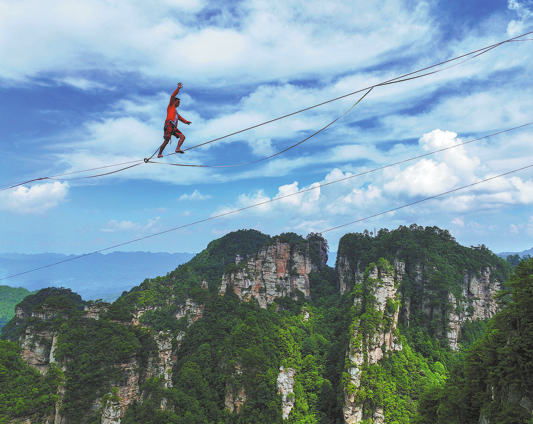
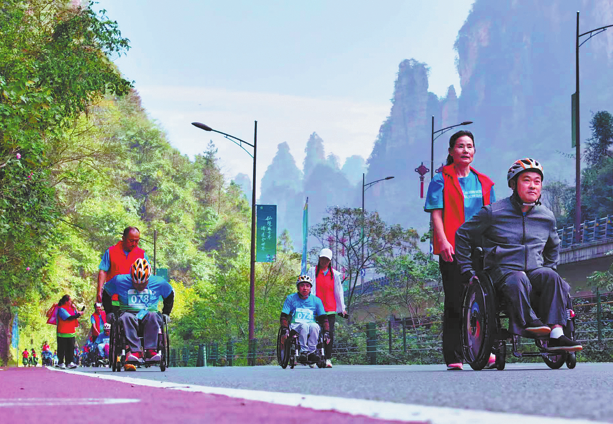
The park has hosted thrilling international outdoor sports activities that attract participants from home and abroad, such as trail running, an extreme swing competition on an over-300-meter-high cliff, and a slackline walking competition.
"We're also committed to fusing the national forest park's fairy-tale scenery with authentic Tujia ethnic group culture. We provide a dual experience for global travelers, a nature epic paired with cultural immersion," Tuo says.
He believes that tourism is one of the best ways to keep culture alive. The scenic area supports local intangible cultural heritage inheritors to interact with tourists and perform for them.
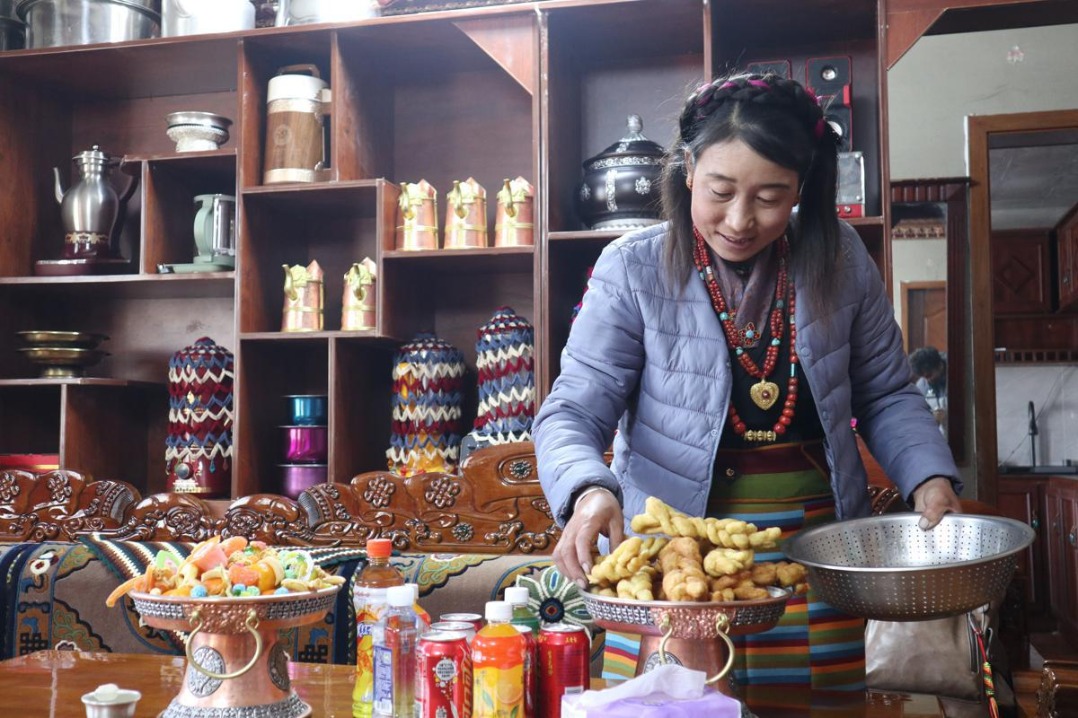
The park will establish intangible cultural heritage workshops including Tujia brocade weaving and Miao silver jewelry making, allowing tourists to create their own pieces and take them home as unique souvenirs.
"Ecological protection is our inviolable red line. For years, we have steadfastly implemented a phased relocation project for residents in the heritage site's core area, updated protection regulations, and advanced the revision of overall management plans. Also, all new projects must undergo strict environmental impact assessments," he says.
"When local residents benefit from tourism development, they will become the staunchest guardians of the heritage site. We train and employ locals in the tourism industry and support them to run snack businesses," he says.
With an ambitious goal of becoming a world-class tourist destination, Zhangjiajie city is launching a comprehensive upgrade of its tourism services and facilities, such as developing infrastructure and new tourism projects.
According to Tian Hongman, deputy director of the city's culture, tourism, radio, television and sports bureau, Zhangjiajie is striving to add new direct flights to key source tourist markets and increase flight links with major domestic cities such as Beijing and Shanghai. To attract independent travelers, a small portion of seats on international charter flights will be reserved for online platforms.
To manage visitor overflows, Zhangjiajie's major scenic areas have implemented crowd control and reservation systems, leveraging big data analytics to predict visitor flow patterns and requiring tourists to book specific time slots for entry.
She says local authorities are working together to enhance the multilanguage tour guide workforce. Measures include special training programs, partnerships between international travel agencies and colleges to foster foreign language tour guides, and establishment of service institutions to support the employment of such talent.
"We are upgrading our food services in line with international standards. This involves introducing global restaurant brands and diverse culinary options, while also fostering local food brands and developing snack streets," she says.
In addition to upgrading star-rated hotels, the city will develop its own high-quality, themed minsu (Chinese-style bed-and-breakfast establishment) that integrates ecotourism with ethnic group cultural experiences.




Today's Top News
- China's CPI up 0.8% in Dec
- Report slams Tokyo's nuclear weapon aims
- Nation's crime rate touched record low last year
- Nation's space program records stellar year of firsts
- Top Party leadership hears series of annual work reports
- 'Great ship' of shared future sails onward