



Pause in fighting allows repairs at nuclear plant









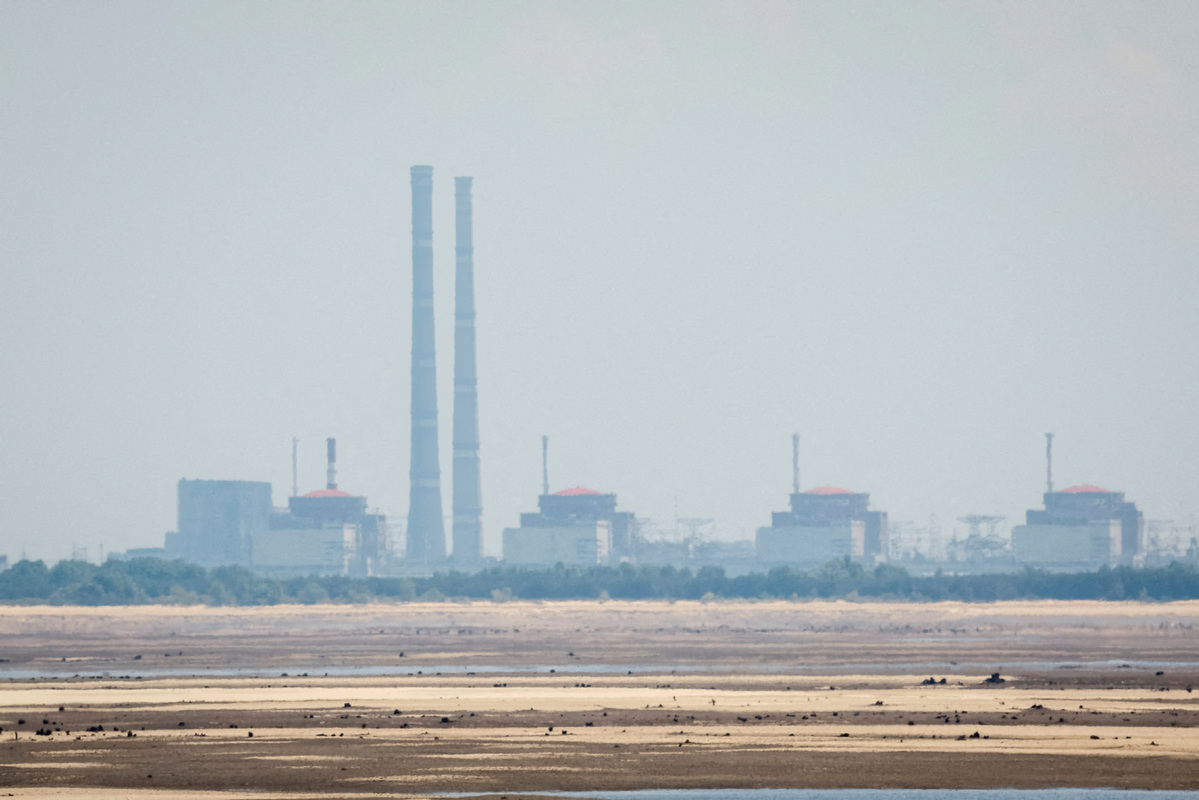
A ceasefire brokered by the International Atomic Energy Agency, or IAEA, has allowed repair work to be done to power supply lines near the Zaporizhzhia nuclear power plant in Ukraine that will reduce the risk of an accident occurring during the Russia-Ukraine conflict.
IAEA Director-General Rafael Grossi confirmed that both Ukrainian and Russian forces had agreed to what he called a temporary "window of silence" near the plant, the largest nuclear facility in Europe, which has six reactors and that, according to the Kyiv Independent website, has not produced electricity since it was occupied by Russian troops in March 2022.
Before the outbreak of the conflict, which began in its current form in February 2022, the power plant, in the city of Enerhodar that was built in the southeast of the country around the nuclear facility, generated around 20 percent of Ukraine's electricity.
Who will have control of it in the future is a key issue in talks to bring an end to the conflict.
Ukraine's President Volodymyr Zelensky has been in the United States this week for talks with US President Donald Trump, who has put forward a peace proposal that both leaders have said offers hope of progress, but control of the plant remains a sticking point.
The US plan for a resolution of the conflict suggests a tripartite division of the plant, but Kyiv is reportedly unhappy that this could be seen as legitimizing Russia's occupation of the site.
In an inspection earlier this month, the IAEA said power transmission between the nuclear plant and thermal plant switchyards had become unavailable "reportedly due to military activity", and at the time, the required access for repair could not be guaranteed on security grounds.
Speaking in October, Grossi, who is Argentina's former ambassador to Austria and who has been mentioned as a contender to succeed Antonio Guterres as secretary-general of the United Nations in 2027, said "under international law, the plant belongs to Ukraine. But for Moscow, after holding several referendums, the Zaporizhzhia region and its nuclear plant are now considered part of Russia".
The IAEA has a permanent observer presence at the site, which Grossi said meant he could confirm that there were no heavy or offensive Russian weapons within the facility.
Although there was enough diesel on-site to keep it supplied for three weeks, he added, "in wartime, supply is never guaranteed. Roads can be blocked by military operations. We're proceeding day by day … it shows just how deeply the IAEA's work has changed under these extreme circumstances".










