



Connecting cities, changing lives
Faster, affordable and convenient rail travel is reshaping China's social and economic landscape










On a winter evening in Beijing, Hou Qingjuan packed her bag with gifts and children's clothes, preparing for a familiar journey home. Her destination was Liaocheng, a city in eastern China's Shandong province, where her young son was waiting.
Hou came to Beijing for work years ago. In 2018, when she first began making the trip back and forth, the journey was long and exhausting. A slow "green train" took more than six hours one way. With additional time needed to reach the stations at both ends, a single visit home could take up an entire day.
"At that time, my children, especially my son, were still very young, and I missed them all the time," she said. "Six hours on the train didn't sound too long, but once you added everything up, it felt overwhelming. I often thought I would work in Beijing for just another two years, then go back home for good."
That plan, however, quietly changed — not because of a new job or higher pay, but because the journey itself became shorter. By the end of 2019, faster trains began running between Beijing and Liaocheng. The travel time was cut to about three and a half hours, and a ticket cost just over 60 yuan (about $8). By 2024, with further upgrades to the rail service, the fastest trips took around two and a half hours.
"The difference was huge," Hou said. "Going home suddenly became something I could do whenever I had time, not something I had to carefully plan for."
The shorter journeys reshaped her choices. Instead of giving up her job in Beijing, Hou decided to stay. She now returns home whenever she has a break, visiting her children more often and with far less strain.
"If it hadn't been for such convenient transportation, I probably would have moved back already," she said. "Now I can work in Beijing and still be present in my child's life."
Hou is among millions of Chinese people whose daily decisions — where to work, how often to see family, how far to travel — have been quietly reshaped by a faster and denser rail network.
50,000-km milestone
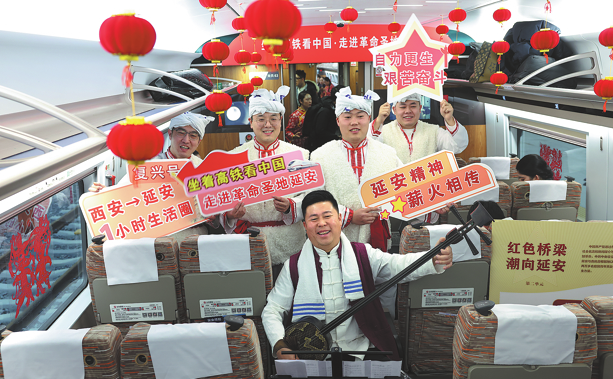
On Friday, with the opening of the Xi'an-Yan'an high-speed railway in Shaanxi province, China's high-speed rail operating mileage surpassed 50,000 kilometers, the world's largest operating mileage, surpassing the combined total of all other countries, according to the China State Railway Group, the national railway operator.
The milestone reflects more than the completion of a single line. It marks the maturation of a nationwide network that now reaches almost all of China's major cities, turning what were once long-distance journeys into routine trips.
Before 2008, China's high-speed rail network was still in its early exploratory stage, with lines such as the Qinhuangdao-Shenyang intercity line, which operated at a speed of 200 km/h, testing the possibilities of high-speed travel.
In 2008, a major milestone was reached with the opening of the Beijing-Tianjin intercity railway, China's first high-speed line designed for 350 km/h service.
The pace of expansion accelerated rapidly in the following years. In 2011, the Beijing-Shanghai high-speed line commenced operations, and by 2012, the Beijing-Guangzhou line was fully connected. By then, the network had grown to nearly 10,000 km.
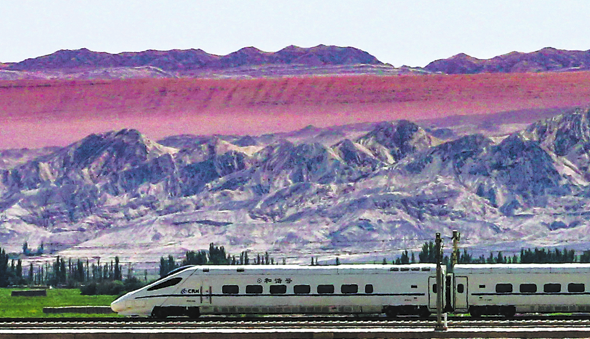
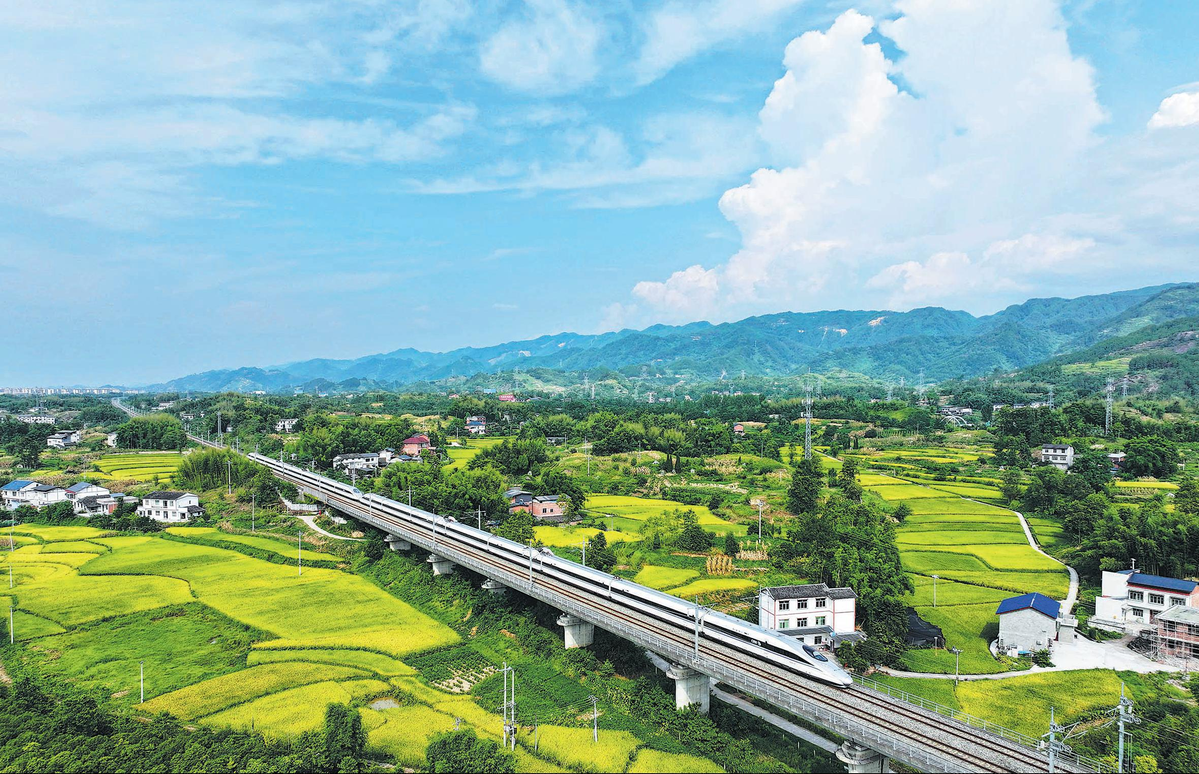
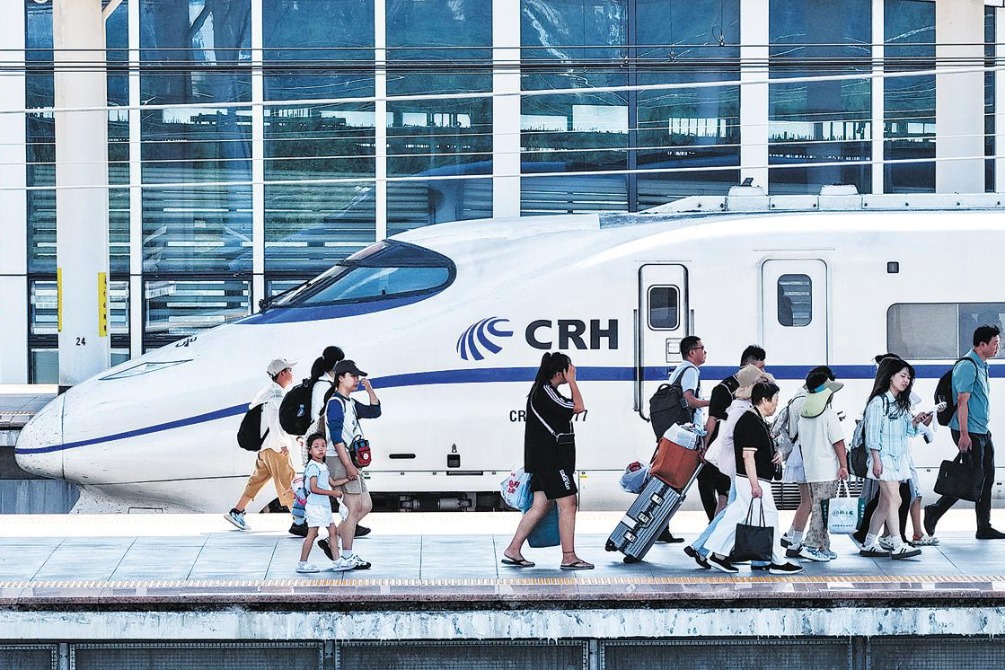
Currently, the high-speed rail network covers almost all major cities in China. More specifically, it serves 97 percent of cities with urban populations of over 500,000. High-speed rail carries 80 percent of all railway passengers in China, dominating medium — and long-distance travel. On an average day, 9,346 high-speed trains are in operation, making around 9.36 million passenger trips across the country — more than the 8.3 million population of New York City, the most populous city in the United States.
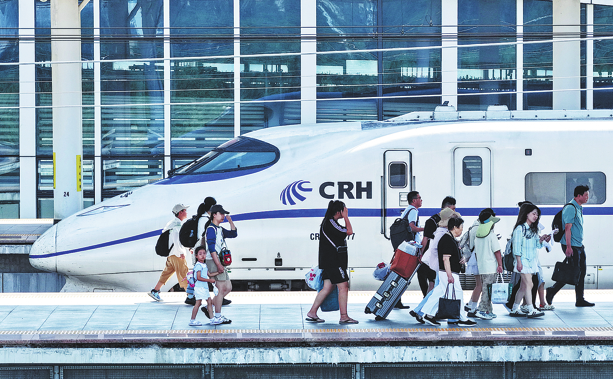
During peak travel periods, daily train services can exceed 10,000, transporting more than 16 million passenger trips, greatly alleviating pressure during peak periods such as the Spring Festival travel rush.
As the network has expanded, travel time between cities has been dramatically reduced. Within major city clusters, destinations within a 500-km radius can now be reached in one to two hours, making frequent, commuter-style travel possible. Cities up to 1,000 km apart are connected within four hours, allowing for same-day round trips, while journeys of up to 2,000 km can be completed in about eight hours.
These time savings have helped redraw the country's economic and social map, bringing cities closer together and encouraging the flow of people, information, and capital across regions.
For example, the Beijing-Shanghai high-speed railway covers about 1,318 km in roughly four and a half hours. The Beijing-Guangzhou line, spanning 2,298 km, can be traveled in around eight hours. Even short-distance routes have been transformed: the Beijing-Tianjin intercity line, just 120 km long, allows commuters to move between the two cities in about 30 minutes.
Together, these connections form the backbone of China's "eight vertical and eight horizontal" high-speed rail network — a medium and long-term national plan designed to link the country's major north-south and east-west corridors and support coordinated regional development.
Smooth sailing
For 76-year-old Zhang Kunming, travel during Spring Festival — one of the major travel rushes in China — once meant endurance rather than convenience.
In the early 1970s, Zhang was working in Shenyang, capital of Northeast China's Liaoning province, while his family lived in Qingdao, Shandong. A trip home on the slow green trains of that era took nearly three days. At the time, a oneway train ticket home cost him three months' salary.
"There were no assigned seats," Zhang recalled. "People filled the aisles. You could barely move." Toilets were at the far ends of the carriage, and reaching them meant squeezing through tightly packed crowds.
Today, Zhang's son works in Beijing. Traveling between Beijing and Qingdao now takes about three hours on a high-speed train, and Zhang makes the trip regularly. The trip between Shenyang and Qingdao is about seven and a half hours. The price is much more affordable, too.
Economic, social benefits
At Wufushan Railway Station in Shangrao, Jiangxi province — one of China's smallest high-speed rail stations — a seasonal surge arrives every spring. Tea farmers board the D2325 train to Wuyi Mountain in neighboring Fujian province for the annual tea-picking season. The journey takes just 17 minutes.
"Every year I organize nearly 200 farmers for the picking season," said Lin Xinfu, a team leader. "This train is our 'Tea-Picking Express'. It makes work easier and boosts income."
High-speed rail has enabled better staffing for tea factories during harvest season, connected rural labor to regional markets, and drawn tourists eager to experience tea harvesting and processing.
In Luochuan, Shaanxi, apples are the dominant crop. Wang Bo, secretary-general of the Luochuan county apple industry association, said: "Our apple sector depends on efficient transport. High-speed trains make it easier for companies to visit and for sales to expand."
Tourism has expanded as well. Destinations that were previously hard to reach — from Jiuzhaigou in Sichuan province to Shennongjia in Hubei province — are now accessible via high-speed rail.
"The economic and social benefits of high-speed rail extend far beyond ticket revenues," said Yu Jian, director of the comprehensive planning division at the planning research institute of the China Railway Economic and Planning Research Institute.
"During the construction phase, it generates extensive employment and boosts related industries, including construction, metallurgy, manufacturing, energy, IT, computing, and precision instruments. Once operational, the network enhances regional connectivity, helps optimize industrial structures, and serves as a cornerstone for high-quality economic and social development," he added.
Governance and strategy
"China has been able to build such an extensive high-speed rail network quickly and operate it well thanks to the advantages of the national governance model, long-term planning, and steadfast implementation," Yu said.
"Railways in China are considered strategic, pioneering, and critical infrastructure — a backbone of modernization, a major artery for the national economy, a vital public service, and a core part of the integrated transport system. In some other countries, high-speed rail is often seen primarily as a profit-driven or controversial project, which makes sustained development more difficult."
Operating China's 50,000-km high-speed rail network requires both advanced infrastructure and sophisticated management.
"It is not just individual lines; it is a network, coordinated nationally," Yu said.
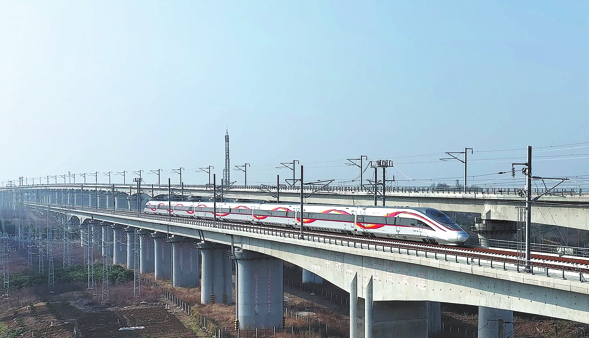
"On the one hand, China focuses on expanding and upgrading the rail network and equipment. Key priorities include completing the main corridors of the 'eight vertical and eight horizontal' network, improving regional and intercity links, and ensuring seamless integration within railway hubs. The country also continues to optimize Fuxing train technology — an advanced bullet train — and promote innovations on faster trains such as the CR450, which will be able to run at the commercial speed of 400 km/h."
He added: "Equally important is improving operations and passenger experience. Using data analysis and AI, China optimizes schedules, stops, and service frequency. Customized travel products support tourism, cultural events, and senior travel. Station and onboard services are continually enhanced to provide comfort, efficiency, and convenience."
"Ultimately, passengers experience more trains, greater punctuality, and smoother travel."
During peak travel periods, the railway network is tested to its limits, and the high-speed railway is a "game changer".
Retired professor Ji Jialun of Beijing Jiaotong University explained: "Previously, freight and passenger trains shared tracks, causing severe congestion during peak periods. China's high-speed rail has become a vital pillar of national infrastructure during major challenges, such as Chunyun (Spring Festival travel rush), enabling people to travel safely and efficiently even at the busiest times."
Controversy to consensus
Once debated, high-speed rail has become an everyday necessity in China.
"China's high-speed rail faced debate in its early days, but today its value is widely recognized," Yu said.
He noted that China's resource distribution, population size, and settlement patterns create strong demand for long-distance, high-capacity transport. Compared with road and air travel, high-speed rail is more efficient and environmentally friendly.
"It connects the country and facilitates mobility. Today, high-speed rail carries 80 percent of all railway passengers in China — its necessity is clear," he said.
Perceptions have evolved further. "Early concerns about 'city fragmentation' or the so-called siphoning effect proved unfounded," Yu added. "High-speed rail has expanded development opportunities and given people more freedom of choice."
Future: Farther, faster
Looking ahead, China's high-speed rail network will continue to evolve. By 2035, the network is expected to expand to 70,000 km, further connecting cities and regions across the country. Technological innovation is also advancing: trains such as the CR450 are being developed to operate at commercial speeds around 400 km/h, reflecting ongoing efforts to enhance efficiency and passenger experience. Experts emphasize that the system is continuously evolving — improving connectivity, refining operations, and integrating new technologies to better serve travelers. As December winds down, several new high-speed rail lines have opened across China, including the Xi'an-Yan'an line, the Wuhan-Yichang section of the Shanghai-Chongqing-Chengdu Yangtze corridor, and the Guangzhou-Zhanjiang line.
For Hou Qingjuan, who has spent months working in Beijing, the expanded network means she can finally return home for the holidays. With four days off, she is set to reunite with her children, boarding a train that will carry her through the evening lights and familiar landscapes — another journey made simple by the country's ever-growing high-speed rail network.



Today's Top News
- Thailand and Cambodia agree to temporary ceasefire
- NPC's 4th annual session slated for early March
- Civilizational links for a fairer world
- Manufacturing in China spurs global growth
- Taiwan lawmakers vote to pass motion to impeach Lai
- Xi: Steadfastly implement conduct rules