



Post services providing lifeline for disaster-hit









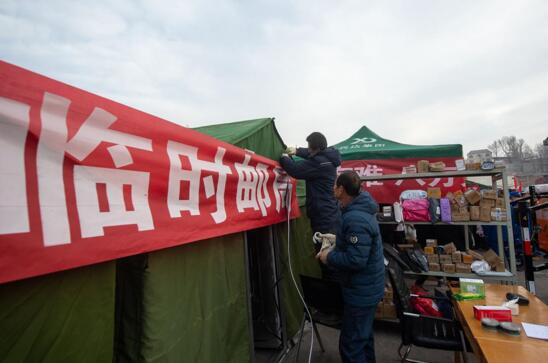
In the wake of a 6.2-magnitude earthquake, it's vital that lines of communication remain open, and the temporary post stations in Jishishan county, the epicenter of the earthquake that struck on Dec 18, have played a crucial role in ensuring packages get in and out.
Ma Hailong, a 32-year-old resident from Dahejia town in Jishishan county, lost his home in the quake, but despite this, he was thrilled that he was able to send and receive packages just three days after the tragedy struck.
He initially thought that postal services, especially deliveries, would be suspended after the earthquake, which occurred just seconds before midnight on Dec 18. Being able to receive his package on time provided some consolation for Ma.
After the earthquake in Jishishan, several buildings, including the Dahejia branch of China Post, had great cracks in their walls.
Temporary post offices were set up in nine quake-hit towns, including Dahejia and Liuji, and are now open for all postal services. In addition, six postal routes in the county remain open, and 24 delivery routes have resumed operation.
The Dahejia post office reopened in a tent on Dec 20, receiving more than 2,300 pieces of mail in two days, which were all promptly delivered to residents in the quake-affected area.
The temporary post office has also opened a green channel for financial services, handling the delivery of mail from courier companies such as SF Express in the disaster area.
To facilitate donations from various sectors of society, Gansu branches of China Post and the Postal Savings Bank of China have opened green channels for the earthquake-stricken area in Jishishan.


- Children's books a tale of new cultural confidence
- Women's development set for high-quality growth in 15th FYP
- Xizang's remote villages gain access to express delivery services
- Egyptian man explores 460-year-old fair in Tianjin
- 10,000-ton electric container ship tests off Jiangxi province
- China's construction sector sees drop in energy use, emissions during build phase, rise in operations