


A cultural gene pull










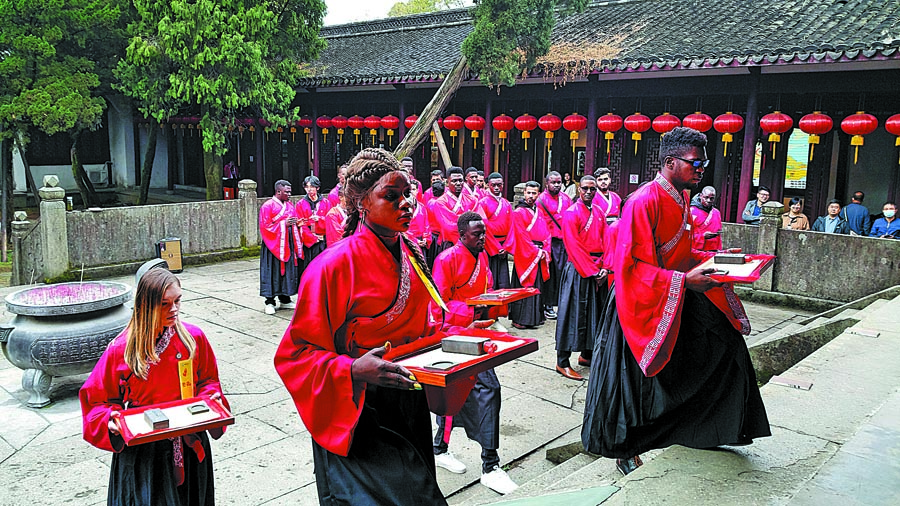
Kseniia has been among an increasing number of visitors who have gone to the temple, one of the only two such Confucian ancestral sites in the country and a key cultural heritage site under national protection.
Not as widely known as its counterpart in Qufu, Shandong province, which was established in 478 BC, one year after Confucius' death, the Quzhou temple was built more than 1,700 years later, because of the migration of the philosopher's family.
After Kaifeng, the capital of the Song Dynasty (960-1279), was conquered by Jin Dynasty (1115-1234) forces, Emperor Gaozong and remnants of the Song Dynasty retreated to South China. The eldest grandson of the 48th generation of Confucius' descendants, Kong Duanyou, also moved South, settling in Quzhou with his wife.
Construction of the temple was approved by Emperor Lizong of the Southern Song Dynasty (1127-1279) after an appeal from the local prefecture chief. Since then, the descendants of Confucius have settled in Quzhou and the city has become their second largest home.
It has been rebuilt three times and repaired 10 times over the past 800 years.





