

Portraits of piety










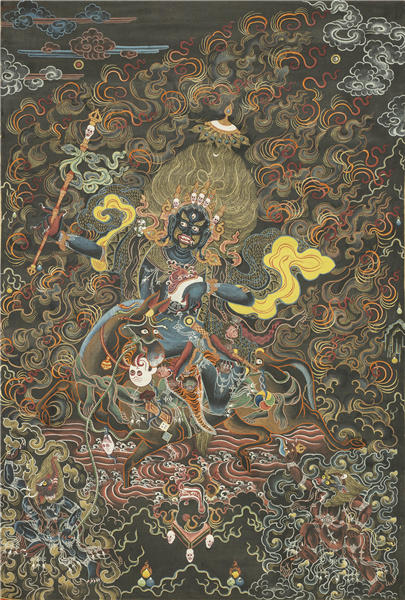
Thangka are known for their striking palettes and sophisticated decorative elements.
Fine quality, expensive metallic and mineral pigments have ensured the hues have survived for centuries. Thangka creation demands advanced painting and embroidery techniques. A piece may take artists months, years and even decades to complete.
It's also called "a mobile niche" since Buddhists carry them around to use during meditation.
Well-preserved vintage thangka paintings are highly sought after.
A 15th-century embroidered silk thangka once in the imperial collection of the Ming Dynasty (1368-1644) fetched HK$348.4 million ($45 million) at a Hong Kong auction in 2014.
The exhibition at the Tsinghua University Art Museum reflects a diversity of the styles and imagery of thangka.
An Su, the exhibition's co-curator, says the thangka paintings on show are dated between the 17th and 20th centuries. Most were acquired by the teachers at the initial central arts academy in the 1960s.
"The oldest (displayed) thangka, which is painted against a black background, dates to the late 17th century," she says.