



China's Civil Code adopted at national legislature









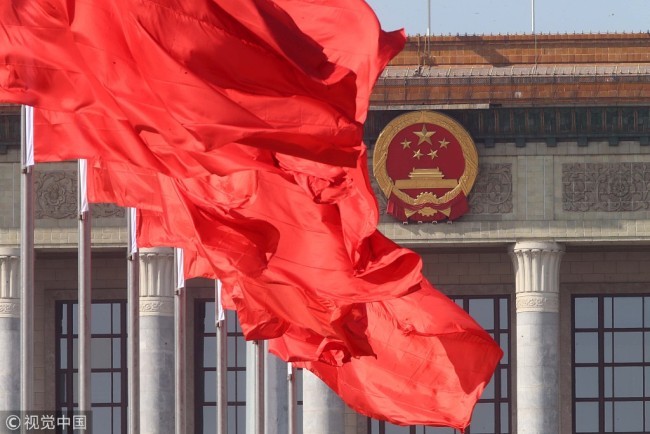
BEIJING -- Chinese lawmakers Thursday voted to adopt the country's long-expected Civil Code at the third session of the 13th National People's Congress, the top legislature.
The Civil Code will take effect on Jan 1, 2021.
In addition to general provisions and supplementary provisions, the Civil Code, the world's latest modern-day civil law, has six parts on real rights, contracts, personality rights, marriage and family, succession, and tort liabilities.
The personal rights, property rights and other lawful rights and interests of the parties to civil legal relations shall be protected by law and shall not be infringed upon by any organization or individual, reads the Civil Code in its opening chapter.
Lawmakers say the codification is not about formulating a new civil law but rather systematically incorporating existing civil laws and regulations, modifying and improving them to adapt to new situations while maintaining their consistency.
A major innovation of China's Civil Code, jurists say, is embodied in the personality rights part. While some countries have related law provisions, few have a specific law book in civil code dedicated to protecting personality rights.
The personality rights part covers stipulations on a civil subject's rights to his or her life, body, health, name, portrait, reputation and privacy, among others.
The personality rights part shows that China has reached a new height in protecting the dignity of people, said Chen Jingying, a national lawmaker and vice president of East China University of Political Science and Law.
The Civil Code is a milestone in developing the socialist legal system with Chinese characteristics, and will greatly boost the modernization of China's system and capacity for governance, said Wang Yi, dean of the law school at Renmin University of China.


- Testing begins on the Shandong section of Xiong'an-Shangqiu high-speed railway
- Bulgarian researcher: My mission to show a humane China
- French sinologist: Speaking Chinese isn't sufficient - reading is essential
- US martial arts enthusiast: Bridging China and the world
- 9 trapped in Heilongjiang building collapse, rescue operation ongoing
- Large-scale marine research infrastructure platform starts construction in Shanghai





