



Nation faces uphill battle in recycling used batteries









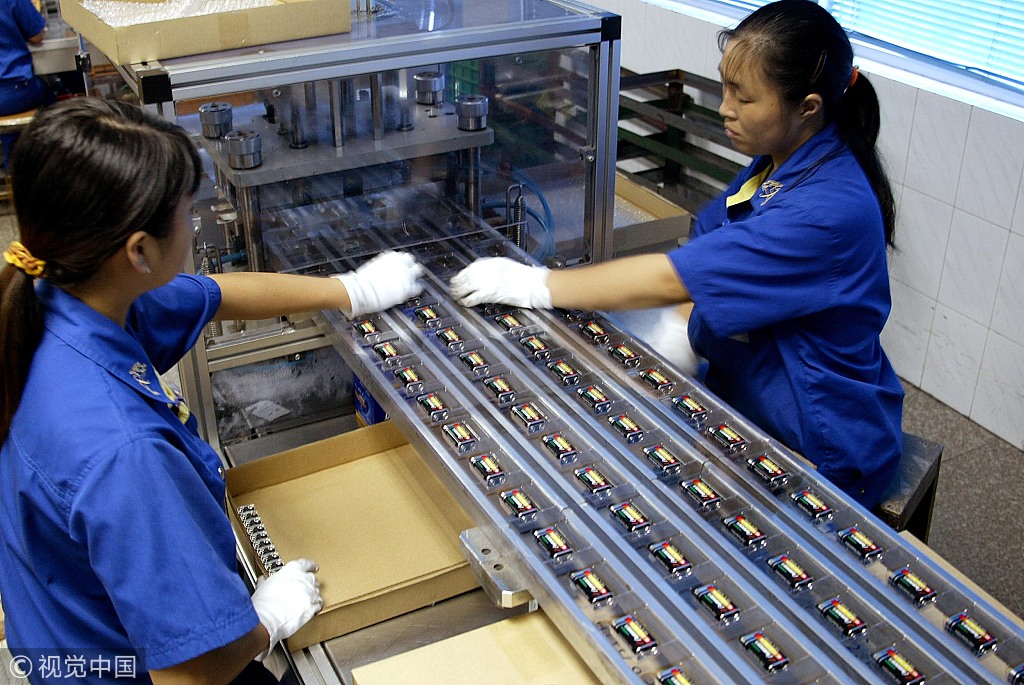
According to a report on recyclable resources published by the Ministry of Commerce, 17.6 tons of spent batteries in China were recycled in 2017, among which 14.6 tons were rechargeable batteries (dry-cell batteries are non-rechargeable).
Cao Guoqing said the recycling of rechargeable batteries, such as lead-acid batteries and lithium-ion batteries, are more profitable because the metals they contain have higher value.
He said the recycling industry of used dry-cell batteries faces difficulties such as complicated processing technologies, high initial investment and operation costs.
Solutions to these problems lie in lowering recycling costs, upgrading products and giving subsidies to recycling enterprises, he said.
To reduce waste, he suggested people turn to rechargeable batteries. He said one rechargeable battery, over its useful life, can substitute for hundreds of dry-cell batteries.
Other country's positions on battery recycling
Japan doesn't have a unified national law on battery recycling. The Battery Association of Japan recommends single-use dry-cell batteries be disposed of with regular waste, while rechargeable batteries must be recycled.
As for the European Union, 44 percent of batteries and accumulators sold in EU countries in 2016 were collected for recycling.



- China seeks public feedback on draft rules for anthropomorphic AI services
- China's top legislature concludes standing committee session
- China adopts revised Civil Aviation Law
- China launches satellite to aid in early extreme weather detection
- Report on mining accident that killed 6 suggests accountability for 42 individuals
- Law aimed at bolstering standard Chinese language education passed