



'Extreme changes' in planet happening now, action needed: UN report









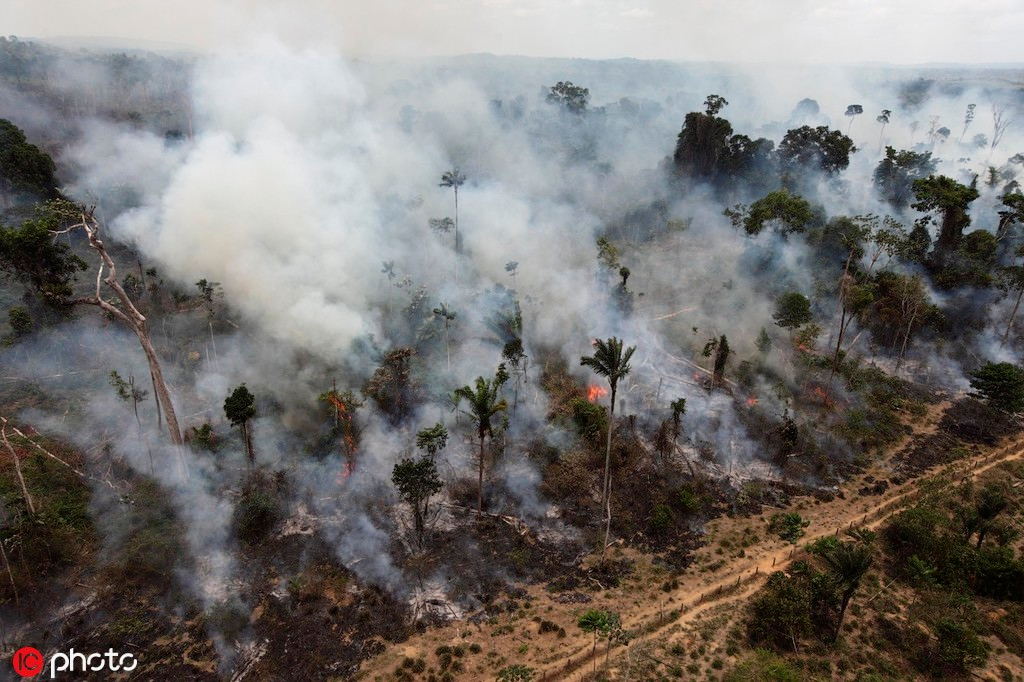
GENEVA -- A new United Nations report Wednesday warned that there are emerging, and much larger threats than before, linked to climate change, environmental degradation, and the growing potential for a disaster to produce or worsen another.
The Global Assessment Report 2019 published by the UN Office for Disaster Risk Reduction (UNISDR), was launched during the May 13-17 Global Platform for Disaster Risk Reduction conference in Geneva, organized by the UNISDR and hosted by the Swiss government.
The report outlines significant risks to human life and material property, ranging from air pollution and biological hazards, through to earthquakes, drought, and climate change.
"Extreme changes in planetary and socioecological systems are happening now; we no longer have the luxury of procrastination," said Mami Mizutori, the UN Secretary-General special representative for Disaster Risk Reduction.
"If we continue living in this way, engaging with each other and the planet in the way we do, then our very survival is in doubt," she said.
If governments do not adopt appropriate strategies to manage risk, then the threats could slow or even reverse progress to the Sustainable Development Goals (SDGs), notably eradicating poverty and hunger, and action on climate change, says the report.
The report urges governments to put the Sendai Framework for Disaster Risk Reduction into action, shifting focus from disaster management to reducing risk.
Adopted by UN Member States in 2015, the Sendai Framework aims to reduce the impact of disasters in terms of mortality, numbers of people affected, and economic loss.
The report warns that unsustainable patterns of economic activity hide the build-up of systemic risks across sectors, citing, for example, dangerous overdependence on single crops in an age of accelerating global warming.
"We witness severe inequalities of burden sharing between low-and high-income countries, with the poorest bearing the highest toll and greatest costs of disasters," the report asserts.
It notes that human losses and asset losses relative to GDP tend to be higher in countries with the least capacity to prepare, finance and respond to disasters and climate change, such as small island developing states.
There is growing potential for one disaster to produce or exacerbate another as often happens during heavy rains which trigger landslides and mudslides following wildfires or periods of extended drought.
"The human race has never before faced such large and complex threats. The doubling of extreme weather events over the last 20 years is further evidence that we need a new approach to managing disaster risk if we are to limit disaster losses," said Mizutori.










