
Perception matters
Another industry player who agrees with the luxury positioning is Wu Jianhua, chairman of the Wujiang Dingsheng Silk Company. A silk handbag sold by his company can cost as much as those from luxury brands like Louis Vuitton.
"If we sell raw silk, we make $1 per meter. If we sell silk souvenirs and gifts, we make $10. If we sell silk dresses with designs, we make maybe $100. But when you sell artworks that are made using traditional silk weaving techniques, that's a $1,000 deal," said Wu.
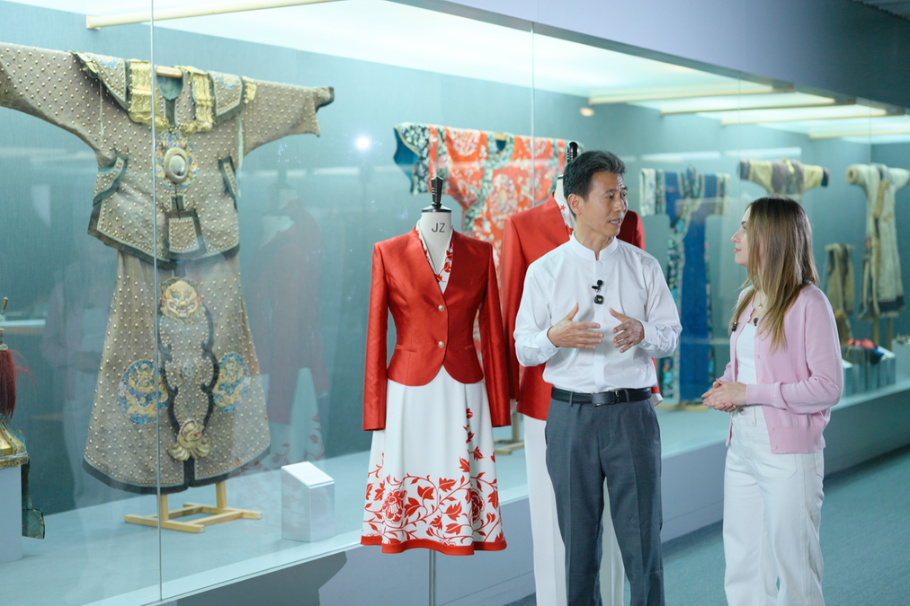
One of the incidents that proved the value of this high-end positioning was the 2014 APEC summit in Beijing when the Wujiang Dingsheng Silk Company was hired as the exclusive producer of silk brocade suits for world leaders including former president of the United States Barack Obama and Japanese Prime Minister Shinzo Abe.
"The morning after the leaders appeared on TV with our brocade creations, our website crashed. It piqued such interest in traditional silk fabric that many people didn't even ask for a price," recalled the 51-year-old.
A native of Suzhou, Jiangsu province, one of China's silk production hubs, Wu made his first bucket of gold after quitting a State-owned silk factory and becoming a silk exporter early in the 1990s.
In 2000, he took over a century-old brocade factory that used to make fabrics for royalty. He later collaborated with international and local artists and took design inspiration from the traditional patterns of brocades found in museums.
Wu's company now releases a new collection every season, with each comprising 20 to 30 products including handbags covered with silk, scarves and even Chinese traditional wedding dresses.
Wu expects his company's revenue to come solely from the sales of silk products instead of fabrics within the next five years.
"I believe no Chinese would say that he or she doesn't like silk. And when it's something people like, they are usually more generous with their wallet," he said.
"The real challenge faced by the silk industry today isn't the competition from the easy-to-wash cotton or cheap fibers — it is the perception of how silk still belongs to the old world. We just need to change that."