
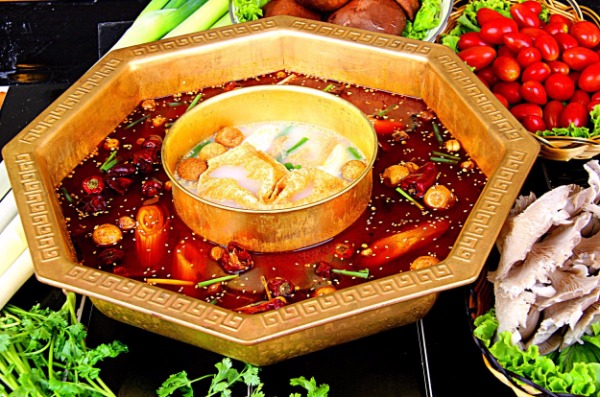
Most food historians agree that the hotpot came in with the Mongolians during the Yuan Dynasty (1271-1368). Apparently, the soldiers traveled light, so they boiled water in their helmets and cooked pieces of meat in them.
But it was Muslim chefs who had settled in the Forbidden City who refined it into an art, with lamb and beef and Silk Road spices such as chili, fennel and cumin, and fermented wild chive flowers from the northern grasslands.
They also introduced the tall copper pots with funnels that have become a Beijing icon.
These early chefs set the template for the hotpots so popular north of the Yangtze River, with their preference for gamey lamb, strong sauces and winter cabbage.
In the past, there was little or no seafood available, and the fish that were used were freshwater varieties such as carp.
For seafood hotpots, we need to go much farther south to the coastal communities in Fujian, Chaoshan and other parts of Guangdong province.
Here, fresh fish, shellfish and processed products such as fish balls feature prominently in a hotpot meal. There are also lots more greens, with mustard shoots, cabbage hearts and garland chrysanthemum vegetables necessary in every hotpot meal.